• Skip to primary navigation
  • Skip to main content
  • Skip to footer
Printing for Less

Printing for Less

At Printing for Less, we've offered high quality online printing services since 1996. Shop business cards, booklets, stickers, and more!

My LoginMy Login
800-930-2423
  • Printing
    • Postcards
    • Business Cards
    • Catalogs
    • Brochures
    • Folders
    • Letters
    • Newsletters
    • Envelopes
    • Greeting Cards
    • Print Templates
    • All Products
  • Direct Mail
    • Why Direct Mail Marketing?
    • Every Door Direct Mail® Postcards
    • Direct Mail Letters
    • Catalogs & Booklets
    • Marketing Gifts & Kits
    • Direct Mail Automation
  • Services
    • Mailing Services
    • Pro Services
    • Design Services
    • Custom Printing Services
    • Reseller Program
  • Industries
    • Advertising & Design
    • Food & Beverage
    • Healthcare Payers
    • Healthcare Providers
    • Nonprofit
    • Real Estate
    • Retail
    • Technology
    • University
  • Resources
    • Direct Mail Marketing
      Resource Center
    • Printing Resource Center
    • Blogs
    • Templates
    • Video Library
    • Have a Question?
  • Request Samples
  • Get a Quote

Marketing

Recycle and Reuse: Repurposing Your Printed Material for Use on the Web
Recycle and Reuse: Repurposing Your Printed Material for Use on the Web

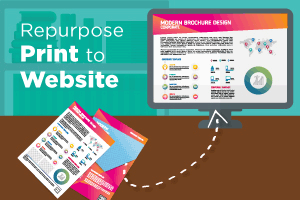
Repurpose Print To WebWhile your business likely has a comprehensive digital strategy, you’ve probably realized one of the biggest challenging of online marketing is generating valuable content! A great web presence requires a lot of great material. Creating content, whether for print or online audiences, can be both time-consuming to produce and costly to purchase.

So what’s a small to medium sized business to do? Chances are, you have a lot of business-related print material on hand. If so, you may be looking at a treasure trove you can repurpose to help you meet your online channels’ demand for content. And even better, reusing print content is an efficient and cost-effective way to help you meet your digital content needs.


Print vs. Online Content: Some Key Differences

Are you wondering if you can just grab your print content and put it online? This might sound like a reasonable approach, especially since a lot of your print material is likely marketing-related and has probably already proven its effectiveness at meeting your marketing goals.

Unfortunately, this is one of the worst approaches you can take when it comes to recycling your print content. Why? The reason lies in the structure of each type of content.

Sure, there are some similarities. Both need to be compelling, giving the reader a reason to keep reading. But copy written for print tends to follow a linear structure; the writer is able to guide the reader from point A to B to C. In essence, in print you are able to take the reader by the hand straight through to your call to action.

Online content has a very different structure. Open up any web page and what do you see? Rather than a linear path through the material, a Web page follows a branching type of structure. Online readers have a multitude of points through which they can navigate to find more material that meets their interests.

And it’s not just traditional website content, either. Social media posts are structured very differently from print media. In most social media posts, information is conveyed through just a handful of words coupled with an appealing image. And with certain social media platforms, the image forms the thrust of the message, while words play a much smaller role.

The First Step to Repurposing Your Material for the Web

Clearly, you can’t just throw your print material up online and expect it to perform well. So what is a good approach?

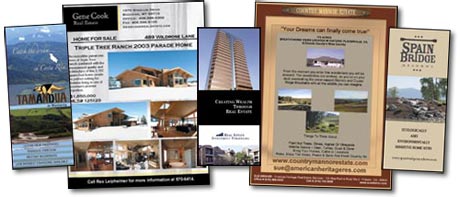
Your first step is to gather together all the print content you have. And here’s a key point: look beyond your marketing materials. Your first thought may be to round up all the brochures you hand out to customers, the newsletters you offer to clients, press releases-in short, everything in your print marketing arsenal.

But don’t stop there. Content you can repurpose is everywhere: fact sheets, reports, presentations, employee handbooks, training manuals, product instruction manuals, product catalogs, white papers, annual reports, case studies, policy and procedure manuals, internal memos, in-house videos, customer information guides. Even packaging materials can provide valuable content you may be able to repurpose.

Break Printed Materials into Useful Parts

Now that you’ve amassed your bounty of print material, it’s time to break everything down into parts. By reducing your best materials to component parts, you can see how your content can be repurposed in a useful, meaningful way for an online audience.

First, identify the content that continues to have value and relevance. Then, go through each piece and break it down into parts. Here are some things to look for:Break Up Content
  • data and statistics
  • quotes
  • facts
  • key points or highlights
  • summaries
  • visuals such as images, graphs, tables and charts.

As you’re doing this, keep track of the various themes and topics that appear. Be especially aware of titles, headings and subheadings, as these will often suggest natural groups for your content.

Define Your Purpose

Once you’ve broken down your relevant print materials into their component parts, what next? How do you go about using all the things you’ve found?

Remember that your goal is not to duplicate your content for an online medium. What you want your repurposed content to do is enhance or supplement the printed piece. Ideally, you don’t want your audience to notice the content is repurposed content.

How do you go about doing this? Now is the time to consider the type of online content you want. Do you need blog posts? Perhaps articles for your site? Maybe social media posts?

Once you’ve determined the type of online content you require, consider the following:

  • your purpose
  • your target audience for the content
  • your message
  • your desired outcome
  • your reach

It’s especially important to remember the purpose for your recycled content will be different from your purpose for the original piece of content. By considering each of the factors outlined above, you will be able to see what needs to be changed in each component part you’ve pulled from your stash of print content.

How to Repurpose Your Print Content

Now that you’ve done the preparatory work, it’s time to begin the task of repurposing.

What you need to do will depend on the online medium you want to use. While blog posts and articles might be the first things that come to mind, your print materials can be repurposed to a variety of other online uses, such as:

  • social media posts
  • webinars
  • videos
  • slideshows
  • podcasts
  • ebooks
  • infographics
  • shareable graphics
  • email newsletters
  • email marketing campaign
  • online photo gallery

Think about how you can get the most out of each of these types of content. For example, if you’re repurposing something in a training manual into an online tutorial, evaluate all the possible forms a tutorial could take. Look at the material you’re working with and consider what it’s best suited for: A video? A step by step static page guide with a lot of visuals? A slideshow presentation? Maybe you have access to a web developer or web design pro and can make an interactive page for the article with tools, quizzes, or other fun-to-use content.

Once you’ve decided what you want to repurpose your original content as, it’s time to buckle down and customize the piece to fit its new online home. Even after breaking down your content into parts, it will be rare to be able to use the piece as is. The following are some tips to help you repurpose each piece of content appropriately:

  • Create new introductions or summaries that work with the material you’re repurposing.
  • Write more descriptions and other copy to expand on presentations or other pieces that utilize a lot of images or graphics.
  • Keep an eye out for opportunities to link to your other online channels, whether it’s posts on your blog, other pages on your website or your social media platforms.
  • Reinforce the SEO (search engine optimization) effectiveness of your repurposed pieces by adding relevant and appropriate keywords. Most print content will not contain enough keywords for proper SEO, so your repurposing session is a good time to make sure your recycled pieces have the keyword power to draw visitors from the search engines.

Six Repurposing Ideas to Play Around With

To get you started, here are six ideas you may be able to apply to your print content right now:

  1. Slideshare presentations. Have you or your staff put in a lot of time on a PowerPoint presentation? Don’t let all that hard work go to waste. Try transforming useful and relevant presentations into online content that can be easily embedded into your website. Not sure where to start? Slideshare offers users six tips for repurposing content on Slideshare.
  2. Blog post series. Remember those mini-themes you jotted down as you went through your pile of print content? Chances are, they probably came from some type of long-form documents, such as reports, white papers or case studies. Or perhaps the mini-themes popped out at you from a presentation. No matter the source, consider designing a series of blog posts around one of these mini-themes, using the content you’ve pulled from your original print source as the basis for each post in the series.
  3. Polls and surveys. Your print content can offer great insights into your customers. Build on these insights by designing a poll or survey you can embed on your site or link to via social media platforms. The data you gather from these surveys can give you ideas for articles or other online content that provide answers for your customers.
  4. Infographics. If you or your staff have spent any time at all collecting data, chances are much of that information has found its way into various forms of your print content. Consider putting together an infographic based on the data or statistics you’ve generated. If you haven’t done this before, there are a number of free tools available online to help with the task. For example, Canva is a multi-featured online design tool that offers an easy, drag-and-drop infographics creator.
  5. Guest posts. Leverage the power of external links to your Web properties by repurposing your print content into guest posts for other sites. Use copy and images from brochures, manuals, handbooks and white papers to create posts that will showcase your business’s particular expertise.
  6. Social media posts. What types of social media posts work best in terms of generating likes and shares? Buffer recently did a study which looked at over 16 million updates on a variety of social media platforms, including Facebook and Twitter, and found that posts containing either videos or photos worked best to generate customer engagement. Finding or creating good images or videos can be a costly process, but your print content is very likely filled with images that can be reused to generate new social media content. Here are three ways images can be repurposed for social media:
    • as images to directly accompany a social media update
    • modified with quotes from your print materials
    • to generate shareable video content.

These are just a few ideas for repurposing your existing print content for your website. As you become more comfortable reusing the copy and images your business has already created, you’ll find more and more ways to turn valuable print content into equally valuable online material.

This field is for validation purposes and should be left unchanged.

Get 20% Off*

Your First Print Order

Name(Required)

*By subscribing, you agree to receive weekly emails from Printing for Less. Some exclusions apply. See details.

RELATED MARKETING & DESIGN TIPS

Custom Magnets

Get high quality full color custom magnets made in whatever size, shape or color you need to market your business.

Read More >


Large 3 Panel Brochure Design Review

Presentation of your product is important with any brochure, but when your product is food, extra special care must be taken to entice the customer rather than repel.

Read More >


Direct Mail Marketing: An Idea Book for Realtors

Boost Your Real Estate Sales! Download our Direct Mail Marketing Idea Book to learn innovative strategies that really work. Discover how direct mail’s 90% open rate can transform your business. Get it FREE today!

Read More >


Realities of Print: Can Paper Really Be Environmentally-Friendly?

Realities of Print: Can Paper Really Be Environmentally-Friendly?

( + Printing for Less’s Guide: How-To Choose a Green Printer)

When you think about printing, what comes to mind? You’re likely thinking “ink,” “paper,” or maybe even “mailing.” The words “eco-friendly,” “sustainability,” and “green” are probably the last you would think of, right? This is why one of the biggest challenges that green printers face is educating their customers about sustainable practices.


Considering the common knowledge about sustainability, this isn’t surprising! As members of modern society, we’re all looking for new ways to lessen our environmental impact. The most common way is to be more conscious and selective about what types of processes, products, and vendors you support. With all the marketing speak and misconceptions about what’s environmentally-friendly and what’s not, making the right decisions can be a difficult and confusing process. Considering printing’s controversial nature, this adds a whole other layer of complexity.

Misleading environmental claims like deforestation, excessive energy consumption, and crowded landfills have overshadowed the fact that today’s paper often comes from a renewable resource, is recyclable and even responsible. So, to help cut through the clutter, let’s talk about some of the common misconceptions about the print industry’s effect on the environment.

Fact 1. Paper supports sustainable forest management.

sustainable tree farmDid you know that the print industry plants more trees than it harvests? That’s right! In fact, the North American paper industry promotes sustainable forestry and depends on sustainable forest growth to provide a reliable supply of wood fiber. Paper manufacturers do this by encouraging forest sustainability through their purchase and use of certified wood fiber and by promoting sustainable forest management policies and practices.



Today, there are 25% more trees than in 1900. Trees are grown and planted by tree farmers. When mature, the trees are harvested and paper is made. After the harvest, new trees are planted completing the circle of sustainability. Paper companies that use responsible forest management practices plant about four trees for every tree harvested.

There are also a number of credible certification systems ensuring that paper certified under them comes from a responsibly managed forest source. If paper companies comply with the strict regulations set by these certification systems, printing becomes a renewable resource that is both recyclable and biodegradable.

By providing a dependable market for responsibly grown fiber, the industry also encourages landowners to continue managing their forestland instead of selling it for development or other non-forest uses. In addition to replenishing the supply of recycled fiber, the U.S. paper industry’s perpetual use of trees harvested from responsibly managed forests has a host of economic, social and environmental benefits.

Fact 2. The carbon footprint of paper is not as high as you may think.

Did you know that most of the energy used to make pulp and paper is renewable? The print and paper industry accounts for only 1% of global carbon dioxide emissions; at a global level, the greenhouse gas emissions from the forest products industry value chain are largely offset by sequestration in forests and forest products.

The U.S. forest products industry is a leader in the production of renewable energy, with more than 65% of the on-site energy needed to produce paper products derived from carbon-neutral biomass. Over the past decade, the pulp and paper industry has made an impressive commitment to improving fuel efficiency and independence by investing in their infrastructures to replace fossil fuels with alternative energy sources.

Bonus fact:
Electronic media also has environmental impacts.
A recent study estimates that developing countries will produce at least twice as much electronic waste (e-waste) as developed countries within the next six to eight years. Uncontrolled toxic emissions can result from informal recycling practices often used in the developing world. These emissions can include dioxins, furans, and cyanide. Yikes!

Fact 3. Paper is one of the few truly sustainable products.

Did you know that paper is one of the most recycled products in the world? Paper is made from a natural resource that is renewable, recyclable and compostable. In the U.S., more paper is recycled than any other commodity in the municipal solid waste stream, including plastics, glass, and metals.

The truth is that virgin fiber harvested using recognized third-party certified sustainable forestry practices is as environmentally sound like the use of recycled paper. While the recycled paper does reduce waste, paper’s full life cycle must be considered before making a determination. Recent Life Cycle Management studies show that there are limitations to the use of recycled fiber that make the need for virgin fiber inevitable, including the loss of yield and strength during the repulping and deinking process.

Fiber can be recycled no more than 5-7 times, and not all categories of paper can be recycled for use in printing and writing grades. Both recycled and virgin fiber have their purpose and justification for use. But the reality is that the paper industry can use all of the recycled fiber available, but the recycled paper industry depends on virgin fiber. They are both parts of the same cycle.

Since we began tracking how much paper gets recycled back in 1990, the recovery rate for used paper has increased dramatically. We’re not only recovering more, but we now know how to get the most environmental and economic benefits from using recycled paper in new products.

To produce something that is environmentally-friendly can be something as simple as the ink we use, or where the paper we used has been sourced. If businesses intend to change the way they market, then it is time to search for ways to use stuff with a much smaller carbon footprint.

But, how can you tell if a product is earth-friendly?

When searching for earth-friendly products, be aware of misleading marketing. As a result of high consumer demand for earth-friendly products, many manufacturers have simply used marketing and packaging to mislead customers into thinking their goods are ecological. So common is this deceptive practice, a term has been coined for it: greenwashing.

Greenwashing can be hard to spot, but keep in mind that “A greener sign doesn’t mean a greener business.” In the print industry, “Go paperless!” messaging can be misleading and may not meet best practices for environmental marketing. Many leading U.S. companies are urging their customers to go paperless with claims that paperless bills, statements, and other electronic communications save trees, are “greener” or otherwise protect the environment.

Beyond the fact that “Go paperless!” marketing messages ignore the highly sustainable nature of print on paper – it comes from a renewable resource, is recyclable and recycled more than any other commodity in the U.S. and has great carbon characteristics – these claims fail to meet the most basic tests for acceptable environmental marketing as outlined by the U.S. Federal Trade Commission (FTC) and others.

You see? Print isn’t so bad after all!

Led by sustainable and responsible forestry, paper production, and printing, Printing for Less is working to ensure that, in a world of scarce resources, print and paper’s unique recyclable and renewable qualities can be enjoyed for generations to come. We take the responsibility of protecting our environment seriously. Sustainability is the future of U.S. print.

Interested in talking with our team about your print desires? Contact Printing for Less at 800-930-6040 for more information.

Want to learn more about how to choose sustainable print solutions? You’re in luck! Our free resource, “The Ultimate Guide: How To Decide if a Printer is Green Enough for You”, is below!


The Ultimate Guide: How To Decide if a Printer Is Green Enough for You

So, what does all this mean for you? If you are looking to get marketing materials or stationery printed for your business but want to make sure you utilize a printer who uses responsible printing practices, there are a few things you should consider:

1. Who is their paper vendor?

Check to make sure your printer uses a company who holds a certification that shows they are adhering to strict forest management standards.

2. Do they offer a variety of recycled papers

Green printers should offer a range of different recycled paper stocks depending on what you are looking for.

3. What type of ink do they use?

Vegetable-based inks and UV printing are a good choice because they are gentle on the environment and still produce bright, high-quality images.

4. What do their printing processes look like?

Consider things like whether or not they use wind power, their facility and what their company recycling policy is.

If you really want to make the right decisions when it comes to paper and green printing, it’s important to learn all the facts. Do your research and utilize a printer who works with a certified paper company and offers a variety of environmentally-friendly benefits. You’ll rest easy knowing that your printed materials are coming from an eco-friendly printer who cares about the environment.

This field is for validation purposes and should be left unchanged.

Get 20% Off*

Your First Print Order

Name(Required)

*By subscribing, you agree to receive weekly emails from Printing for Less. Some exclusions apply. See details.

RELATED MARKETING & DESIGN TIPS

Design Postcards in InDesign to Connect

Make sure your message is delivered by laying out and printing postcards correctly.

Read More >


Roll Labels

Roll Labels and stickers printed to your specifications. Durable, high-quality full color label printing with many standard and custom options available. Use your design or have us design them for you. Printed right and delivered on time, guaranteed

Read More >


Paper Belly Bands

A wide variety of paper belly band printing options to enhance the packaging of your product or printed material

Read More >


Hang Tag Stringing

Hang Tag Stringing

Custom Strings For Your Hang Tag Projects

You’ll have the world on a string with our hang tag stringing service. With our handy one-stop shop for hangtags, you get the convenience of drilled and pre-strung tags delivered to your door and ready to hang.hang tag strings

Your time is valuable, why spend it stringing your own tags? Our specialized equipment enables us to offer hang tag and label stringing at a price that won’t leave you strung out.


Hang Tag Benefits

  • Convenience: tags arrive pre-strung
  • Versatile: available in a wide variety of shapes and sizes
  • Key Products: ideal for clothing tags, candles, bottlenecks, jewelry, and other merchandise
  • String Choices: stringing available in multiple colors of elastic or cotton

Use strings on standard flat or die cut tags or folded marketing pieces for a unique concept, such as hang tag micro catalogs and mini brochures.

We offer two popular string materials and a wide range of colors to complement your hangtag design. These attractive strings add both function and style to your tags and can be ordered in lengths from 2 to 10 inches from hole to knot.

  • Cotton strings provide a natural look and feel. Available in popular colors such as white, brown and black or other options to complement your printed hang tags.
  • Elastic loops give you a sleek, stretchy connection. Stick with tried-and-true black and white elastic or go glam with silver and gold metallic loops.

Speak with one of our Printing Experts Today

This field is for validation purposes and should be left unchanged.

Get 20% Off*

Your First Print Order

Name(Required)

*By subscribing, you agree to receive weekly emails from Printing for Less. Some exclusions apply. See details.

RELATED MARKETING & DESIGN TIPS

How to Create a Small Business Marketing Plan

Need help creating a small business marketing plan? We created a detailed step by step guide to get your marketing out into the world. Learn more!

Read More >


Professional Printing Tips and Resources

All types of promotional marketing materials printed in full color with quaranteed qualtity and on-time delvery. Live expert help

Read More >


Business Card Size Specifications

See standard business card dimensions, layout specifications, and guidelines for printing business cards and folded business cards for commercial printing.

Read More >


Real Estate Marketing Tips

Real Estate Marketing Tips

Real Estate Marketing Myths

1.  Real estate is all about word of mouth, my past clients and my current listings market for me.

Word of mouth is the best form of advertising, but it’s rarely enough. Even if you have a strong referral base in your favor, if you aren’t keeping a moving stream of new customer leads, you’re at risk when the tides change in your competitive environment. You can’t afford not to spend on advertising if you’re banking on long-term viability for your business.


real estate business cards

  • Marketing doesn’t have to be expensive. business cards, for example, are one of the most cost-effective print marketing tools. Think of them as miniature ads and maximize the ‘real estate’ on your cards. You can use the back to print to provide useful info and calls to action, such as testimonials and free offers. Or use creative magnetic business cards to stay in front of your prospects every time they hit the fridge! To get a fast start, check out our easy online Business Card Templates.
  • When promoting your existing listings, make your printed real estate flyers and brochures work harder for you. Showcase not only the property, but your services as well – what you offer to sellers and/or buyers. You’ve seen how many people stop by and pick up real estate flyers out of curiosity, even if they’re not currently in the market. Those are your future customers, make an impression both in person and on paper.
  • Do stay in touch with your customer base in thoughtful and creative ways that encourage them to keep you in mind and refer you to friends. Send personal or useful gestures such as holiday greeting cards, notepads or mini-calendar magnets. Follow up with buyers after closing to welcome them to their new home.

2.  The more exposure you get, the better.

Think you need to get your face plastered on billboards, in newspapers and in other media with your ads to get listing and buyers? Think again. Effective real estate marketing is not about getting in front of more people more often, it’s about getting in front of the right people in the right way.

What is your target audience? Are you focused on a particular neighborhood, demographic or income level? Use the right medium and messaging that reflects your unique value proposition and your target market. A combination of print and internet exposure is critical for an integrated marketing strategy.real estate postcards

  • Done right, direct mail real estate postcards can be a powerful sales-booster with cost/benefits you can easily measure. Learn how to build a successful mail campaign and calculate your ROI with our Direct Mail Tips and our affordable Mailing Services and Direct Mail Lists. Use the new Every Door Direct Mail® Program or EDDM® to reach specific cities, zip codes, carrier routes or geographic areas cheaply.
  • Surveys have shown that more than 70% of sellers and buyers use the first realtor they contact. Give prospects a reason to contact you or visit your website now. On your business cards, postcards, door hangers or flyers, point to resources on your site that are useful anytime such as local real estate updates, free home valuation service, home maintenance checklists or a blog for issues in your target neighborhoods.

3.  You can’t compete with the “big guys” marketing budgets or more experienced agents.

This is a fallacy in every industry. In fact, you can compete well if you consider what do that the larger brokerages or long-time realtors don’t offer. Do you send new listings by email to buyers or share your clients’ environmentally-responsible practices, such as using sustainably-produced paper for your printed marketing and contract documents? Or maybe you exclusively work with buyers. Zero in on the advantages you provide or could offer that will distinguish you and get the message across in the cost-effective ways we’ve mentioned here.

More than most industries, real estate is about building trusted relationships. Find out what your target market cares about most and explain how you are a good fit for their needs. Don’t be hesitant to tout your accomplishments and ask for your customers’ business. The more honest, confident and competent you come across, the more trust you’ll earn and the better your chances for riding out the storm of any downturn.

real estate brochures


This field is for validation purposes and should be left unchanged.

Get 20% Off*

Your First Print Order

Name(Required)

*By subscribing, you agree to receive weekly emails from Printing for Less. Some exclusions apply. See details.

RELATED MARKETING & DESIGN TIPS

What is EDDM® and is it Right for Your Business?

One of the best tools for reaching customers in a geographical area is provided by the post office. It is called Every Door Direct Mail® (EDDM®) and it’s a cost-effective way to market locally.

Read More >


Coating for Printing

Descriptions of uses of uv coating and varnish coatings used on printed materials for protection or to achieve visual effects.

Read More >


Liquid Laminate

Liquid laminate is a great way to add durability & visual impact to paper & digital prints. We created a guide on how to effectively use liquid laminate.

Read More >


Choosing A Printing Company: A Partnership For Your Success

Choosing A Printing Company: A Partnership For Your Success

Selecting an online printing company to help you with your business is a critical choice, and one not to take lightly. It goes beyond the quality, cost, or speed of a printing project to finding a trusted partner to help propel your business forward.


As with many business choices, partnering with an online printing company requires you to ask the right questions to find the right fit for your business.

Print buying can be a nerve-wracking, time-consuming process, and a good printing company alleviates or removes these issues. You’re busy running your business. You shouldn’t have to wait days for estimates or proofs, be limited by file types you can submit, have your timeline pushed back because the printing company isn’t flexible, or get nickel and dimed to death with charges buried in the fine print. It’s not just your money but your time that’s valuable.

At PrintingForLess.com, we save you the headache, stress and worry, allowing you to run your business. We work with you to find out what success looks like to you and how we can help you achieve it through your printing and direct mail projects.

The Human Factor

customer advocate teamOur biggest competitive advantage can be summed up in one word: people. We hire and thoroughly train our front-line employees in sales, lithography, pre-press and customer service. This combination gives you a highly skilled three-person team to handle your order from the first phone call or email to the final delivery of your project. We also equip our manufacturing staff with the training and empowerment to ensure your order meets our high quality standards.

When you receive your order, we are not out of the picture; you will hear from us personally on every order to make sure it met your expectations, and if not, we fix it, guaranteed. A printing company is not just a room full of presses and stacks of paper.

offset printing press

A Good Fit is not Just for Suits and Shoes

This high level attention to service, training and flexibility allows us to be your personal printing consultant. We will talk to you about your timeline, budget, image quality, project expectations, as well as look at layout and design elements, discuss mailing services and list procurement, and do what we do best-help you build and grow your business through high-quality, eye-catching marketing materials, delivered on time for a fair price.

We specialize in offset printing using state-of-the-art Heidelberg presses on small to medium sized print runs.

We focus on helping what many refer to as “small businesses”. From accountants to bakeries, dry cleaners, mechanics and doctors, landscapers, real estate agents, dentists and restaurant owners, you’re the backbone of America’s economy. When you succeed, we all prosper.

So ask yourself, have you made the right choice when selecting a printing company? Your business is worth it.

This field is for validation purposes and should be left unchanged.

Get 20% Off*

Your First Print Order

Name(Required)

*By subscribing, you agree to receive weekly emails from Printing for Less. Some exclusions apply. See details.

RELATED MARKETING & DESIGN TIPS

Bulk Mailing

Bulk mail and printing services with Printing for Less offers a variety of design options and is cost-effective! Learn more about our bulk mail services.

Read More >


CD Cover Size Specifications

See standard CD cover dimensions, layout specifications, guidelines, and design tips for printing CD covers and CD inserts. Guaranteed quality & delivery.

Read More >


Catalog and Booklet Printing Specifications and Formats

Understanding printing specifications and formats for catalogs and booklets is key for making the most of your printed marketing efforts. Learn more!

Read More >


How Custom Printing can Turbo-charge your Business

How Custom Printing can Turbo-charge your Business

  • How do you use custom printing in your business?
  • How can it set you apart from your competitors?
  • What are some ways you can use custom printing for your own marketing pieces?
Offset Printing Press
Heidelberg Offset Printing Press

Custom printing is anything that is out of the ordinary, unique or distinctive, and when used to market your business, it can be the one thing that stops a customer for that crucial moment, and gets them to look at YOU.

Some of the ways you can use custom printing to make your collateral stand out are very straightforward. Many times, a change in paper stock, adding foil to your logo or using a Pantone ink adds a level of distinction that your marketing collateral needs.


Some other great examples of printing customization are:

Die Cutting
Embossing
Foil Stamping
Perforating
Custom Papers
100% Recycled Paper
Round Corners
Custom Folds
Pantone Inks
Metallic Inks
Spot Varnish
Spiral binding
 
See visual samples of some of these special printing options

foil stamped folderAdditionally, creative use of finishing techniques can make a ho-hum presentation folder have depth and an almost three-dimensional appearance with a striking emboss of your company’s logo, or an interesting die cut can transform your postcard into the shape of a computer, a dollar sign or even a palm tree. You are only limited by your imagination and budget.


Remember, you are looking to gain attention and create interest through custom print, but still maintain your design intent. Out of the ordinary paper or shiny metallic inks may make your brochures or rack cards look appealing, but if they are counter to your message and campaign, don’t feel compelled to use them. Try this–the next time you are out at a tradeshow or come across a service and product rack, examine the business cards, the flyers and brochures. What are you drawn to? What “jumps out” at you? Make mental notes, and see if you can incorporate anything into your own design or plan.

One of the biggest benefits of custom printing, in addition to the aesthetic side, is it is a surefire way to differentiate you from your competitors. Everyone is drawn to the unique, the eye-catching, and the different. And when you get that future prospect to stop, look and read what you have to offer, you are half way to getting that sale.

To get started ramping up your business marketing, click to Custom Printing Products and Options. One of our highly trained print consultants will answer all your questions.

This field is for validation purposes and should be left unchanged.

Get 20% Off*

Your First Print Order

Name(Required)

*By subscribing, you agree to receive weekly emails from Printing for Less. Some exclusions apply. See details.

RELATED MARKETING & DESIGN TIPS

Corporate Printing Solutions

Find a fast, cost-effective solution for your corporate printing needs by partnering with Printing for Less. Plus, save time and money with web to print!

Read More >


Catalog Binding Options

Learn which catalog binding options work best for different types of catalogs, booklets and manuals based on page count, use cases and other factors

Read More >


Plastic Business Card Printing

Get high quality plastic business cards printed with numerous custom options, fast turnaround, free templates, live expert help and award winning service

Read More >


  • « Go to Previous Page
  • Page 1
  • Interim pages omitted …
  • Page 3
  • Page 4
  • Page 5
  • Page 6
  • Page 7
  • Page 8
  • Go to Next Page »

Footer

Printing for Less

info@printingforless.com
100 P F L Way, Livingston, MT 59047

800-930-2423

  • Home
  • Products
  • Services
  • Industries
  • Get Printing Samples
  • Direct Mail Marketing Resource Center
  • Printing Resource Center
  • Blogs
  • Templates
  • Terms & Conditions
  • Contact
  • About Printing for Less
  • Careers
  • Login

Copyright © 1998-2026 PrintingforLess.com. All Rights Reserved.

logo
  • 800-930-2423
  • Products
  • Direct Mail Marketing
  • Services
  • Industries
  • Direct Mail Marketing Resources
  • Printing & Mailing Resources
  • Get a Quote
  • Contact Us
  • My Login
Direct Mail Delivery
This field is for validation purposes and should be left unchanged.

Get 20% Off*

Your First Print Order

Name(Required)

*By subscribing, you agree to receive weekly emails from Printing for Less. Some exclusions apply. See details.