• Skip to primary navigation
  • Skip to main content
  • Skip to footer
Printing for Less

Printing for Less

At Printing for Less, we've offered high quality online printing services since 1996. Shop business cards, booklets, stickers, and more!

My LoginMy Login
800-930-2423
  • Printing
    • Postcards
    • Business Cards
    • Catalogs
    • Brochures
    • Folders
    • Letters
    • Newsletters
    • Envelopes
    • Greeting Cards
    • Print Templates
    • All Products
  • Direct Mail
    • Why Direct Mail Marketing?
    • Every Door Direct Mail® Postcards
    • Direct Mail Letters
    • Catalogs & Booklets
    • Marketing Gifts & Kits
    • Direct Mail Automation
  • Services
    • Mailing Services
    • Pro Services
    • Design Services
    • Custom Printing Services
    • Reseller Program
  • Industries
    • Advertising & Design
    • Food & Beverage
    • Healthcare Payers
    • Healthcare Providers
    • Nonprofit
    • Real Estate
    • Retail
    • Technology
    • University
  • Resources
    • Direct Mail Marketing
      Resource Center
    • Printing Resource Center
    • Blogs
    • Templates
    • Video Library
    • Have a Question?
  • Request Samples
  • Get a Quote

Blog

Digital Clutter is a Drag: Here’s How Print Can Ease the Chaos

Digital Burnout

Is your email inbox overflowing? Your social media notifications in the double digits (maybe triple if you’re a Gen Z’er)? Your home screen filled with apps you never use? Your web browser stuffed with open tabs containing content that you one day promise to read?

You, my friend, are suffering from digital clutter.

Digital clutter is any online material that is disorganized and underutilized on your devices. It’s the equivalent of a hoarder’s living room—chaotic and confusing. Not only does digital clutter slow you down when you want to find something important, but it can also increase your stress and anxiety levels because the problem becomes harder to manage as more content arrives. And in the digital world, more content always comes a-knocking.

But fear not. There are digital clutter solutions, and they don’t have to involve hiring Marie Kondo to manage your accounts. Below, our print marketing experts offer their advice on how to overcome digital clutter once and for all.

What is Digital Clutter? How Does it Relate to Digital Fatigue?

Digital clutter is unnecessary items in your digital space. Digital fatigue is a state of exhaustion due to excessive use of technology and digital platforms. According to a survey by Deloitte, nearly one-third of people report feeling digital fatigue. Digital clutter can be a direct result of digital fatigue because people are overwhelmed by the number of devices and content they have, and so stop maintaining their content—meaning it accumulates until it seems impossible to tidy.

Ambre Zachmann, our Ecommerce Marketing Specialist says that more companies are switching to direct mail these days precisely because customers are experiencing digital fatigue. “[Businesses] are seeing the decrease in engagement from their digital tactics and want to try a new method”, she says.

National Account Executive, James Casey agrees. “Many businesses have found that their digital marketing efforts are getting lost in the noise of an increasingly crowded online space, they’re looking for ways to break through the clutter and connect with customers in more meaningful ways,” he explains. “Print marketing offers a tangible, memorable experience that can’t be replicated by digital channels.”
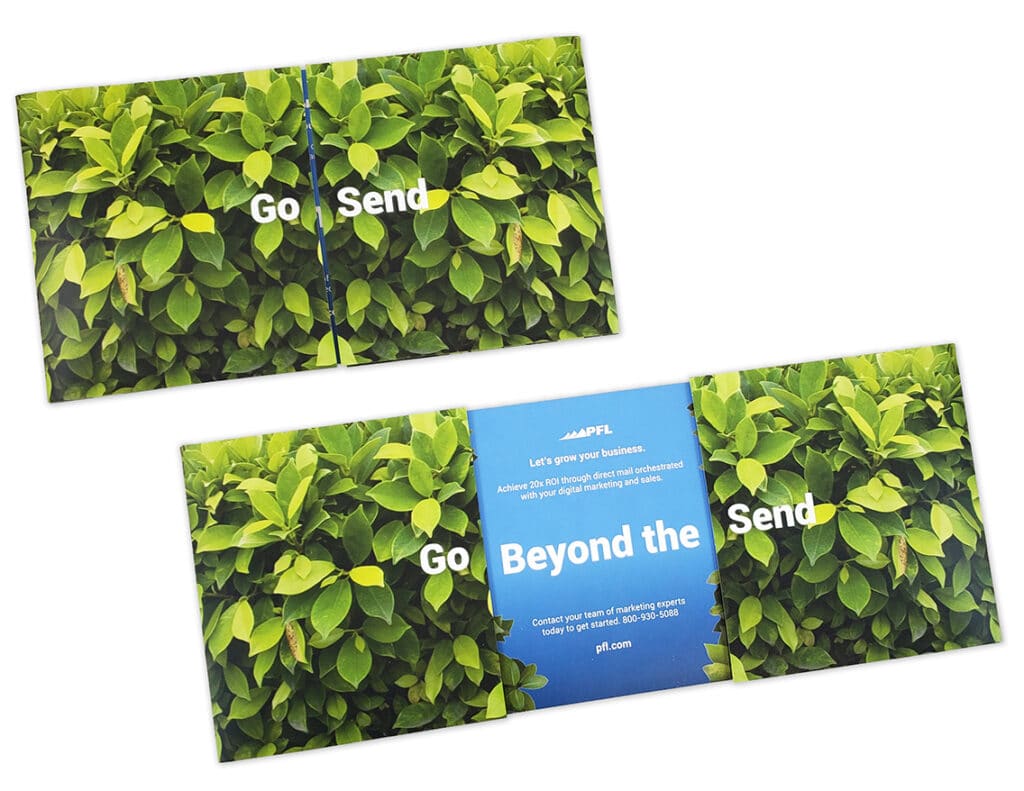
Custom Folded Mailer

In contrast to digital content, print content isn’t as tiresome. More than 80% of households read or scan their mail daily—a stat that demonstrates how physical content is part of people’s routines, and how it doesn’t require the same energy to access and order as digital content.

In fact, physical materials like direct mail can stimulate a positive emotional response in people. A study by Temple University found that print content activates the ventral striatum, which is the part of the brain responsible for value and desirability. Unlike digital content, which can be more easily dismissed, physical cards, leaflets, brochures all leave a greater impact, which in marketing is the coveted end goal.

Girl Opening Mail

Zachmann also points out that data from the National Postal Form event shows direct mail isn’t age specific, leaves a “deeper footprint” in people’s minds than digital content, and has a higher return on ad spend. All qualities that curb digital fatigue and clutter, and make print the prime route for marketers.

What Tools and Strategies Can Combat Digital Clutter?

Naturally, companies can’t simply dive into a print marketing strategy and expect results. Much like the mail itself, there has to be planning, coordination, and a team of trained professionals to deliver the goods.

Katie Younge, Director of Sales at PrintingForLess, says that the tools and strategies you apply to a print mail campaign will depend on the size of your market and budget. Zachmann adds that experts like those at PrintingForLess can help by asking you what you hope to accomplish, what stage of the funnel you’re focusing on, and what action you want people to take.
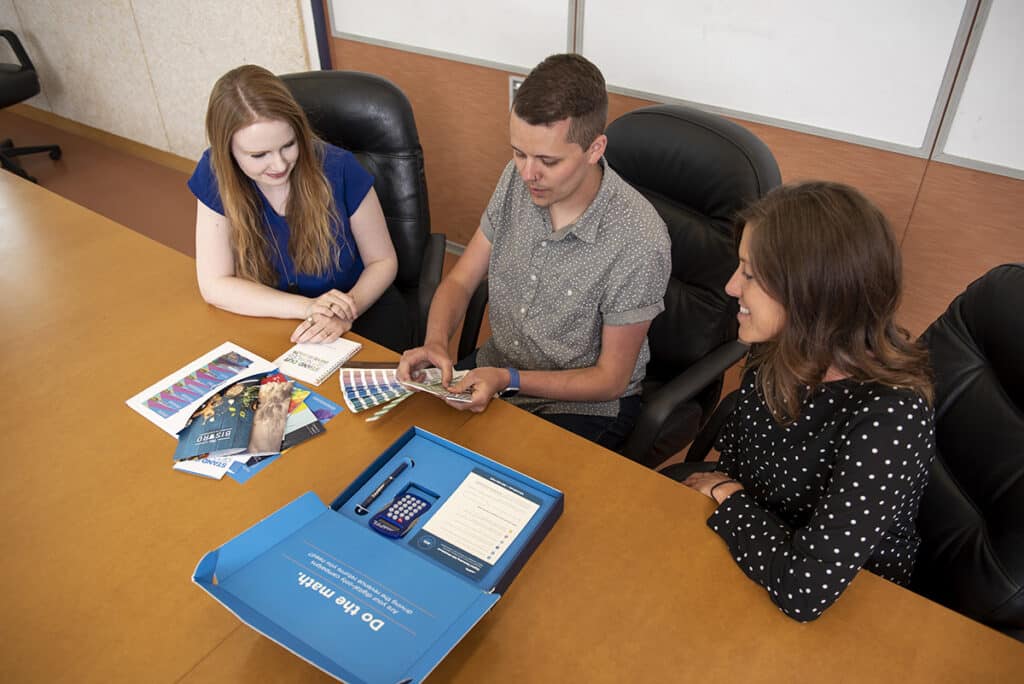
Printing for Less Team

Patrick Trembly, National Account Manager, emphasizes the importance of understanding the recipients’ perspective. “Businesses need to consider if they are well known to their customer base or if they’re trying to get their name out there,” he says. “Every customer is different and diverse. Understanding the position they are in will dictate what a print project looks like.”

When it comes to techniques, Casey recommends a combination of direct mail and kitting and gifting branded sends. “I would also recommend incorporating variable data printing to create personalized messages that resonate with each individual recipient.”

For Ecommerce Sales Manager, Brooke Seidel, promotions or coupons are the way to go. “I would ask if these types of content would be useful for businesses, and then I would discuss dynamic QR code opportunities.”

Benefits of Print Marketing in the Digital Deluge

For businesses that have taken the print marketing plunge, the outcomes have proven to be valuable. “The primary returns depend on your specific goals, but common results include increased brand awareness, customer engagement, and sales,” says Casey. “Print marketing can also help businesses break through saturated digital channels and form stronger customer relationships, as well as increased loyalty.”

Trembly continues by stating that print marketing can grab customers’ attention more easily than digital, can motivate them to take action, increase companies’ sales pipeline, and increase business in a new area or with a new offering or product.

Nonetheless, Zachmann comments that “it does take time to fully flesh out a print campaign, as it’s not as simple as sticking an image on a website. Timelines are important. The sooner you get started with a print campaign, the smoother the process goes.”

How to Bridge the Digital Gap

While we live in the digital era, not everyone has access to digital content. Whether due to limited or no internet connection, a lack of digital skills or simply the decision to not leverage virtual spaces, close to three billion people have never been online. While this may be one end of an extreme, this digital divide means that businesses can’t reach the full scope of audiences with digital marketing only. Perhaps worse, because of digital fatigue even when they can reach audiences, they may not be resonating.

Zachmann adds that “there are many businesses, specifically in healthcare, that do not use email or apps.” She also notes that “younger generations trust print more than they trust digital content” and that there’s great potential to speak authentically to this group via print.

How to bridge the digital gap.

Not only does print content encompass a wider section of society, it’s a cost-effective move for businesses. Casey explains that “many businesses assume digital marketing is always cheaper, but that’s not the case. Print materials can be produced in bulk, which helps stretch marketing budgets further. Additionally, print marketing is highly customizable, allowing businesses to create unique, eye-catching materials that stand out from competitors.”

The reality is that digital clutter can creep up on anyone. Fortunately, print media can be a much-needed remedy. By seamlessly integrating with people’s daily lives, being viewed as more sincere, and demanding less administration from target customers, print marketing is a timeless, powerful way to connect with people.

Ready to find your print pathway? Speak with an expert from PrintingForLess.
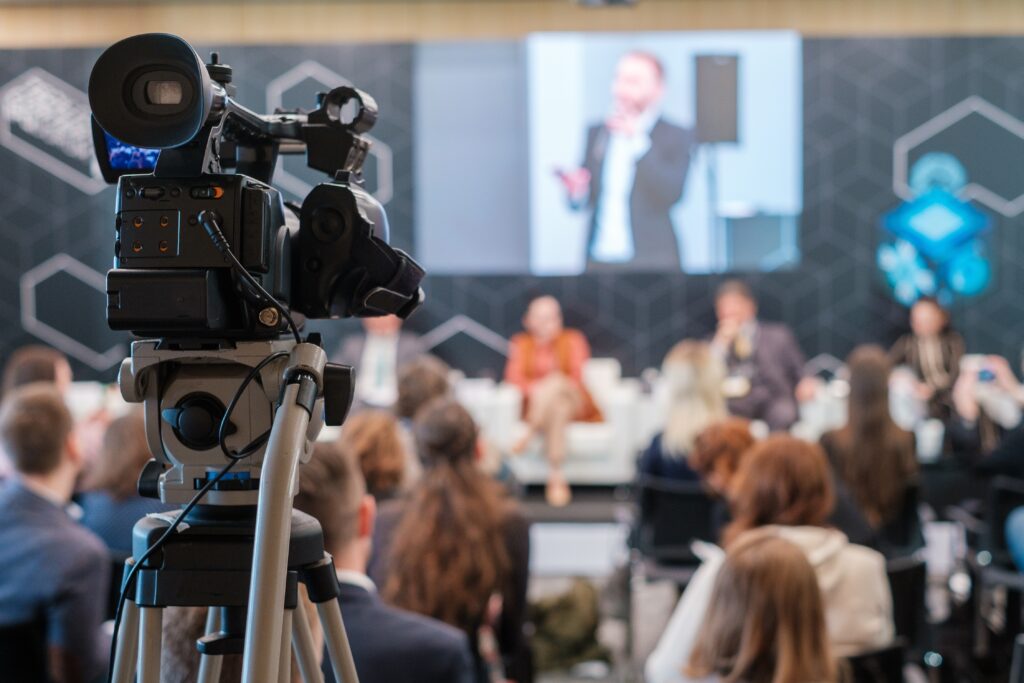
Hybrid Event Ideas: Using Print to Inspire a Positive Experience

During the pandemic, many in-person events such as trade shows, conferences, and workshops were replaced by online alternatives. Guests would attend virtually, watching presentations and participating in conference calls via video link. It was a strange new world for events, but at least one you could navigate while wearing comfy sweatpants. 

As the world eased out of lockdown, digital events transitioned back to in-person events. But many organizers, having benefited from the convenience of online events, settled on a half-way point between the two formats: hybrid events. 

Here we discuss exciting hybrid event ideas based on print marketing, looking at how hybrid events work and how print campaigns can make them a success. 

What are Hybrid Events? 

A hybrid event is an in-person event with virtual components. Some participants gather at the designated physical location, while others attend virtually via the internet. In some cases, virtual attendees passively watch the in-person activities (via a live YouTube stream, for example).  

In other cases, they may actively participate in a video conference or text-based chat. Another scenario is for the event organizer to plan distinct activities for the physical and online guests, allowing staff to focus on one format or the other. 

Hybrid events are common in the business world, as the format is highly suited to trade shows and conferences. Global industry events, for example, often invite guests from other countries (and other time zones) to attend virtually—a trend that predates the pandemic.  

However, hybrid events can also be found in academia and entertainment: university seminars may have virtual guest speakers, while live concerts may have both in-person and virtual ticketing. 

Although many people are still enjoying the novelty of in-person events after a long break, hybrid remains an exciting format. According to research from the Professional Convention Management Association (PCMA), 90 percent of event professionals may continue using digital strategies for in-person events in the post-pandemic world. 

How Print Materials Help 

How Print Materials Help 

Since hybrid events have two distinct components—in-person and virtual—print marketing can play two distinct roles. 

The first and broadest application of print at hybrid events is targeting the in-person attendees. Strategies here can be similar to those deployed at traditional in-person events: programs, flyers, kits, stickers, and event-branded merchandise like magnets and pens can be distributed at the event to promote products or encourage future participation. Costs can be kept low, as the print media is distributed at the event location rather than mailed. 

Targeting virtual attendees of hybrid events has less scope for creativity but is arguably more important, as these participants are more likely to drop out or pay less attention to event proceedings. Print marketing can play a vital role here by convincing the virtual attendees of their importance to the event.  

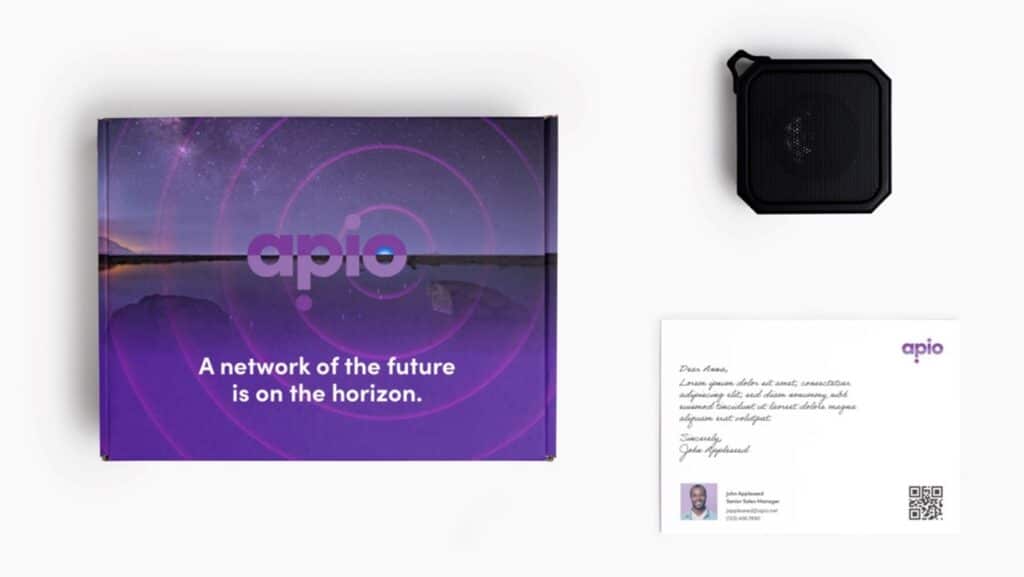
A simple and effective option is a visually appealing mailer with a QR code linking to the event website. Promoters may also try distributing a symbolic ticket complete with tear-away stubs for virtual invitees, providing them with a feeling of genuine participation. Detailed pamphlets and programs can also assist virtual guests while they watch video presentations or performances. 

Some print media can be applicable to both in-person and virtual guests, such as pre-event promotion via flyers or mailers that entice recipients to sign up for the event or a particular item on its program, either locally or remotely. 

Examples of Print Marketing at Hybrid Events 

Print marketing is a great way to generate interest in hybrid events, and not just for in-person attendees. These three examples are just some of the ways that print media can inspire a positive hybrid experience.  

Gift Swap Kit 

One Printing for Less customer hosting a hybrid event came up with a novel plan for encouraging in-person attendance. They used a highly strategized mail campaign to send low-cost pairs of sunglasses to a selection of potential attendees; within the package was an invitation to exchange the plastic eyewear for a pair of genuine Ray-Bans at the event. 

Dynamic QR Code Mailers 

Several event organizers have used Printing for Less mailers to drum up interest for in-person, virtual, and hybrid events. One advantage of mailing print media is that it creates a tangible aspect to the event even for virtual attendees. These mailers can feature a QR code that leads the recipient directly to the event website. 

Printed Merchandise 

Events that are pushing in-person attendance may entice potential guests with branded event merchandise such as water bottles. Unlike paper advertising, such merchandise is typically kept for a long time after the event, helping to maintain brand awareness for future events or product launches. 

Print Marketing for Hybrid Events 

The last few years won’t be remembered fondly by many, but there has been at least one silver lining. New online infrastructure has been developed, and previously technophobic computer users are now familiar with video conferencing tools like Zoom and Microsoft Teams. This has laid the foundation for hybrid events to continue long into the future. 

Of course, promoting hybrid events isn’t always straightforward. Having been forced to use their computers for business and personal activities throughout the pandemic, some people are reluctant to participate in digital events. But print media can give these skeptics a physical connection to the hybrid event they would otherwise be lacking, resulting in a positive experience for the virtual participants. Meanwhile, the same tried-and-tested print strategies for traditional in-person events can be used to great effect for the in-person portion of a hybrid event. 

Hybrid event organizers looking for inspiration can contact Printing for Less to request a catalog of event-specific products. 

The 7 Best Retention Marketing Print Strategies

Retention Marketing

Making a sale is cause for celebration. But marketers should be aiming to convert one-time customers into brand disciples that will come back for more. 

One of the best ways to carry out retention marketing is with print. This can include targeted direct mail campaigns, thank you gifts, and leave-behinds at retail locations. Here we look at seven proven retention marketing strategies that leverage print to keep customers returning time and time again. 

What is Retention Marketing? 

There are all sorts of potential customers and customer demographics out there. Customers are kinda like a Dr. Seuss book, there are tall ones, short ones, rich ones, poor ones. However, when it comes to marketing, one category needs to be considered above all others: has this person bought something from us before, or not? 

Attracting new customers who haven’t made a purchase before is called acquisition; re-attracting customers who have previously bought something is known as retention. Strategies for targeting these two groups can be drastically different. Although a business needs fresh customers to survive, it’s generally easier and more cost-effective to advertise to previous buyers. Research has shown that existing customers are 50% more likely to buy new products than first-time customers. 

How Print Keeps Customers Coming Back 

When it comes to retention marketing, print can play a vital role. For example, online sales result in the acquisition of customer details, which opens a range of direct mail marketing strategies such as event invitations, catalogs, and promos. But printed media can also be distributed at events or directly to customers at retail locations. 

There are several reasons why paper-based marketing helps to transform one-time customers into repeat customers. For one, print engagement is higher than it is for online marketing, with customers more likely to read through a printed brochure than a digital one. What’s more, marketers can get creative with physical media: stickers, foldouts, and printed merchandise are just some of the options for grabbing the customer’s attention.  

How Print Keeps Customers Coming Back 

Retention Marketing Print Strategies 

Send Personalized Thank You Notes 

Making a sale isn’t easy, so why not tell customers you appreciate their business? Sending a thank you note or card after a customer makes a purchase is a great way to maximize retention. 

Notes of appreciation are especially important in the nonprofit world, where organizations rely on the goodwill of donors. In 2021, disaster relief organization Convoy of Hope ran a campaign that involved emailing lapsed donors with the promise of a free t-shirt if they made a fresh donation. 

Along with their t-shirts, donors received a personalized thank you note (printed and mailed by Printing for Less), creating a meaningful bond between the org and its backers. The campaign was a huge success, achieving a 10x ROI.  

Creatively Distribute Leave-Behinds 

Direct mail campaigns make up a big part of print-based retention marketing, but customers can also be targeted in person — at events or stores, for example. 

Leave-behinds like business cards, leaflets, and coupons can be distributed in infinite ways. At a retail location, these items can be placed at the ends of aisles near the relevant products, by the register, or even within shopping bags for customers to discover when they get home.  

Mail Out Branded Gift Kits 

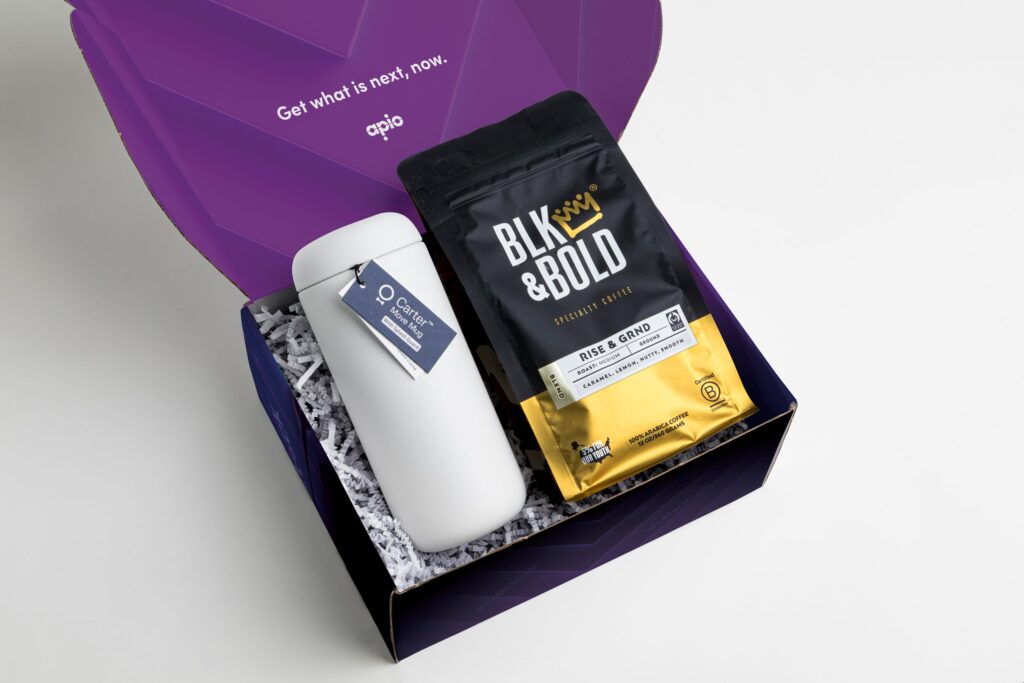
Marketers looking to make an impression on existing customers have a huge range of options with direct mail kits. Branded packaging, printed inserts, and gifts are just some of the ways to remind customers that your company is ready and waiting for a continued purchasing relationship. 

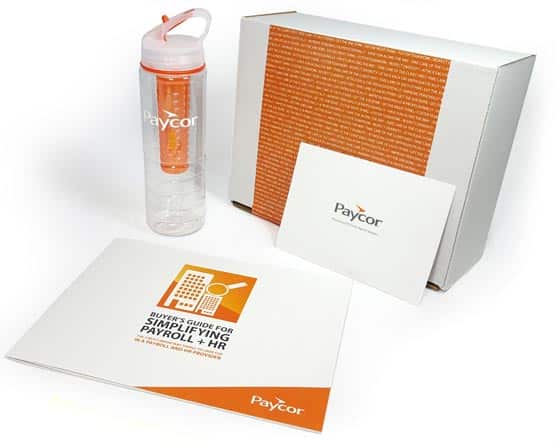
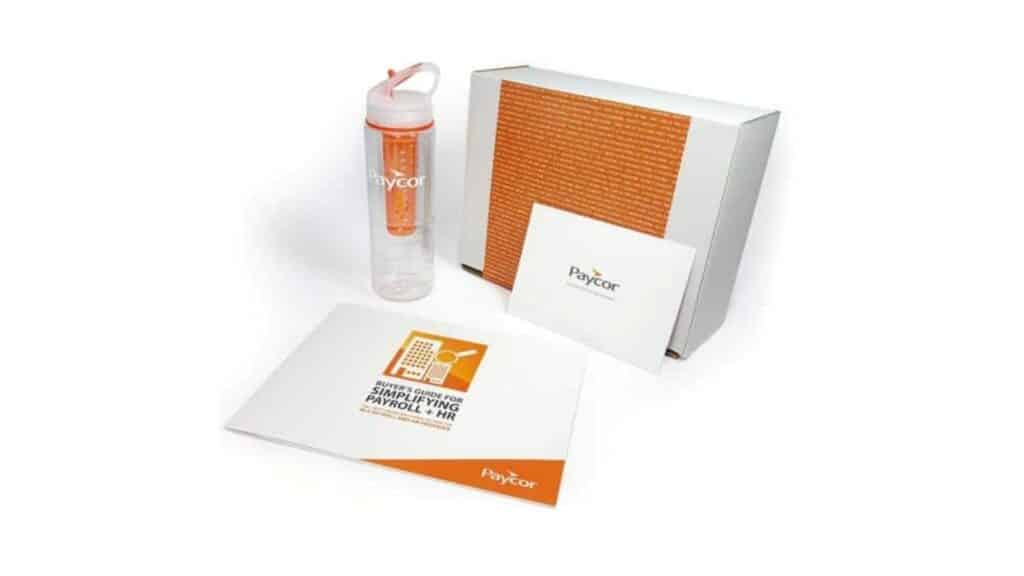
HR and payroll software company Paycor, a user of Printing for Less’s Marketo platform, recently used direct mail to send 15,000 prospects a package containing personalized messaging, a customized postcard, and a branded gift. A big part of this strategy was the Address Validation and Append Service, which ensured the high-value packages weren’t being sent to the wrong addresses.  

At the end of the campaign, Paycor had reached 209% of its goal for sales opportunities generated. 

Follow Up Events with Mailers 

Events like trade shows can yield immediate sales, but creating a lasting relationship with customers is more important than any individual transaction. Sending communications right after an event can help secure long-term customer interest. 

Proofpoint is a cybersecurity company that hosts regular “Power Series” conferences in which expert speakers deliver presentations about cybersecurity. The company wanted to improve the post-event experience for attendees and did so by devising a smart print marketing strategy. 

The campaign involved sending out packages to attendees thanking them for their attendance, giving them more information about the company, and including a gift. The thoughtful follow-up has seen attendances rise at recent events. 

Mail Discount Coupons (with Expiry Dates) 

A tried-and-tested strategy for customer retention is discounts and rewards. Printed coupons have the appeal of exclusivity — recipients know they’re part of a select group — and they don’t get stuck in email spam folders. 

To create a sense of urgency, encourage a quick purchase by putting a clear time limit on the offer. 

Target Offline Customers 

Because they’re scared of getting spammed or feel digital fatigue, some customers may be reluctant to give out their email address to a company. 

During a recent campaign, Printing for Less customer Vivint, a smart home specialist, found that some customers on its database had provided a mailing address but no email. Wanting to reduce its direct mail expenditure, the company decided to mail out marketing materials exclusively to customers with no email address on file. This cut costs and ensured that digital customers weren’t receiving the same content twice over. 

In some situations, customers may have an active email address but simply do not respond to digital marketing. Targeting these digital non-responders with printed materials like pamphlets can be the best route to a repeat sale. 

Establish Loyalty with Birthday Mailers 

In adult life, most snail mail is a cause for indifference or dread. Bills? Great. Bank statements? Fascinating. But birthday cards rank highly on the mail enjoyment scale. 

If your database includes the customer’s date of birth, sending them a birthday gift such as a discount coupon helps to establish a friendly relationship. The loyalty shown to them will likely be returned. 

Using Print to Retain Customers 

Print marketing demonstrates genuine commitment to the customer, which often leads to repeat purchases. Request a Printing for Less sample pack to see the wide range of options available to your business. 

Offline Marketing Still Works and Print is the Key to Unlocking It

Offline Marketing Still Works and Print is the Key to Unlocking It

With our email inboxes full of reminders, surveys, and not-so-special offers, offline marketing presents an opportunity to clamber over the mountain of spam and grab your audience’s attention.

Print campaigns — mailers, packaging, catalogs, and beyond — are offline marketing’s secret weapon, achieving high engagement at low prices. Print and digital marketing can work together to create engaging campaigns, let’s look at how.

Print’s Big Comeback

E-readers and tablets were supposed to replace printed books, yet the publishing industry continues to rake in about four times as much money in physical book sales as digital. Likewise, downloads and streams were supposed to make CDs and records obsolete, but in 2022 vinyl sales increased for the 17th consecutive year. Digital might be convenient, but people continue to value tangible, real-world experiences.

Print’s Big Comeback

In the world of marketing, physical media is showing a similar resilience. Although marketers can fire off email newsletters and deploy banner ads at the click of a button, users are experiencing a kind of “digital burnout” and the impact of these campaigns has started to weaken.

A recent study commissioned by Printing for Less and conducted by Forrester Consulting, “Hybrid Experiences Bring Direct Mail into The Digital Age,” surveyed 158 business-to-business marketing executives in North America. The study found that 78 percent of marketers believe analog touchpoints have seen a performance boost since the start of the pandemic, which accelerated the digital burnout many were already experiencing. These marketers also recognize the engagement potential of direct mail, as 81 percent admitted they are “very likely” to open a package they receive.

“There will always be the need and desire for print,” says Kristi Eby, National Account Executive at Printing for Less. “In my opinion, there is something special about holding something physical in your hands that cannot be replicated digitally.”

Print has made a comeback, and it’s here to stay.

Using Print & Digital Together

Print marketing is head and shoulders above digital in terms of engagement and interactivity, while also allowing marketers to enclose product samples like perfume sachets. But digital clearly has the edge in terms of reach, analytics, and the ability to use multimedia elements like sound and video.

This means that marketers are increasingly trying to get the best of both worlds, combining online and offline marketing to create more effective campaigns. After all, these are not two separate worlds: Printing Industries of America has found that 67% of online searches are driven by offline messaging.

Using Print & Digital Together

Print and digital can be used together in various ways. Marketers who have a customer’s home and email address can use physical and digital channels simultaneously. Different mediums can be brought together by cohesive campaign messaging. On the flip side, marketers can look to using analytics from a digital campaign to inform their offline marketing strategy.

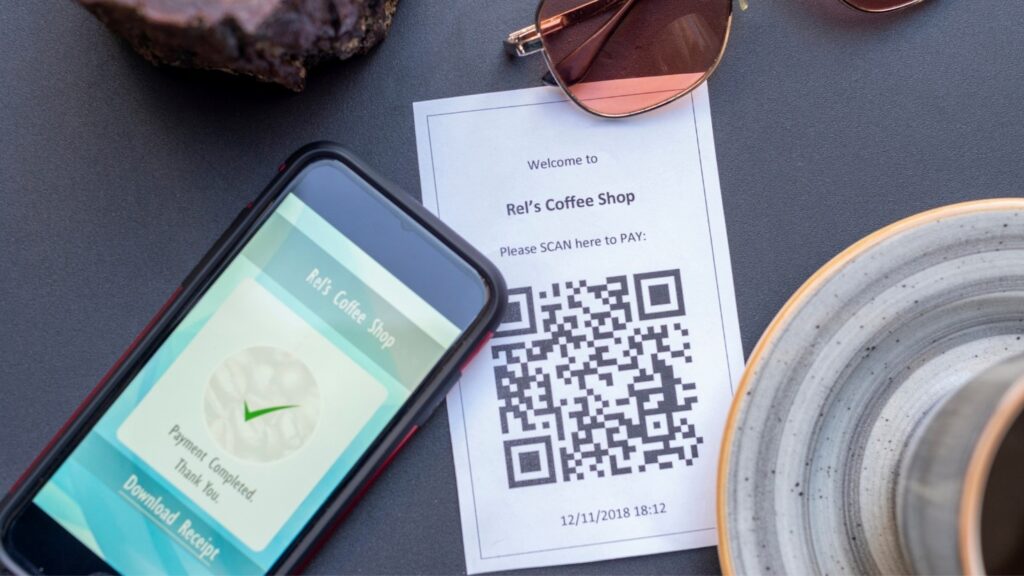
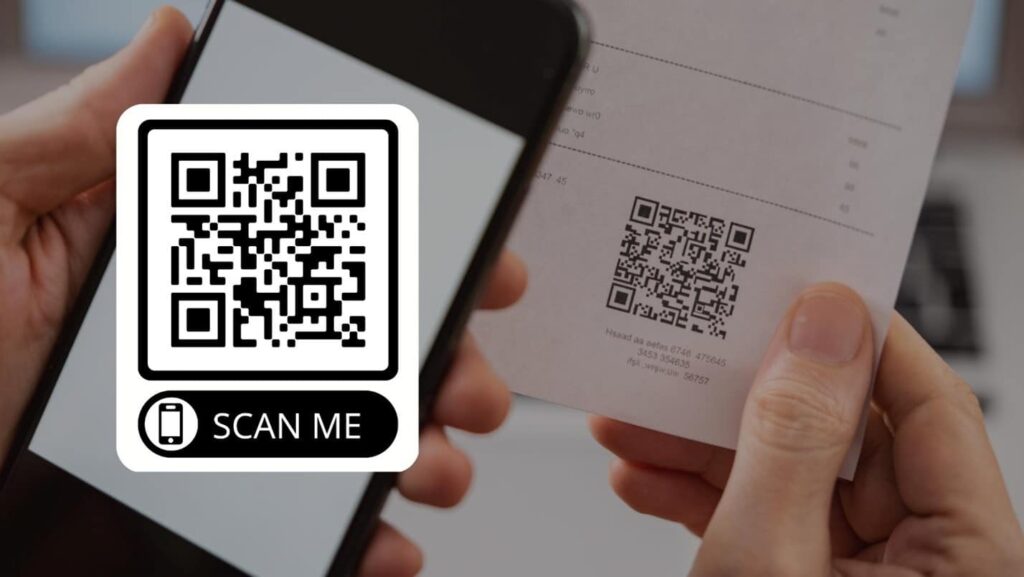
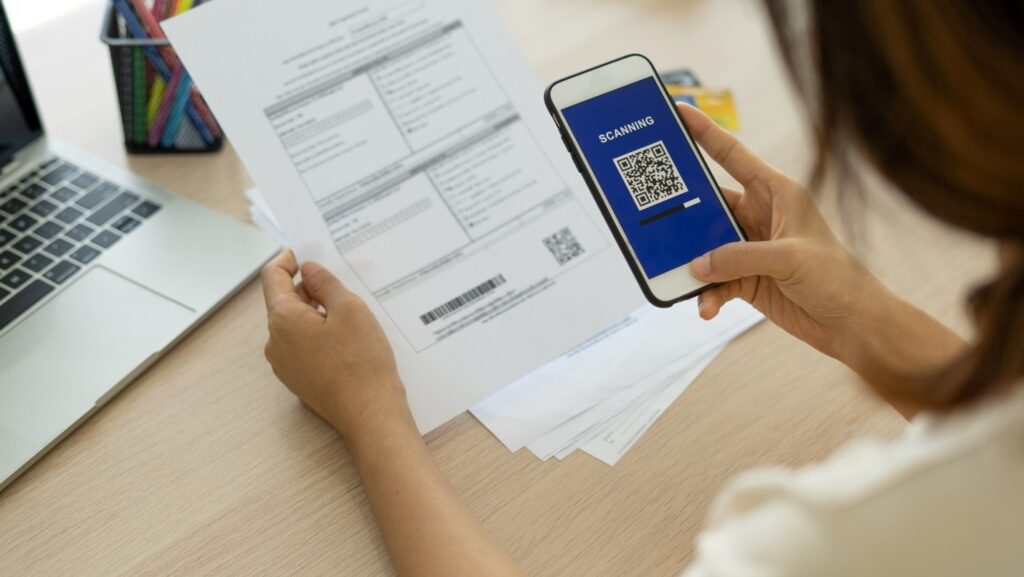
Another way of combining print and digital is to use a mailer to guide the customer to the digital element of their campaign. The easiest way to achieve this is by using QR codes that the user can scan with their smartphone, taking them from printed media to a digital destination such as a YouTube video or product page.

Using Print & Digital Together

“Using QR codes and integrating marketing efforts across media does two important things: it unifies the brand and allows the campaign to reach different audiences,” Eby explains.

Print is Cool!

Using print media for offline marketing opens infinite possibilities in terms of campaign messaging and the physical medium on which it is delivered. For example, print marketing can involve booklets, kits, oversized postcards, uniquely folded mailers, die-cut packaging, custom catalogs, and much more. Curious how you can start incorporating print into your marketing campaigns? Check out the examples below for inspiration.

High-Value Offline Marketing

HR and payroll software company Paycor recently embarked on a highly ambitious offline marketing campaign, sending different forms of print media, including a customized postcard and a branded gift within die-cut card packaging.

After successfully delivering 95% of the packages, Paycor achieved 209% of its goal for sales opportunities generated.

High-Value Offline Marketing

Using QR Codes to Attract Younger Audiences

A great way to entice a customer is to provide a promotional code that gives them a discount on their next purchase. However, the experience becomes even more seamless when the discount is activated by a QR code on the printed media.

45% of United States shoppers report using marketing-related QR codes. Of these shoppers, QR codes were most popular among customers aged 18-29, making this an essential offline marketing tool for organizations advertising to a younger audience.

Mailers for a Digital-Averse Audience

Eleanor Health, a mental health and addiction organization with more than 40 clinics in seven states, has used Printing for Less mailing services to coordinate its online and offline outreach, automatically sending and tracking personalized mail.

The organization used this technology to launch a multi-part introduction mailer that discussed how its services are eligible for insurance coverage. Follow-up mailers included an informational brochure and a letter from a health advocate encouraging the recipient to get in touch. This strategy made it easier to target a digital-adverse audience and led to 3x as many leads.

Offline Marketing to Express Values

When it comes to campaign messaging, there are even more options. However, Ambre Zachmann, Ecommerce Marketing Specialist at Printing for Less, has noticed a trend for campaigns that focus on issues like sustainability, one-on-one support, and local donations. “Personally, the most effective campaigns I have seen contain messaging centered around a purposeful cause or meaningful initiative,” Zachmann says.

Offline Marketing to Express Values

Conclusion

In the early days of online marketing, digital threatened to wipe out offline marketing. However, the opposite has happened: digital strategies have helped to refresh offline marketing, making it more powerful than ever and — perhaps most importantly — allowing it to work in conjunction with digital.

Request some free samples to see how print media can create real engagement with your audience.

Mail QR Codes: How Digital Tech Can Transform Traditional Printing

Mail QR Codes

You’ve used it to enter a venue, follow your favorite brand on social media, and pull up the menu at your local restaurant. You know what we’re talking about: the Quick Response Code—better known as the QR code.

Besides these common uses of QR code technology, there are a wealth of uses for the black-and-white graphic in marketing. Its unique ability to connect the physical and digital worlds has proven to be particularly useful for syncing print marketing materials and digital campaigns. Here’s what you need to know about QR codes and how they can enhance your mailers with a digital touch.

How QR Codes Have Evolved

While they may seem ubiquitous nowadays, QR codes have only become a part of everyday life over the past few years. Originally developed in 1994, the first QR codes were used by a Japanese automaker to track parts as they progressed along assembly lines. In the 2000s, as access to camera phones with QR scanning capabilities gradually increased, QR codes shifted into the world of marketing, with businesses starting to use them to share coupons or to quickly share a weblink with customers.

But QR codes really—and we mean really—took off in 2020. Across the world, restaurants uploaded digital menus that could be accessed via a QR code for safer, touchless interactions. QR codes were also used for contact tracing and check-ins at various venues. They quickly became part of people’s everyday experience. In 2022, QR code usage grew, with a 433% increase in scans compared to 2021. So while QR codes have existed for over two decades, the time is now ripe to fully make use of them for marketing purposes.

Why Use QR Codes in Marketing

QR codes have a unique ability to redirect consumers from the printed page to a website or social media account in a single click. They create a seamless link from physical marketing campaigns to online content, which is an invaluable thing for marketers.

“QR codes are easy and straightforward for the consumer,” explains Kristi Eby, National Account Executive at Printing for Less. “While it is likely that someone would mistype a link or website URL, a QR code leaves no room for that human error. They are a great way to link online and print marketing together.”

Ambre Zachmann, Printing for Less’ eCommerce Marketing Specialist, also recognizes the enormous potential QR codes have for marketing purposes. “QR codes have really evolved to help enhance the omnichannel experience. Using a QR code in your offline efforts to bring customers or prospects into a digital environment creates an engaging, unique experience. It helps them to see all sides of your business.”

Why Use QR Codes in Marketing

Ways to Integrate QR Codes into Mail Campaigns

There are various ways QR codes can be used to bridge (and even enhance) print and digital marketing strategies. The square codes can be printed onto virtually all print marketing materials, including postcards, brochures, posters, business cards, you name it. They can also be used for different purposes.

Ways to Integrate QR Codes into Mail Campaigns

For instance, a QR code printed on your business card could link to a PDF of your resume; a QR code printed on a mailer could link to a special discount for consumers. The possibilities are endless. Here are some of our favorite QR code ideas to inspire your upcoming campaign.

Expand the page

We know how effective direct mail campaigns are: compared to email, physical mailers have a much higher open rate (up to 90%!). But there are limitations to what you can share in a postcard or brochure. Literally. The page can only hold so much information.

Instead of crowding your prints, use QR codes to invite consumers to learn more about your products or services. It’s an easy way to give them the information they need about your business without compromising print designs.

Referral bonus incentive

Businesses that send thank you cards to new customers can make things more interesting by including a QR code that links to a referral bonus incentive. This approach was recently used by a Printing for Less customer, who said the strategy was a success. “When the recipient scanned the QR code, they were invited to share their information and that of a friend or family member to receive a $75 credit,” says Kristi. “This campaign was highly effective, functioning both as appreciation for current customers and to expand the brand’s client base.”

Dynamic campaign tracking

In addition to providing value to recipients (via product information, discounts, and more), QR codes are very helpful to marketers, generating insights about the person scanning the code with their smartphone.

Dynamic Campaign Tracking

These insights, including where a scan came from, what type of device, and when it occurred, can help you track the success of your marketing campaigns. At Printing for Less, we now offer dynamic QR code tracking, which lets you print a unique QR code on each mailer to track in detail how your campaign is faring with different audiences.

Drop a pin

If you are trying to encourage foot traffic at a brick-and-mortar location, local mailers are a great way to let people know about your business. Add a QR code to your postcard or brochure that links to your business’s location on Google Maps. This will help local residents or businesses know exactly where to find you without the inconvenience of opening an app and typing in your business name or address. As a bonus, this QR code function also acts as a shortcut to accessing reviews, contact details, and opening times.

Exclusive offers

Coupons are a great way to both attract new customers and build lasting relationships with existing clients. With mail coupons, you can have the recipient redeem the coupon in person or type in a discount code for online purchases.

However, both of these options require the consumer to undertake a number of additional steps. Printing a coupon QR code simplifies the process for everyone: taking the consumer directly to your website and automatically applying the discount. QR code coupons can be generated for one-time use and have the added bonus of providing scan data to your marketing team.

Bridge Mail and Digital Campaigns

The fact of the matter is: print and digital marketing are both here to stay. As the fastest, simplest way to link the two, QR codes are only going to become more popular. Printing for Less can help you integrate your printed materials with your digital presence for a seamless customer experience. Get in touch today for guidance on how to make the most of QR codes in postcards, brochures, business cards, and more.

How to Use Direct Mail Marketing at Every Stage of the Customer Lifecycle

What is Direct Mail?

In a world where online marketing is becoming ubiquitous and, for many consumers, overwhelming, marketers can stand out from the crowd using direct mail.

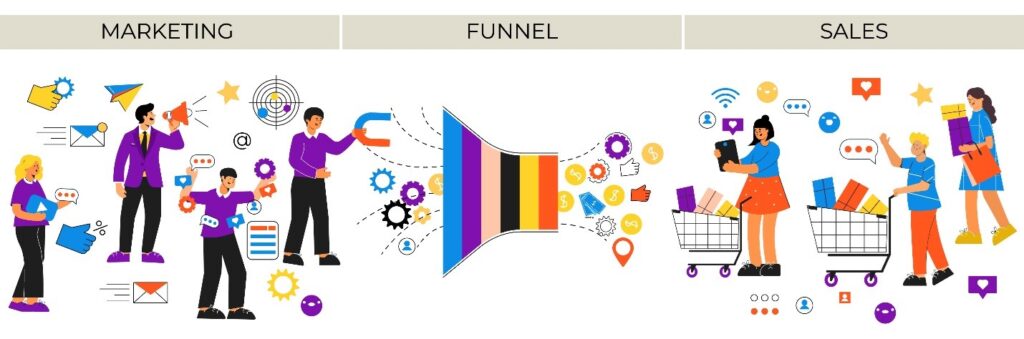
But what is direct mail? And is it applicable to all stages of the marketing funnel?

Direct Marketing Journey

Direct mail is a “physical printed piece that is sent via USPS directly to recipients’ mailboxes,” says Kristi Eby, a National Account Executive at Printing for Less. It can take the form of written letters, catalogs and brochures, coupon books, surveys, and more. The advantage of a physical form of marketing like this is that it enables brands to connect with their existing and prospective customer base in ways that go beyond just written communication.

With open rates from 57.5%-85% and an average return of $4.09 for every $1.27 spent, it’s no wonder that direct mail marketing remains a powerful tool for businesses. As we’ll see, direct mail marketing can drive results at every stage of the customer lifecycle.

Stage One: Awareness

The first step in any marketing campaign is to identify the target customer. This can be done using approaches such as look-alike analysis, which builds a picture of the target customer based on the characteristics of the existing customer base. Alternatively, a large group of people can be targeted, perhaps in a particular geography, quickly and easily by purchasing a mailing list or by mailing to an entire zip code.

Once this target audience has been identified, direct mail can quickly establish brand awareness with a wide base.

“At the beginning of the customer lifecycle, companies will use direct mail to raise awareness of the brand and inform them of their business,” says Kristi. “These are usually sent to larger quantities to spread that awareness as far as possible.”

Direct Marketing

It pays to think carefully about the messaging of this initial outreach. This is the first impression that prospective customers will have of a new brand, so it better be a good one!

Stage Two: Consideration

As all marketers know, the first contact often gets the worst results. Awareness mail is about ensuring that your logo and offering will look a little more familiar and hold attention a little bit longer the next time it appears in your prospects’ mailbox.

When that happens, it’s time to get prospects to consider the offering in more detail. There are lots of ways that direct mail can help achieve this. Content that demonstrates the value of a product via case studies or testimonies can build the audience’s understanding of the value proposition. Similarly, sending a catalog makes prospects aware of what they could purchase.

Direct mailing doesn’t have to ignore more technological approaches. Including a unique URL or a QR code in a second round of direct mail can enable tracking of which, and how many, prospects respond at this stage of the campaign. As well as monitoring of middle-of-the-funnel metrics, this can provide information on the most engaged prospects for retargeting in future campaigns.

Ambre Zachmann, Ecommerce Marketing Specialist at Printing for Less, recommends exploiting the physical characteristics of direct mail to make messaging stand out during the mid-funnel stages of a campaign. For example, a “uniquely folded mailer [will] allow yourself more real estate to sell your company while providing a fun, engaging experience.” Similarly, oversized postcards, envelope mailers, or anything of an abnormal size will stand out in the mail and encourage more viewing time.

Direct Marketing Example

Being more informative than competitors’ efforts will make your direct mail stand out. “Significantly change the paradigm of the ‘company newsletter,’” urges Wes Kirk, Printing for Less Mailing Expert. “Make it have value, purpose, and meaning.”

The consideration stage is your opportunity to convince prospects of your product’s value compared to that of competitors. Take full advantage; be as informative and educational as possible, and communicate how your offering addresses its specific pain point.

Stage Three: Conversion

The next stage of the marketing funnel is all about pushing interested prospects over the line and converting them into paying customers.

One obvious way that direct mail can help here is via coupons or limited-time offers. Like a unique URL or QR code, sending coupons enables measurement of a campaign’s effectiveness by quantifying uptake.

Coupons also help convince prospects that now is a good time to try out your product. Limited-time offers (which can be combined with coupons) also create a sense of urgency and a fear of missing out on a bargain.

A slick, catchy call to action is crucial when attempting to convert prospects. Give careful consideration to this when crafting conversion-focused direct mail campaigns.

Stage Four: Loyalty

While direct mail can lead new prospects to your shopfront, it’s unlikely to be worth the investment just for a round of one-off purchases. To truly unlock its value, direct mail can be used to turn first-time buyers into loyal, repeat customers.

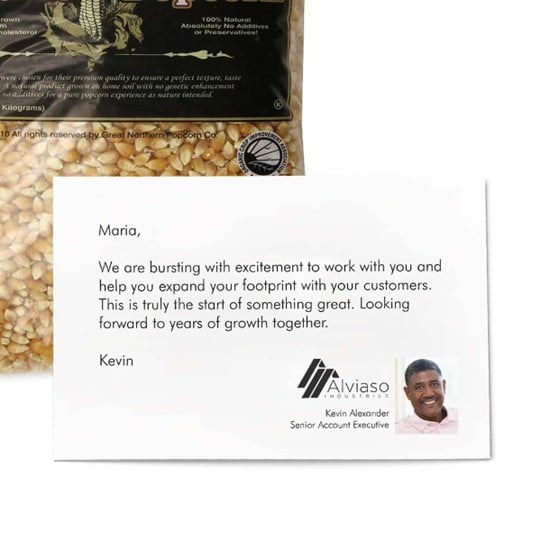
There are various ways in which this can be achieved. Integrating a physical thank-you note or a feedback form into the CRM process means that a first-time buyer will receive a message from you shortly after their first purchase. If written well, this has the potential to delight the customer, make them more likely to return the next time they are buying, and (in the case of feedback forms) provide vital information on what has worked well and what can be improved about the customer journey so far.

Direct Marketing Examples

As during the conversion stage, sending out coupons can encourage audiences to make a repeat purchase. Establishing this pattern early offers the best shot of forming a habit where new customers select your brand to address their needs.

Depending on how much information you’ve collected about prospects during the preceding phases, you may also be able to add a personal touch with a birthday card during their birthday month. Approaches like this are the cornerstone of true brand loyalty and create a close, authentic relationship between you and your customers.

Stage Five: Advocacy

Achieving this level of brand loyalty with customers lays the groundwork for them to start doing your next round of marketing for you. Which can be fostered, and rewarded, through direct mail.

For example, later rounds of direct mail campaigns can offer incentives for your customers to refer their friends, family, and colleagues. Referrals can be rewarded with gifts or coupons, again sent through the mail. When contacts at B2B clients change companies, consider congratulating them with a welcome gift to their new office; this is a really natural way to lead into a prospecting call with their new employer.

Your most dedicated brand advocates can even be rewarded with free samples of new lines, or advanced notice to order them. With customers like these, it really pays to get creative and think of all the ways possible that delightful customer experiences can arrive unexpectedly in their mailbox.

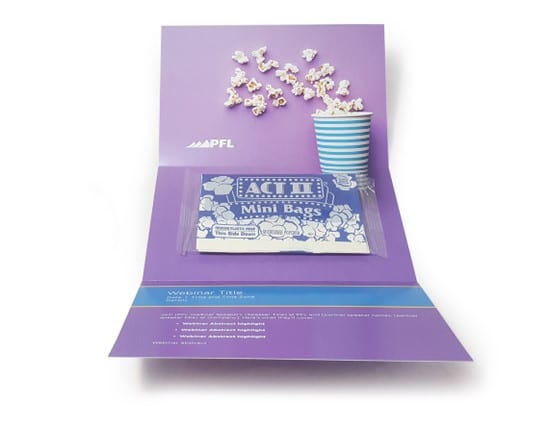
Direct Marketing Popcorn Mailer

The key is to ensure that you always remain in your most dedicated customers’ thoughts. “Stay top of mind with valuable information your customers would benefit from,” says Ambre.

At any stage of the customer lifecycle, direct mail marketing has the potential to enhance marketing efforts. It can increase open rates and conversions, and greatly improve customer loyalty.

During an era in which the vast majority of marketing emails are deleted without being opened, consider the impact that a well-designed, creative direct mail campaign could have on your marketing efforts.

  • « Go to Previous Page
  • Page 1
  • Interim pages omitted …
  • Page 14
  • Page 15
  • Page 16
  • Page 17
  • Page 18
  • Interim pages omitted …
  • Page 48
  • Go to Next Page »

Footer

Printing for Less

info@printingforless.com
100 P F L Way, Livingston, MT 59047

800-930-2423

  • Home
  • Products
  • Services
  • Industries
  • Get Printing Samples
  • Direct Mail Marketing Resource Center
  • Printing Resource Center
  • Blogs
  • Templates
  • Terms & Conditions
  • Contact
  • About Printing for Less
  • Careers
  • Login

Copyright © 1998-2026 PrintingforLess.com. All Rights Reserved.

logo
  • 800-930-2423
  • Products
  • Direct Mail Marketing
  • Services
  • Industries
  • Direct Mail Marketing Resources
  • Printing & Mailing Resources
  • Get a Quote
  • Contact Us
  • My Login
Direct Mail Delivery
This field is for validation purposes and should be left unchanged.

Get 20% Off*

Your First Print Order

Name(Required)

*By subscribing, you agree to receive weekly emails from Printing for Less. Some exclusions apply. See details.