• Skip to primary navigation
  • Skip to main content
  • Skip to footer
Printing for Less

Printing for Less

At Printing for Less, we've offered high quality online printing services since 1996. Shop business cards, booklets, stickers, and more!

My LoginMy Login
800-930-2423
  • Printing
    • Postcards
    • Business Cards
    • Catalogs
    • Brochures
    • Folders
    • Letters
    • Newsletters
    • Envelopes
    • Greeting Cards
    • Print Templates
    • All Products
  • Direct Mail
    • Why Direct Mail Marketing?
    • Every Door Direct Mail® Postcards
    • Direct Mail Letters
    • Catalogs & Booklets
    • Marketing Gifts & Kits
    • Direct Mail Automation
  • Services
    • Mailing Services
    • Pro Services
    • Design Services
    • Custom Printing Services
    • Reseller Program
  • Industries
    • Advertising & Design
    • Food & Beverage
    • Healthcare Payers
    • Healthcare Providers
    • Nonprofit
    • Real Estate
    • Retail
    • Technology
    • University
  • Resources
    • Direct Mail Marketing
      Resource Center
    • Printing Resource Center
    • Blogs
    • Templates
    • Video Library
    • Have a Question?
  • Get Samples
  • Get a Quote

Printing Methods & Materials

How to Choose the Best Paper for Your Printing Project

How to Choose the Best Paper for Your Printing Project

Paper choice is maybe the single most important decision you’ll make when it comes to creating a great printed piece. It can have as much impact on the final product as ink and the design. It affects how, when, and where the printed piece can be used. It can also have a significant effect on price at higher quantities.


Essential Paper Knowledge for Ordering Print

The primary features that you need to know about when ordering standard printing papers are weight, finish and shininess.

In most cases, weight corresponds to thickness and stiffness. The higher the weight the thicker and stiffer the paper. Text stocks are regular paper and cover stocks are like thin cardboard. More details below.

Papers are either coated or uncoated. Uncoated paper is non-reflective like printer paper. Coated papers have dull/matte or gloss finishes. Dull/matte stocks are smoother and more refined than uncoated, but not shiny like gloss papers. The coated papers produce sharper and more vibrant printing. Learn more about these key paper attributes below.

If your print job is pretty standard and has no special effects or options, our standard house paper stocks will more than meet your needs. We use high quality papers and simply don’t carry low quality paper stocks so you don’t have to worry about getting burned with cheap paper.

However, if you want to stand out, just use something different, have special requirements or will be mailing your piece, please read on and learn the fundamentals of choosing the right paper stock, and let us work with you find the best paper for your project.

Usage: Picking the Right Paper

Don’t just think about how you want the piece to look, also think about what you’re going to use the final piece for, who’s going to be handling it, if it will be mailed (because the weight of the paper can affect your postage costs), and if the paper will be exposed to water, chemicals or extreme temperatures.

Choosing the Right Paper Material

Paper isn’t just made from wood. There are papers made from cloth, synthetic fibers and even plastics. These papers serve specialized purposes.

If you’re worried about your impact on the environment, there are speciality green papers that are made from more environmentally friendly materials, are sourced from sustainable forests, and biodegrade faster. Though most of our standard papers are sustainably sourced, other options are available.

Picking the Right Paper for the Job

Most of the print jobs we see are part of a marketing campaign, no matter if that’s a business card, a giant poster, a brochure or a postcard mailing campaign. Here are some things to consider when you’re choosing the paper you’ll need:

Are you going to use a detailed die-cut? If you’re going with a detailed cut, usually a thicker paper will show finer details better. Thinner papers tend to lose the details or have frayed edges where they’re cut. A premium paper would be benficial too.
Is the piece going to be mailed? If you’re going to mail the piece, keep the weight down because you’ll pay more per each piece if certain weight limits are exceeded.
Where will you store it until you use it? If you think the paper might be exposed to extreme temperatures, rain or dampness then you should use a paper that is resistant to these things.
Will you want to write on the paper? Nothing beats uncoated paper when it comes to writing, so in most cases, don’t use a coated, glossy, or heavily textured paper.
Will the paper be out in the elements? If the paper might get wet, pick a type with built-in water resistance or apply a supplemental coating.
Do you need the paper perforated? Thin, stiff paper works best for perforation.

Picking an Affordable Paper

Paper can have an impact on the price of any printed piece. A more expensive paper can add quite a bit to the total cost of a printing project, especially if you are printing large quantities. Ultimately you will need to choose a paper that works for your budget.

Our advice: pick a paper for function first – it won’t matter that your piece looks great if it doesn’t perform, hold up, or hits you with hidden mailing or shipping costs because it’s too heavy.

The standard papers available on our ordering pages are high quality and good value papers that print well for the majority of projects.

You can also dig deeper into this topic and see how paper choice affects specific printed products.

Paper Stock: Coated vs Uncoated

Paper stock is either coated or uncoated. There are a variety of coating finishes, and specialized uncoated papers, but all paper falls into one of these two categories.
Uncoated Paper

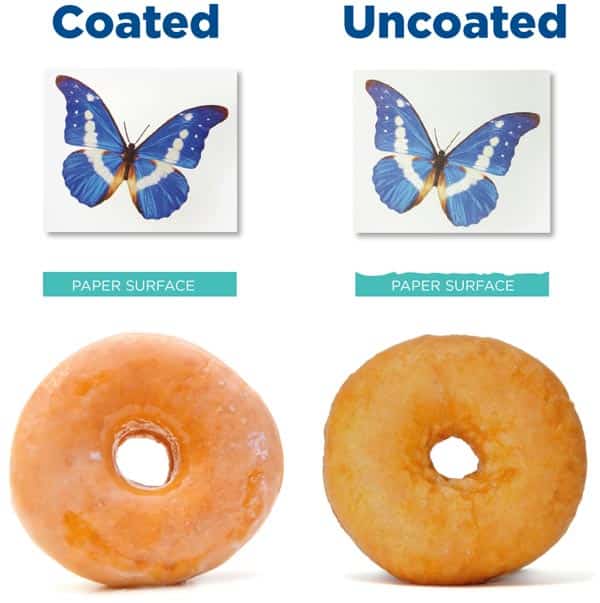
Uncoated paper has a non-glare surface and is absorbent. It has nothing covering the natural fibers and easily soaks up ink. Uncoated paper can be textured, for example, a linen finish, but it can also be very smooth, like printer or copy paper. Uncoated paper is the easiest to write on. Uncoated paper is generally used for things like:

  • stationery and standard envelopes
  • inexpensive flyers
  • newsletters
  • a final product you can write on

Coated Paper

Coated paper has been covered with a hardened clay material so that it will better display text and images with sharper detail and denser color. The coating can be a non-shiny matte, dull, gloss and cast coated (a mirror-finish high gloss), spanning the range from non to super glossy. Paper can be coated on one or both sides. Paper coated on one side is often used for low-cost postcards. Coated paper is more difficult to write on, especially with pencils or ballpoint pens. Coated paper is great for:

  • brochures
  • catalogs
  • postcards
  • packaging
  • a product that you won’t be writing on

Specialty Paper Coatings

There are also specialty coatings that can be added after a piece is printed. These can help protect the entire piece or can be used to create eye-catching effects. Click on the links to learn more details about these options.

  • UV coating and Soft-Touch coating can dramatically change the look and tactile feel of a printed piece.
  • Varnish can be used to protect a piece or be used to highlight specific details.

Paper Thickness & Weight

You have to think about the thickness and weight of paper at the same time. Both measure how thick, sturdy and rugged the paper is. A higher weight, thicker paper will stand up to a beating better than a lower weight or thinner paper.

Cover and Text Stock

When you’re talking about weight and thickness of paper, you can understand the difference with the terms cover and text stock. Cover stock is thicker paper that is often used as covers for books. We aren’t talking hardcover books – but more like paperback or softcover books, greeting cards, and the like. Text stock is the paper you’re used to seeing in desktop printers. Thinner, looser and more flexible, it is used as the paper inside a book.

Cover stock and text stock really have nothing to do with books although they use those terms. Cover stock is great for postcards, bookmarks, hang-tags, and anything that needs stiff, heavy paper. Text stock can be made into brochures, flyers, mailers and notepads.

What is Paper Thickness?

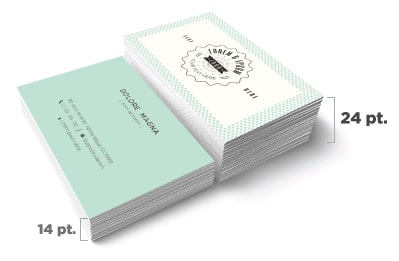
Paper thickness is usually mentioned when talking about cover stock, and it’s simply a measurement of how many hundredths of an inch thick a single sheet of the paper is. The thickness of a paper is expressed by points, where a point is equal to one thousandth or .001 inches. Paper that is 10pt is 0.01 inches thick, 20pt is 0.02 inches thick, etc.

Business cards are great examples of different paper thicknesses. Most business cards are printed on 12 or 14pt cover stock, while extra thick cards are printed on 18pt or 24pt (or thicker) stock.

Other products usually printed on thick papers include hang tags, door hangers, bookmarks, packaging, and table tents.
What is Paper Weight?

Paper weight is harder to define. Depending on what country you’re in, the weight of paper can be specified differently. The measurement comes from how much a ream of paper of a particular size weighs.

Paper is weighed in stacks of 500 sheets, and the resulting weight in pounds is the weight designation for that paper. If 500 sheets of text weight paper weighs 60 pounds, the paper is called “60# text.” If the sheets are cover stock that weighs 120 pounds, the paper is called “120# cover.”

In most cases, the greater the weight the thicker the paper. Could you have a thin paper that is also higher weight? Sure, it would be very dense. But the inverse, a thick paper that isn’t a higher weight, is uncommon. Here are some examples:

  • 60# text: copy or printer paper, like the paper used for legal documents
  • 80# text: heavier paper used for flyers, posters, or brochures
  • 120# cover: basically thin cardboard, great for postcards, business cards, and note cards

Choosing the Right Thickness & Weight

Paper weight and thickness have a huge impact on your final piece and it can be confusing. You should talk to a printing professional before you choose a critical stock, but here are some things to keep in mind when you’re picking paper thickness and weight.

  • Thicker paper produces better results for die-cutting, embossing and foil stamping.
  • Paper that’s being mailed as a self-mailer may have to be a certain thickness to pass US postal regulations (the final thickness has to be at least 7 or 9 point, depending on the size).
  • You pay to mail paper by weight so keep paper that will be mailed the right weight for the size of the mailing piece.
  • Thinner paper is usually cheaper and uses less material, making it more environmentally friendly.
  • If you’re printing a catalog or magazine-style piece, make sure the cover and interior paper stocks are the right thickness for your project, as there can be binding issues with some combinations and configurations.
  • Thicker paper is more rugged and can typically hold up to a beating better than thinner paper.
  • SmartFlex is a plastic paper that looks, feels, and acts just like paper but is water resistant and tear resistant.

Paper Brightness & Opacity

The quality and specifications of your paper can have a dramatic effect on the perception of the images and text printed on the paper.

Paper Brightness

Paper brightness is measured using a special blue light on a scale of 1 to 100, with 100 being the brightest. The brightness of the paper affects contrast and impacts how readable print appears – the brighter the paper the more readable it will be. Brighter papers also display ink colors more accurately, vibrantly and purely, as the less bright papers are yellower, muddying the colors somewhat. This makes brighter papers better suited for the best quality printing used in high-end advertising or fine art reproduction.

Paper that is brighter makes colors pop and just looks better. A darker paper could be used to make a certain type of image have a darker, more muted tone but in general, brighter paper works best for colorful designs.

Opacity

Opacity is a measure of transparency or how much print shows through from one side of the paper to the other. Paper that shows nothing from the other side is 100% opaque (greeting cards, postcards). Paper that shows everything is 0% opaque (tracing paper). Opacity is particularly important if you are printing on both sides of the paper, as it can be unsightly, distracting and hard to read if content from the other side is visible.


UV Coating

UV coating uses ultraviolet light to quickly dry the coating, hardening it to a brilliant shine. UV coating blows all other coatings away when it comes to gloss, but is so hard it may crack when folded. UV coating is not a good idea for a piece that will be folded, scored, foil stamped or embossed.

It can be applied in small areas, termed spot UV, creating brilliant highlights on your piece. The high gloss has the effect of making colors appear even more vibrant and kinetic. If you want very high-gloss pieces with colors that explode off the page, UV coating is for you. Learn even more.

Soft-Touch Coating

This specialty coating changes the tactile feel of a piece. It creates a velvety coating that offers some protection while creating a soft feel to the paper. It is great on business cards or other pieces that will be held. In addition to making the paper feel soft, it also softens colors, creating a warm look to printed images. If you’re interested in this, order a sample from us because you have to feel soft-touch coating to really understand what it can do. Learn even more.

Varnish

Varnish is a clear ink that can be applied over the whole printed piece or in selected areas to add an artistic effect. When it is applied in a small area, it is called spot varnish. The varnish creates a glossy, satin or matte area on the printed piece, useful for highlighting a logo, part of an image, or a call to action.

Premium Papers

When you hear the term premium paper know that it really just refers to paper stocks that have the best attributes of thickness, texture, opacity, brightness and coating. Premium papers offer nicer textures, better coatings, higher brightness and greater attention to detail. They make just about everything look better – from color reproduction to properly setting embossing stamps and taking metallic foil or metallic inks. We offer a wide variety of premium papers that are on par with really expensive designer papers. Premium papers cost more, so they may not be right for every project.
There’s a ton of info on premium paper stocks here.


Paper FAQs

How does Matte compare to Uncoated stock?

A matte coating is still a coating on your paper. It may look matte, but it will resist smudges; and printing, especially images, will look sharper and more vibrant. Matte coated paper is usually ok to write on, but lacks the tactile feel of uncoated paper. Uncoated stock is naked paper – it’s perfect for writing.

Why should I use a flood color instead of printing on colored paper?

Printing on colored stocks changes the color of your images in ways that can be unpredictable and can change their look, usually by muddying or darkening them. Flooding a color creates a perfectly applied, predictable background for your design in the exact shade that you want. Your piece looks better because you are able to print full color images on the white paper, and simulate the colored paper by flooding the rest of the page. Plus, there are only a very few shades of coated stock available, so flood coloring is your only option in most cases.

What’s the difference between recycled vs sustainable paper stock?

Recycled paper is made from post-consumer waste and goes through a process to be turned back into paper or from pre-consumer waste like sawdust from lumber and furniture manufacturing. Either way it must be purified before it can be made into paper. Sustainable paper comes from carefully controlled forests that are replanted and renewed. Honestly, recycled paper could be considered a bigger burden on the environment because the process uses some pretty harsh chemicals. Before sustainable paper was your business card, it was cleaning the air.

What kinds of recycled paper do we have?

All of our house coated and uncoated papers have at least 10% recycled content. Most of that is pre-consumer content. We can order custom stocks with varying amounts of post-consumer recycled content up to and including 100% post-consumer recycled. Learn more about printing on recycled paper.

Why are custom stocks more expensive than house stocks?

We keep a lot of house stock… well, in house. We can offer a better deal on that stock because we buy huge amounts of it at a better price. But let’s be clear: we buy lots of really great paper. Our house stock is better than many standard or custom ordered stocks.

I need to know more about weight versus thickness / pound versus point size.

Thickness indicates how thick the paper is and is usually referred to in point sizes or thousandths of an inch. The smaller the point, the thinner the paper. Some synthetic papers like our SmartFlex material, are sold in a ‘mil’ designation, also equal to one thousandth – these are all interchanged measurements.

Weight is how much the paper weighs, usually measured in pounds. In some cases, paper can be thin and heavy, or thick and light – but usually thicker paper weighs more.

What is the lightest stock you carry?

60# uncoated text is the lightest and thinnest we carry in an uncoated sheet, and 80# gloss text is the lightest coated sheet. Both are approximately 3.5 points thick.

What’s a good paper stock to write on?

Any uncoated stock is best for writing. It’s naked paper, and it lets you write with ink or pencil without a problem. It also soaks up water and other liquids so it’s not a great choice if you’re printing underwater post-it notes. If you have to have a coated stock for better print quality, matte stocks can sometimes be used with certain types of pens. You’ll want to do testing to make sure you use a combination that works for you.

What kinds of paper are the most durable?

Generally speaking, the thicker the paper the more durable it is, but this can change quickly depending on how it is coated. Thick, heavy uncoated paper will turn into sludge if you drop it in water. Thin paper covered in a UV coating will brush the water right off. If you want the most durable paper of all, use the plastic-based SmartFlex. It feels like paper, acts like paper, and prints like paper but it is water resistant and tear-proof.
This field is for validation purposes and should be left unchanged.

Get 20% Off

Subscribe to our weekly newsletter and get an instant 20% off your first print project.

Name(Required)
RELATED MARKETING & DESIGN TIPS

Folding Options for Menus

Menu folding options explained. The paper stock and weight you use on your printed menus has an impact on the folding options you have available

Read More >


Printing Product Descriptions

Printing for Less offers a variety of print marketing materials. Learn more about what products we offer and see helpful product descriptions.

Read More >


Scented Printing

Scented printing offers a whole new dynamic to the customer experience! Great for sampling fragrances or creating a lasting impression. Smell our options!

Read More >


Printing Paper Type Descriptions

Printing Paper Type Descriptions

Paper 101 Make your print projects eco-friendly and sustainable with Printing for Less’s wide range of recycled and sustainably sourced papers.


Learn more about How to Choose the Best Paper Stock for Your Project. 


Standard House Paper Stocks

24# Uncoated Text and 28# Uncoated Text

  • The 28# is thicker and heavier than the 24#.
  • Standard uses: this stock is commonly used for envelopes, also called White Wove.

70# Uncoated Text

(is slightly thicker than copy paper)

  • This ultra-premium uncoated (non-glossy) white stock is guaranteed safe for laser printing.
  • Feels thick and substantial in your hands, and is the best type of uncoated paper stock available for full-color printing.
  • Standard uses: we exclusively offer 70# Lustre for stationery, envelopes, and newsletters.

80# Coated Text

(is the thickness of a quality magazine page) 80# Gloss Text

  • Standard glossy paper provides an excellent opaque base for rich process color printing.
  • Standard uses: brochure printing, catalog inserts, flyers, posters, etc.

80# Dull/matte Text

  • This stock is finely coated with a satin finish.
  • It provides an excellent opaque base for easy to read, crisp typography.
  • Standard uses: brochures, newsletters, catalog inserts, and flyers, etc.

100# Coated Text

(is 25% thicker than 80# gloss text) 100# Gloss Text

  • Similar to the 80# gloss text, but 25% thicker and heavier, for a more substantial feeling piece.
  • Standard uses: brochures, information sheets, self-mailers, posters, and door hangers.

100# Dull/matte Text

  • Thicker and heavier than our 80# dull/matte text for a more substantial feeling piece.
  • Provides a non-glossy, opaque base for detailed, crisp printing.
  • Standard uses: brochures, information sheets, self-mailers, posters, and door hangers.

80# Coated Cover

(is the thickness of a postcard or baseball card) 80# Gloss Cover

  • This stock is coated with a glossy finish, making photographs and other images look beautiful.
  • Standard uses: durable, heavy-weight brochures, catalog covers, and packaging.

80# Dull/matte Cover

  • Our dull/matte cover is a thick 9pt cover stock with a smooth, non-shiny coating.
  • It is well suited for detailed, crisp printing without sacrificing the ability to easily write on it.
  • Standard uses: typically used with our 80# dull/matte text option for catalog or booklet pages.

100# Uncoated Cover

(is the thickness of a standard business card)

  • This bright white, uncoated smooth #1 grade cover stock is 14pt in thickness.

  • You can easily write on this stock.

  • This heavier option is a great companion to our 70# uncoated text for texture consistency across your marketing materials.

  • Standard uses: great option for appointment or reminder cards and business cards.

120# Coated Cover

(is the thickness of a standard business card) 120# Gloss Cover

  • This is one of our most popular papers.

  • It is a heavy 14pt stock with a glossy, coated finish.

  • It makes photographs and other images look beautiful. UV coating, often called liquid lamination, is a great addition for added pop and shine.

  • Not recommended for cards that you would like to write on.

  • Standard uses: business cards, brochures, hang tags, and presentation folders.

120# Dull/matte Cover

  • Our dull/matte cover is a substantial paper with a smooth, non-shiny coating.

  • It is a heavy 14pt stock well suited for detailed, crisp printing without sacrificing the ability to easily write on the paper.

  • You can also add UV coating on the front of a dull/matte card to add pop to the side that isn’t needed for writing.

  • Standard uses: excellent choice for business cards, postcards, and greeting cards.

160# Coated Cover

(about 30% thicker than standard business cards)

  • At 18pt, this is our thickest and sturdiest paper stock.

  • It has a glossy, or dull/matte smooth finish that produces vibrant colors and professional image quality.

  • It works really well for die cuts and foil stamping.

  • Standard uses: business cards, postcards, hang tags and rack cards.

Premium and Specialty Papers

SmartFlex® Synthetic Paper

  • Our standard plastic substrate stock is flexible and water, heat and tear resistant.

  • Available in 6pt, 8pt, 15pt and 20pt thicknesses.

  • Tree and Pulp Free and 100% Recyclable.

  • Standard uses: maps, menus, door hangers, posters or any product that can benefit from the increased durability of plastic.

Premium Papers

  • Many Recycled Paper varieties from partial to 100% Post Consumer Waste.

  • Textured finishes such as laid, linen, ribbed and felt are available with and without watermarks.

  • Many colored stocks from light to dark colors for specialty projects.

  • Get your company and printed pieces noticed and stand out from the crowd with a premium paper stock.

Coatings

UV Coating

  • UV coating, often called liquid lamination, is a highly protective, ultra-shiny gloss coating that we apply on a special machine using ultraviolet light.

  • The solvent-free UV coating provides an extremely hard finish that’s chemical and abrasion resistant.

  • It makes details really pop! On deep colors, it results in a stunning, almost wet appearance.

  • Perfect when you want a durable, environmentally-friendly piece with a richer, high-end look and feel.

  • NOTE: UV Coating cannot be used on the addressed side of mailed pieces, unless the address is printed first and then the coating is applied.  Learn more…

Soft Touch® Coating

  • This coating creates a velvety texture.

  • The paper becomes “soft” to the touch and increases the tactile appeal.

  • It dries fast, is non-yellowing, and is eco-friendly.

  • Luxurious and sophisticated are words often used to describe the finished product. 

Learn about using recycled paper for green printing

This field is for validation purposes and should be left unchanged.

Get 20% Off

Subscribe to our weekly newsletter and get an instant 20% off your first print project.

Name(Required)
RELATED MARKETING & DESIGN TIPS

Recycle and Reuse: Repurposing Your Printed Material for Use on the Web

Repurposing content effectively can maximize your ROI. Explore new avenues by repurposing your print marketing to your digital strategies like a pro.

Read More >


Graphic Design Layout Specifications for Printing

Make sure your printed products fit into their dimensions with this guide on graphic design layout specifications for various printing projects.

Read More >


Printing Options

Learn about using full color commercial printing options to market your business

Read More >


Green Printing Recycled Paper

Sustainable Printing Using Recycled Paper

Printing for Less offers a variety of recycled papers on all of our products. We’re also always happy to accommodate requests for 100% recycled printing paper. However, not all recycled papers are created with the same environmental impact, and an environmentally-conscious company should be selective when choosing the paper for their printing project. While printing on a paper with a high ratio of post-consumer content is a popular option that is beneficial for some projects, saving the environment is not that easy. Chemically de-inking post-consumer paper back into the clean white paper best suited for attractive full-color printing is a toxic process, one with high energy consumption and waste disposal challenges. The scrap paper from our production facility is recycled into newsprint, which requires far less energy, water and chemical treatment than recycling into white paper. 


Let’s explore a few recycling terms:

Post Consumer Fiber

The EPA defines this material as paper, paperboard and fibrous wastes from retail stores, office buildings, and homes. Used corrugated boxes, old newspapers, magazines, junk mail and mixed waste paper all fall under this group. These items have been diverted from the waste stream. The two key words to keep in mind are “end products” and “consumers”. Scraps, cuttings, and loose ends from the paper mills do not qualify here.

Pre Consumer Waste

Also referred to as post-industrial waste, this is the by-product of the production process. Examples are “mill broke”, paper off-cuts, make readies and rejected or surplus printed matter.

De-Inked Material

Waste paper that has had the ink, fillings and coatings removed before being recycled. Examples are magazines and newspapers that were printed but never sold.

Printing Responsibly

Learn more about our sustainable printing solutions.

If you’d like to have your printing project quoted on 100% recycled paper, or have questions about alternative eco-friendly paper options, calling us at 800-924-2041, or request a quote on our Custom Pricing page. We’ll work with you in order to get the best product to meet your eco printing needs and suit your conscience.

This field is for validation purposes and should be left unchanged.

Get 20% Off

Subscribe to our weekly newsletter and get an instant 20% off your first print project.

Name(Required)
RELATED MARKETING & DESIGN TIPS

Spot UV Printing

Get exceptional Spot UV printing for your marketing materials. Numerous Spot UV coating options can enhance your printed piece and really get you noticed.

Read More >


Printing Metallic Ink on Business Cards

Add a little flash to your business card with metallic ink! Printing for Less offers metallic printing for your business card to get you noticed! Learn more.

Read More >


Low-cost graphic design programs

Guide to free and low-cost design programs for designing quality marketing materials for print or website use

Read More >


Printing With Metallic Ink

Custom Printing with Metallic Ink

Make Your Print Shine with Metallic Ink

If you are looking to make a big impression with your next print project, sometimes plain black or colored ink just won’t cut it. When you venture beyond the familiar territory of cyan, magenta, yellow, and black, a wide world of color possibilities opens up for you. Whether you’re striving for vibrancy not attainable in process colors, or looking to add some pizzazz to your printed piece, it may be time to consider incorporating some custom printing finishes to add that little something extra—think spot colors, embossing, foil stamping, spot varnish, and of course, metallic inks.


What is a metallic ink?

Metallic ink has reflective metal particles such as copper, bronze, zinc or aluminum suspended within it. When the ink dries, the metal particles reflect light and create a metallic sheen. Metallic inks add color and shine beyond what regular inks can produce, but are less shiny and reflective than the more complicated and expensive foil stamping. They are available in a variety of both pure metallic colors such as gold, silver, bronze, blue and red, and combination tints.

Metal Madness – A Lustrous Add-on

Metallic inks are special inks that create a shine and luster you won’t see in standard inks. Silver and gold metallics are the most common, but metallic inks also come in bright blues, vibrant purples, hot reds and burnished coppers. Metallic inks are perfect for presenting that high-end image because they add attention-grabbing shine to any printed piece without the higher cost of foil stamping. There are a variety of different ways you can incorporate metallic inks into your organization’s print materials. Consider the following ideas:

  • Highlight headlines or important points on postcards, brochures, and flyers
  • Add some elegance to invitations or stationery with gold or silver metallic ink
  • Add some pizzazz to your company name or logo
  • Create an unforgettable business card with subtle metallic highlights
  • Use several different metallic inks together to create a unique image or design
  • Make special elements or lettering on your presentation folders pop

Get it Right: Things to Consider When Using Metallic Inks

If you are thinking of using metallic ink on your next offset printing project, there are a few things you should consider to ensure you get the best possible results.

  1. Do your homework – Not every printer has experience with metallic inks. Before you award a metallic job to a printer, ask to see samples of various metallic projects the shop has produced in the past.
  2. Be forward – Show your design to the printer early in the process. If either of you are concerned about how the metallic colors will read, it may be worth negotiating a small press proof—the gold standard insurance policy for getting the look you want.
  3. Coated is key – If you are aiming for maximum shine, print on a coated stock—the glossier the better. Coated stocks have more ink holdout, which means that less of the ink is absorbed into the paper fibers. It sits atop the paper instead, where it can work up some serious shine.
  4. Protect your piece – Since they’re composed of metal flakes, metallics are somewhat prone to chalking and flaking.

Metallic inks not only look nice, they will also help take your marketing materials to the next level by defying the status quo. Oftentimes, the spotlight of attention is on the layout and colors of the piece and the use of ink sometimes gets neglected. If you incorporate metallic inks, you create a shiny and glossy effect that will make your full color postcard, business card, catalog or brochure stand out from the pack.

Metallic Ink Printing Samples

(Photos do not adequately capture the effect. Request printed samples to see the effect first hand.)
Catalog Metallic
Catalog Printing
 
Need creative or technical advice on incorporating metallic inks into your next printing project?
Give our helpful experts a call at 800-924-2041.
This field is for validation purposes and should be left unchanged.

Get 20% Off

Subscribe to our weekly newsletter and get an instant 20% off your first print project.

Name(Required)
RELATED MARKETING & DESIGN TIPS

About RGB and CMYK

How to convert RGB to CMYK in Adobe Photoshop, Illustrator, and more graphic design programs for commercial printing. Hint: We convert RBG to CMYK for free!

Read More >


How to Choose the Best Paper Stock for Printing

How to choose paper for printing custom booklets, menus, and more with informative descriptions of paper types, finishes, weight, thickness, and coatings.

Read More >


How to Choose the Best Paper for Your Printing Project

Paper choice is maybe the single most important decision you’ll make for your printing project. Get essential tips to help you choose the best paper.

Read More >


Custom Embossing Services

How to use Embossing in your Printed Materials

What is embossing?

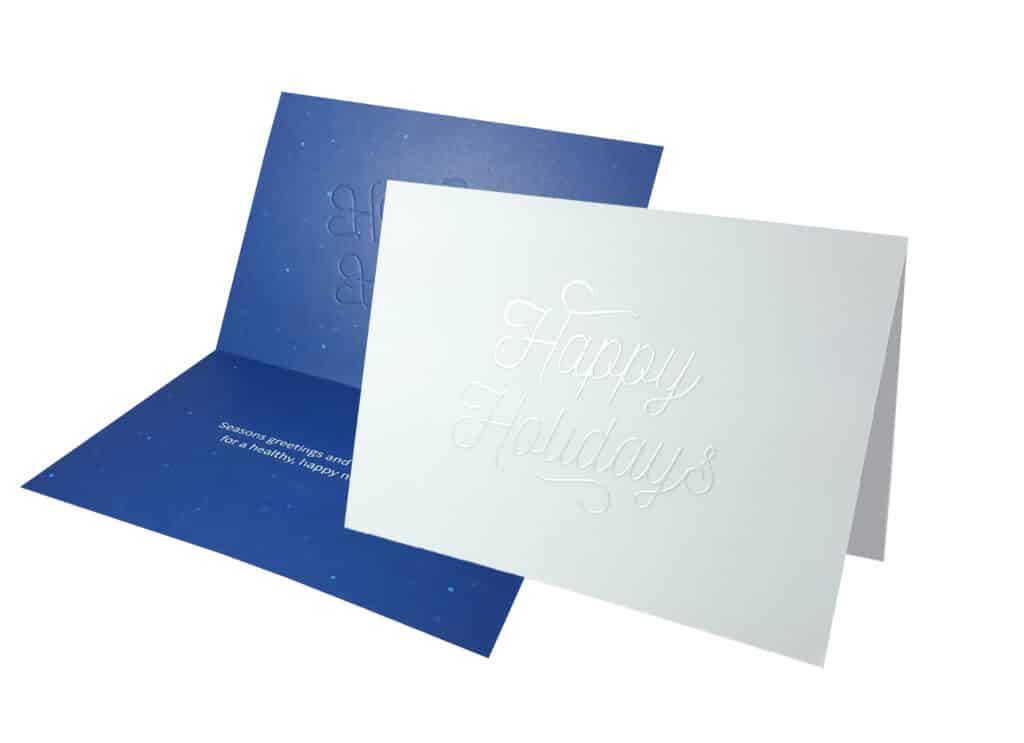
Blind embossing example Embossing is the process of using male and female etched dies (typically made of magnesium, brass or copper) and heat to raise or push letters or a design above the surface of a sheet of paper; it creates an eye-catching three-dimensional effect. The embossing die is made with a reversed image of the design. When this process is reversed it creates an indented image, and is known as debossing. Depending on the complexity of the design, computer controlled milling machines or hand sculptured engraving are used to convert the graphic image to the metal embossing die. A good example of paper embossing that many of us have seen (and felt) is a notarized document. Many times these embosses are “blind,” meaning there is no ink, only the raised paper design. Other effects can be added, such as metallic foil to highlight the raised area and create an even more stunning effect.


Man explaining embossing and how to use embossing in printing.

Embossing Techniques or Die Styles

Embossing is available in a number of different die styles, each having a distinct appearance and optimal use based on what type of element is being embossed.

  • Round dies produce an image that is curved at the edges.
  • Flat dies produce a straight edge good for embossed type or hard shapes.
  • Sculptured dies produce an almost 3D appearance using multiple layers.
  • Beveled dies create sloped sides that are good for deep embossed effects.

How to use Embossing

Embossing is a technique that’s perfect for adding a touch of class and individuality to your printed piece. It works well on many types of printing products, including:

  • Business cards
  • Letterhead and envelopes
  • Presentation folders
  • Postcards and Rack Cards
  • Brochures
  • Invitations
  • Certificates
  • Greeting Cards

Embossing with foil stamping Many elements and images in your design can be embossed, including text. The most effective embossed pieces use a detailed die and heavier paper stock to highlight the depth and detail of the embossed graphics or images. Also, with the addition of colored or metallic foil stamping as shown in this image, the emboss really stands out, both literally and visually. It is a great way to draw out and highlight important details, such as names, designs or logos. A combination embossing die and foil stamping die is needed for this process. Our team can help you convert your graphic designs into templates for the embossing or foil die creation.

Embossed printing is an elegant way to add a unique look, and more importantly, feel to your marketing piece. Considering how many pieces of mail, business cards and other printed materials your target audience gets each day and at every tradeshow and convention, this special touch can make all the difference in your piece getting noticed or not. Embossed business cards can make a lasting impression. Add custom embossing or debossing to your marketing practices to stand up and out from the crowd and stop your customers in their tracks. Need technical or creative advice on your embossed printing project? Give our helpful experts a call at 800-924-2041, or Get Pricing Check out our full line of custom printing effects and finishes.

This field is for validation purposes and should be left unchanged.

Get 20% Off

Subscribe to our weekly newsletter and get an instant 20% off your first print project.

Name(Required)
RELATED MARKETING & DESIGN TIPS

USPS Mail Layout Templates

Get USPS-compliant templates for printing EDDM postcards, brochures, newsletters, and more to ensure your mail fits USPS regulations. Print & mail EDDM!

Read More >


Going to Press Efficiently

Read More >


Plastic Self-Mailing Snap-out Postcards

Get printed custom plastic postcards that can be customized for many different purposes, from snap-off membership and loyalty cards to special discount cards and more

Read More >


Hot Foil Stamping – Make Your Printing Pop

Hot Foil Stamping – Make Your Printing Pop

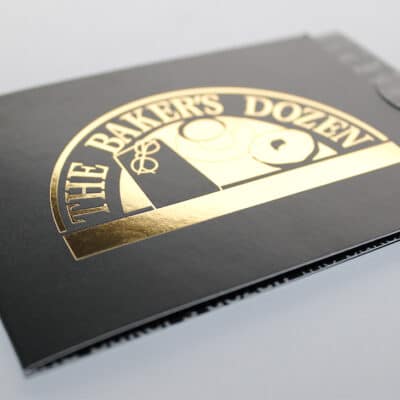
Nothing in print says “elegance” like foil stamping, but what exactly is it? Foil stamping, hot stamping or hot foil stamping is the application of pigmented or metallic foil to paper using pressure and a heated die. The die presses the foil onto the surface under pressure, leaving the design of the die on the paper.

Foil stamping, or foil printing is frequently combined with embossing to produce a three-dimensional image. You’ve likely seen this effect on holiday cards, wedding invitations and certificates. There are so many ways to use foil stamping to set your print apart from the crowd.


Man explaining foil stamping and how to use foil stamping in printing.

Types of Foil

There are many types of foil that can make your printed piece pop.

  • Metallic Foils have a metal-like sheen and a shine or shimmer, and come in a variety of colors, such as gold, silver, copper, green, blue and red.
  • Gloss Pigment Foils have a high glossy, but non-metallic finish and come in many colors.
  • Matte Pigment Foils have a dull finish with deep solid colors.
  • Special Effects Foils such as marbles, woodgrains, leathers or pearl add distinctive textures and looks.
  • Holographic Foils use the transfer of a hologram image onto unique foils. Holographic foils add a dramatic effect that often provides a “high-tech” look.

Benefits of Hot Foil Stamping

  • Greater brand perception: Research shows that by adding gold foil printing or other interesting effects to your piece, consumers perceive a higher value and quality of your product.
  • Attention-grabbing effects: Foil stamping helps make your printed piece stand out from the crowd with its distinctive and eye-catching appeal.

What can you Foil Stamp?

Foil can be applied to most paper stocks. However, the ideal paper stock for metallic foil or other foil stamps is gloss cover or other stocks with a smooth surface. Linen or other textured papers can be a challenge for foil due to their uneven surfaces, as the foil may not look as crisp.

Business cards, brochures, presentation folders, greeting cards, note cards, invitations or diplomas and certificates are some of the endless possibilities that you can foil stamp. Add a touch of class to your marketing materials with elegant and affordable foil stamping. Learn more about designing print materials for foil stamping.

Because of the extensive setup involved, a minimum quantity of 250 pieces is required.

Request our custom printing effects sample to see examples of these effects first-hand. Need creative or technical advice on using foil stamping on your next printing project?

Give our print experts a call at 800-924-2041, or Get Pricing.

Examples of Foil Stamping

Giftcard
Gold Foil
Custom Holiday Cards Printing
Silver Foil


This field is for validation purposes and should be left unchanged.

Get 20% Off

Subscribe to our weekly newsletter and get an instant 20% off your first print project.

Name(Required)
RELATED MARKETING & DESIGN TIPS

2025 Essential Guide to Direct Mail

Direct mail remains a powerful marketing tool because it creates a tangible connection. So, whether you’re looking to boost sales, increase engagement, or build lasting relationships with customers, here’s a look at how to harness its power and integrate it…

Read More >


The Art of Business Card Marketing

Your business card is one of the best advertising tools you have – Five Steps for Business Card Marketing Success.

Read More >


Custom Bookmark Printing Samples

Custom bookmark printing samples printed with full color showing design ideas, standard book mark sizes and designs. See samples of 2×6 bookmarks and more.

Read More >


  • « Go to Previous Page
  • Page 1
  • Interim pages omitted …
  • Page 6
  • Page 7
  • Page 8

Footer

Printing for Less

info@printingforless.com
100 P F L Way, Livingston, MT 59047

800-930-2423

  • Home
  • Products
  • Services
  • Industries
  • Get Printing Samples
  • Direct Mail Marketing Resource Center
  • Printing Resource Center
  • Blogs
  • Templates
  • Terms & Conditions
  • Contact
  • About Printing for Less
  • Careers
  • Login

Copyright © 1998-2026 PrintingforLess.com. All Rights Reserved.

logo
  • 800-930-2423
  • Products
  • Direct Mail Marketing
  • Services
  • Industries
  • Direct Mail Marketing Resources
  • Printing & Mailing Resources
  • Get a Quote
  • Contact Us
  • My Login
Postcard Printing & Mailing
This field is for validation purposes and should be left unchanged.

Get 20% Off

Subscribe to our weekly newsletter and get an instant 20% off your first print project.

Name(Required)

*Some exclusions apply. See details