• Skip to primary navigation
  • Skip to main content
  • Skip to footer
Printing for Less

Printing for Less

At Printing for Less, we've offered high quality online printing services since 1996. Shop business cards, booklets, stickers, and more!

My LoginMy Login
800-930-2423
  • Printing
    • Postcards
    • Business Cards
    • Catalogs
    • Brochures
    • Folders
    • Letters
    • Newsletters
    • Envelopes
    • Greeting Cards
    • Print Templates
    • All Products
  • Direct Mail
    • Why Direct Mail Marketing?
    • Every Door Direct Mail® Postcards
    • Direct Mail Letters
    • Catalogs & Booklets
    • Marketing Gifts & Kits
    • Direct Mail Automation
  • Services
    • Mailing Services
    • Pro Services
    • Design Services
    • Custom Printing Services
    • Reseller Program
  • Industries
    • Advertising & Design
    • Food & Beverage
    • Healthcare Payers
    • Healthcare Providers
    • Nonprofit
    • Real Estate
    • Retail
    • Technology
    • University
  • Resources
    • Direct Mail Marketing
      Resource Center
    • Printing Resource Center
    • Blogs
    • Templates
    • Video Library
    • Have a Question?
  • Get Samples
  • Get a Quote

Marketing

Green Printing Recycled Paper

Sustainable Printing Using Recycled Paper

Printing for Less offers a variety of recycled papers on all of our products. We’re also always happy to accommodate requests for 100% recycled printing paper. However, not all recycled papers are created with the same environmental impact, and an environmentally-conscious company should be selective when choosing the paper for their printing project. While printing on a paper with a high ratio of post-consumer content is a popular option that is beneficial for some projects, saving the environment is not that easy. Chemically de-inking post-consumer paper back into the clean white paper best suited for attractive full-color printing is a toxic process, one with high energy consumption and waste disposal challenges. The scrap paper from our production facility is recycled into newsprint, which requires far less energy, water and chemical treatment than recycling into white paper. 


Let’s explore a few recycling terms:

Post Consumer Fiber

The EPA defines this material as paper, paperboard and fibrous wastes from retail stores, office buildings, and homes. Used corrugated boxes, old newspapers, magazines, junk mail and mixed waste paper all fall under this group. These items have been diverted from the waste stream. The two key words to keep in mind are “end products” and “consumers”. Scraps, cuttings, and loose ends from the paper mills do not qualify here.

Pre Consumer Waste

Also referred to as post-industrial waste, this is the by-product of the production process. Examples are “mill broke”, paper off-cuts, make readies and rejected or surplus printed matter.

De-Inked Material

Waste paper that has had the ink, fillings and coatings removed before being recycled. Examples are magazines and newspapers that were printed but never sold.

Printing Responsibly

Learn more about our sustainable printing solutions.

If you’d like to have your printing project quoted on 100% recycled paper, or have questions about alternative eco-friendly paper options, calling us at 800-924-2041, or request a quote on our Custom Pricing page. We’ll work with you in order to get the best product to meet your eco printing needs and suit your conscience.
This field is for validation purposes and should be left unchanged.

Get 20% Off

Subscribe to our weekly newsletter and get an instant 20% off your first print project.

Name(Required)
RELATED MARKETING & DESIGN TIPS

Printing Help

Printing Help Getting Started Product Descriptions Paper Descriptions Designing Your Layout Print Marketing Tips Preparing Your Files: Color        Layout Specs Images     Text The Ordering Process Ordering Checklist Production Speed Shipping & Delivery Mailing Services Proofing…

Read More >


Text and Type for Printing

Tips and advice on how to work with text in your graphic arts files used for full color commercial printing

Read More >


Soft Touch Coating for Printing

Check out the advantages and benefits of UV coating.Soft Touch Coating creates a velvety texture that increases the tactile appeal of printed materials such as brochures, postcards and business cards

Read More >


Printing With Metallic Ink

Custom Printing with Metallic Ink

Make Your Print Shine with Metallic Ink

If you are looking to make a big impression with your next print project, sometimes plain black or colored ink just won’t cut it. When you venture beyond the familiar territory of cyan, magenta, yellow, and black, a wide world of color possibilities opens up for you. Whether you’re striving for vibrancy not attainable in process colors, or looking to add some pizzazz to your printed piece, it may be time to consider incorporating some custom printing finishes to add that little something extra—think spot colors, embossing, foil stamping, spot varnish, and of course, metallic inks.


What is a metallic ink?

Metallic ink has reflective metal particles such as copper, bronze, zinc or aluminum suspended within it. When the ink dries, the metal particles reflect light and create a metallic sheen. Metallic inks add color and shine beyond what regular inks can produce, but are less shiny and reflective than the more complicated and expensive foil stamping. They are available in a variety of both pure metallic colors such as gold, silver, bronze, blue and red, and combination tints.

Metal Madness – A Lustrous Add-on

Metallic inks are special inks that create a shine and luster you won’t see in standard inks. Silver and gold metallics are the most common, but metallic inks also come in bright blues, vibrant purples, hot reds and burnished coppers. Metallic inks are perfect for presenting that high-end image because they add attention-grabbing shine to any printed piece without the higher cost of foil stamping. There are a variety of different ways you can incorporate metallic inks into your organization’s print materials. Consider the following ideas:

  • Highlight headlines or important points on postcards, brochures, and flyers
  • Add some elegance to invitations or stationery with gold or silver metallic ink
  • Add some pizzazz to your company name or logo
  • Create an unforgettable business card with subtle metallic highlights
  • Use several different metallic inks together to create a unique image or design
  • Make special elements or lettering on your presentation folders pop

Get it Right: Things to Consider When Using Metallic Inks

If you are thinking of using metallic ink on your next offset printing project, there are a few things you should consider to ensure you get the best possible results.

  1. Do your homework – Not every printer has experience with metallic inks. Before you award a metallic job to a printer, ask to see samples of various metallic projects the shop has produced in the past.
  2. Be forward – Show your design to the printer early in the process. If either of you are concerned about how the metallic colors will read, it may be worth negotiating a small press proof—the gold standard insurance policy for getting the look you want.
  3. Coated is key – If you are aiming for maximum shine, print on a coated stock—the glossier the better. Coated stocks have more ink holdout, which means that less of the ink is absorbed into the paper fibers. It sits atop the paper instead, where it can work up some serious shine.
  4. Protect your piece – Since they’re composed of metal flakes, metallics are somewhat prone to chalking and flaking.

Metallic inks not only look nice, they will also help take your marketing materials to the next level by defying the status quo. Oftentimes, the spotlight of attention is on the layout and colors of the piece and the use of ink sometimes gets neglected. If you incorporate metallic inks, you create a shiny and glossy effect that will make your full color postcard, business card, catalog or brochure stand out from the pack.

Metallic Ink Printing Samples

(Photos do not adequately capture the effect. Request printed samples to see the effect first hand.)
Catalog Metallic
Catalog Printing
 
Need creative or technical advice on incorporating metallic inks into your next printing project?
Give our helpful experts a call at 800-924-2041.
This field is for validation purposes and should be left unchanged.

Get 20% Off

Subscribe to our weekly newsletter and get an instant 20% off your first print project.

Name(Required)
RELATED MARKETING & DESIGN TIPS

Door Hanger Marketing and Door Hanger Design

Printed samples of door hangers showing different designs and uses for targeted local door to door personalized marketing.

Read More >


Horizontal Small Catalog Design

Need help designing a small horizontal catalog (8.5 x 5.5)? This guide walks you through our process of creating a unique design and execution! Learn more.

Read More >


Postcard Design in InDesign for Postcard Marketing Success

Tips on easily using InDesign to design postcards from conception to printing, including sizes, back design, images, ink, templates, paper, indicias and mail layout guidelines.

Read More >


Pantone Colors in Printing

Printing with Pantone Colors and Spot Color Inks

Color creates the first impression of any print. Even the lack of color can be a bold statement. Because of that, you should put thought into how you want colors to impact your brand through print.

The biggest choice you will need to make when it comes to ink is whether to use spot colors (Pantone Matching System®) or CMYK process printing. Understanding the difference between the two “color systems” and when you should use each is the key to making it an easy choice.


What is a Pantone (PMS) color?

A PMS color is a specific numbered color in the Pantone Matching System® used in the graphic arts, printing and other industries to facilitate accurate and consistent color reproduction, especially across multiple production runs, vendors and manufacturing processes.

CMYK vs Pantone: Printing Processes Demystified

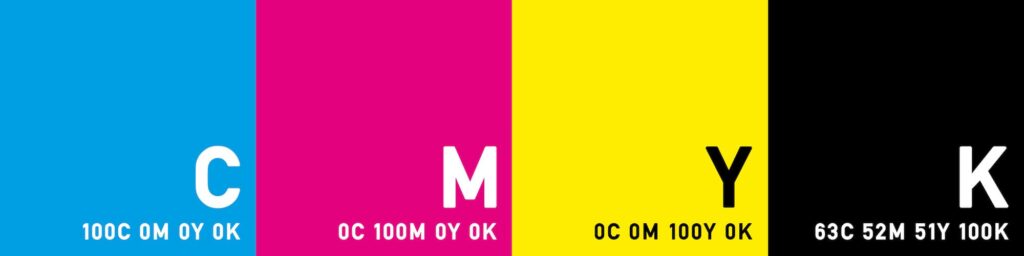
When preparing an image for printing in CMYK, the electronic file is separated into four primary colors: cyan, magenta, yellow and black. The image is recreated using screen tints made up of small dots that are applied at different angles to the four process colors. The separated color images are then transferred to four different printing plates on the press. The colors are then printed one after the other to recreate the original image. The CMYK colors are manufactured colors and are not mixed by the end user. This method can be referred to as 4 color, full-color or standard process printing.


Pantone Colors in Printing
CMYK or cyan, magenta, yellow and black inks used in process printing


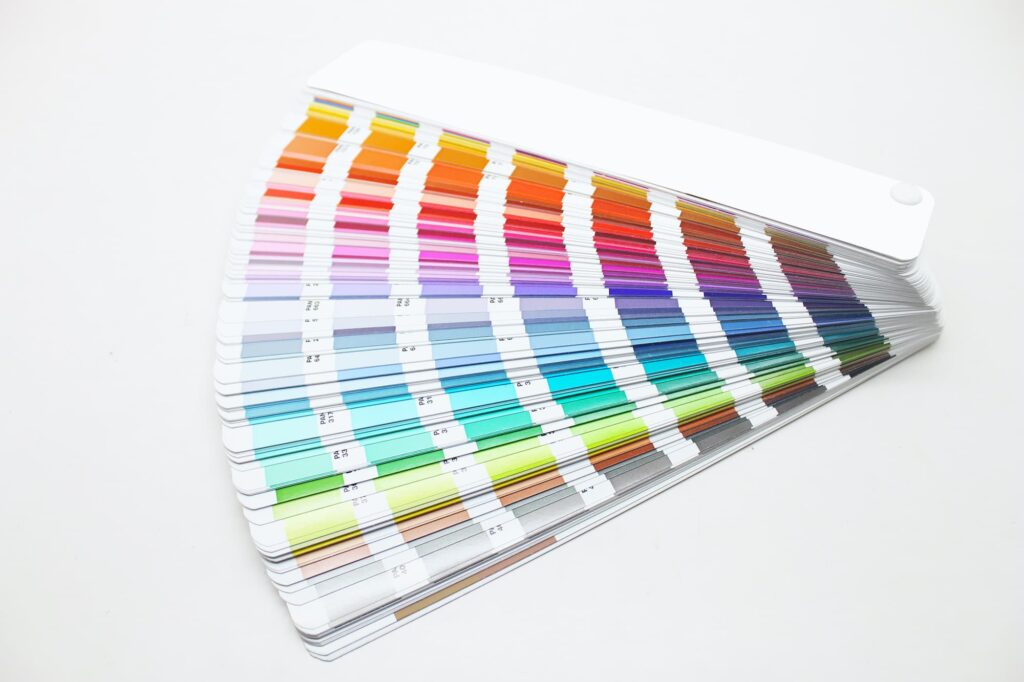
The PMS system uses pre-determined, published color formulas to create a large number of ink colors. PMS stands for Pantone Matching System®, and is a standardized color reproduction system. Similar to the paint swatch guides you find at your favorite paint store, the pantone color chart contains thousands of color swatches created from a palette of basic colors. Each color has a ‘PMS’ number assigned to it. These numbers are used to identify the exact color needed. Using PMS inks is called spot color printing.


A selection of colors from the Pantone color chart

Get it Right: Benefits and Drawbacks of Printing with Pantone

Color is very subjective, which is why the Pantone Matching System® works so well. It takes all the guesswork out of color identification. Every computer monitor is different, every printer is different. By standardizing the colors, manufacturers and customers in different locations can all refer to the Pantone system to make sure colors match. It is used by many printers and graphic artists to deliver reliable, reproducible colors to their customers. The ink manufacturers who create the base color inks are strictly licensed by Pantone for color accuracy.

Why PMS Isn’t Always King

Even though Pantone is a great option in certain cases, it doesn’t always make sense to incorporate it into your printing project. Using spot colors is usually more expensive than process inks due to the extra production costs involved in “washing up” and changing out the ink in the press, particularly when using more than one or two PMS colors depending on the printer’s manufacturing equipment and processes. Since CMYK process printing uses the same base colors all the time, it’s a more cost-effective solution.

When Spot Colors Should Reign Supreme

There are certain times in commercial printing when your colors need to be exact. That’s when you should consider using Pantone colors, either on their own or added to standard four-color process printing. Here are a few examples:

  1. Consistent Branding/Logos – Think McDonald’s red or UPS brown. Using PMS colors for your logo and stationery will allow you to ensure color accuracy and establish a standard that anyone working with your artwork will be able to match.
  2. Colors outside the range of CMYK – There are some colors that just can’t be produced with CMYK, including colors such as reflex blue, fluorescent orange or metallic silver.
Need technical or creative advice on using Pantone inks on your printing project?
Give our print experts a call at 800-924-2041.
This field is for validation purposes and should be left unchanged.

Get 20% Off

Subscribe to our weekly newsletter and get an instant 20% off your first print project.

Name(Required)
RELATED MARKETING & DESIGN TIPS

Direct Mail Marketing: An Idea Book for Healthcare Providers

At every stage of the patient journey, direct mail plays a crucial role. Healthcare providers must focus on efficiency and targeted messaging to get the most out of their direct mail campaigns.

Read More >


Our Partners

Add value to your customers by partnering with the leader in online commercial printing.

Read More >


Roll Labels

Roll Labels and stickers printed to your specifications. Durable, high-quality full color label printing with many standard and custom options available. Use your design or have us design them for you. Printed right and delivered on time, guaranteed

Read More >


Die Cut Business Cards

Die Cut Business Cards

Skip the boring and make it extraordinary! Die cut business cards are an effective way to break out of the standard business card box to create a unique impression.

From simple geometric shapes to catchy designs that fit your brand, die cuts showcase your business in the most convenient marketing tool at your disposal, your business card.


Standard Dies

Get a creative look for less by selecting a standard die cut business card shape on your choice of high-quality gloss, matte, uncoated or recycled card stocks.


Standard die cut business cards cost substantially less and have a faster turnaround than ordering a new die, which involves custom fabrication.

Standard Die Cut Business Card Styles


Round Corner
2×2 Round Corners #2
Circle
3 Inch Circle #48
Small Container
Container #108
Guitar Pick
Guitar Pick #107
Die Cut Business Cards
3.5×1.75 2 Round Corners #81
Animal Paw
Animal Paw #106
Oval
3.5×2 Oval #22

Printing Features

  • Your choice of our standard dies
  • 500 per box – multiple boxes with different names at NO EXTRA CHARGE!
  • Full color on front or both sides, or black or blank on the back
  • 6-day production (rush available for standard dies)

Paper Options

  • 120# gloss cover 14pt
  • 100# uncoated cover 14pt
  • 120# dull/matte cover 14pt
  • 160# gloss cover 18pt
  • 200# gloss cover 24pt
  • Recycled cover options
  • Many custom papers

Custom Dies

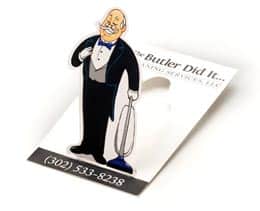
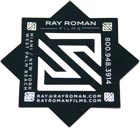
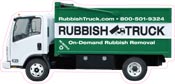
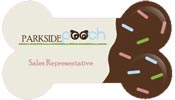
A custom die created just for your unique business card gives you complete freedom to create a distinctive look or visual effect. A custom die can be created to your exact specifications for a one time fee starting around $200. Call for more details. See some examples below to spark your imagination.

Custom Die Examples

Couch Die Example
Stardie Example
Truck Example
Dog Boned Example
Leaf Die Cut Example
Scallop Example

How Does Die Cutting Work?

Custom die cut business cards are produced using a sharp steel cutting blade called a “die” that’s formed into a shape similar to a cookie cutter. Die cutting can be used either to punch out a decorative shape or pattern within a piece or to create an interesting outer shape for your business card design. Die cuts enable you to create fancy shapes from curvy edges to sharp points, as well as contours of recognizable items such as cars, animals, buildings or flowers – the ideas are endless!


Designing Die Cut Business Cards

We have seven standard die cut shapes, but we can also create just about any custom business card shape you can imagine. Here are some design tips:

  • Don’t get carried away. Die cut cards are unique and eye catching, but don’t forget that your business card must convey your contact information. Make sure your die cut pattern leaves plenty of room for your message.
  • Die cuts are suitable for any paper stock, as well as plastic and magnet business cards.
  • Your business card should be easy to read. Avoid tiny type or hard to decipher fonts.

Using Die Cut Business Cards

Business cards aren’t just for industry events and networking luncheons. They’re versatile and affordable promotional pieces that can meet a variety of business needs.

  • Use business cards as hang tags on clothing. When the cards are die cut, they send a message that’s uniquely you.
  • Use business cards as company rewards cards. Choose a die-cut that fits easily into a wallet and design it to accommodate hole punches or rubber stamps to reward customers for repeat visits.
  • Turn business cards into raffle tickets to win an in-store prize. Have customers fill out their names and email addresses, and let the cards do double duty by collecting responses to a survey question that will help you improve your business. An intriguing die cut style will encourage people to participate.

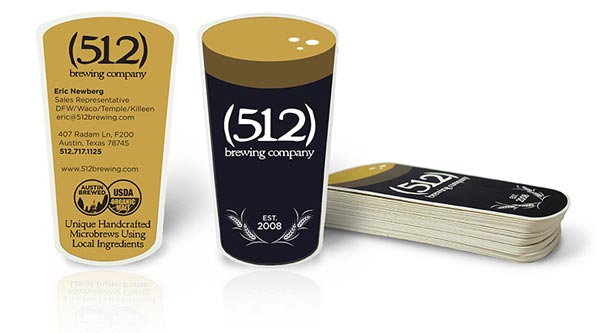
Die cuts help business cards stand out in the stack that comes home from the Chamber of Commerce happy hour. Rounded corners are a popular effect, but what about rounding just one or two corners? Think of the impact of a card shaped like a to-go cup for your café, or a plastic card with a punch-out guitar pick that people can really use. Innovative die cut business cards get displayed, used, and read again and again.

Die cuts introduce almost unlimited fun and creativity to the concept of a business card. Pair them with specialty papers, plastics or magnets and your business card will be the talk of the town.

Call us at 800-924-2041 to learn how die cut business cards from Printing for Less can boost your business, or to request a printing quote, get some free samples or get in touch with our fast and affordable design team.

This field is for validation purposes and should be left unchanged.

Get 20% Off

Subscribe to our weekly newsletter and get an instant 20% off your first print project.

Name(Required)
RELATED MARKETING & DESIGN TIPS

Offset Printing FAQs

Learn how offset printing or offset lithography works, the most common commercial printing method in use today

Read More >


Postcard Design in InDesign for Postcard Marketing Success

Tips on easily using InDesign to design postcards from conception to printing, including sizes, back design, images, ink, templates, paper, indicias and mail layout guidelines.

Read More >


Color Management 101 – Monitor Calibration

We demystify certain elements of color management and suggest helpful tools for monitor calibration and profiling for better printing accuracy

Read More >


Custom Embossing Services

How to use Embossing in your Printed Materials

What is embossing?

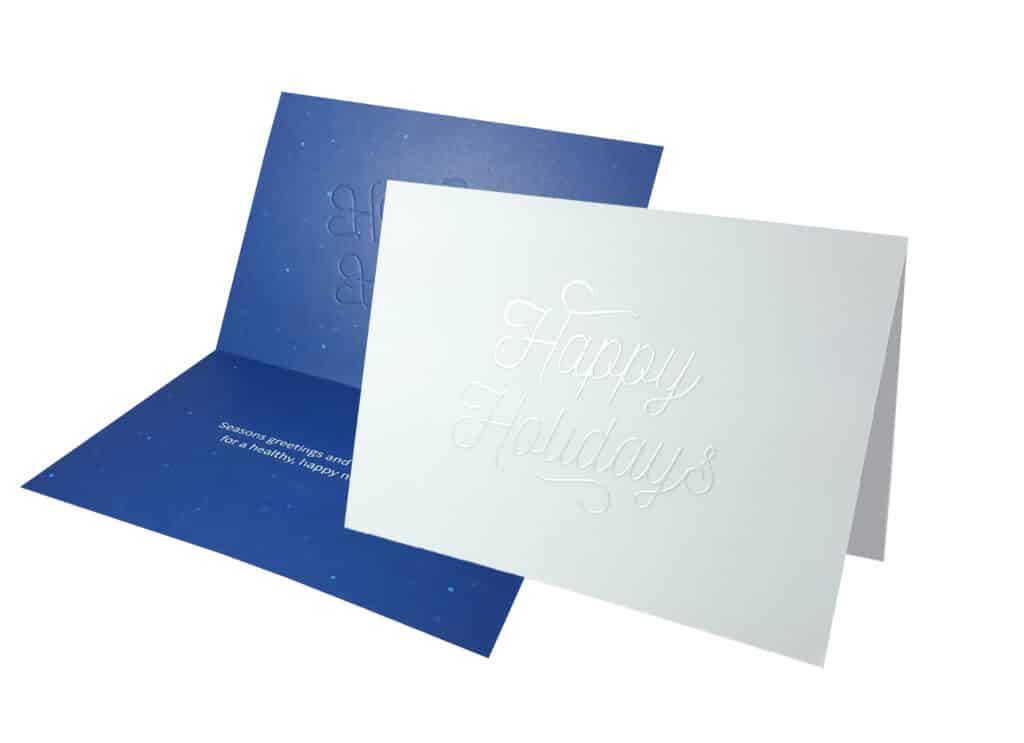
Blind embossing example Embossing is the process of using male and female etched dies (typically made of magnesium, brass or copper) and heat to raise or push letters or a design above the surface of a sheet of paper; it creates an eye-catching three-dimensional effect. The embossing die is made with a reversed image of the design. When this process is reversed it creates an indented image, and is known as debossing. Depending on the complexity of the design, computer controlled milling machines or hand sculptured engraving are used to convert the graphic image to the metal embossing die. A good example of paper embossing that many of us have seen (and felt) is a notarized document. Many times these embosses are “blind,” meaning there is no ink, only the raised paper design. Other effects can be added, such as metallic foil to highlight the raised area and create an even more stunning effect.


Man explaining embossing and how to use embossing in printing.

Embossing Techniques or Die Styles

Embossing is available in a number of different die styles, each having a distinct appearance and optimal use based on what type of element is being embossed.

  • Round dies produce an image that is curved at the edges.
  • Flat dies produce a straight edge good for embossed type or hard shapes.
  • Sculptured dies produce an almost 3D appearance using multiple layers.
  • Beveled dies create sloped sides that are good for deep embossed effects.

How to use Embossing

Embossing is a technique that’s perfect for adding a touch of class and individuality to your printed piece. It works well on many types of printing products, including:

  • Business cards
  • Letterhead and envelopes
  • Presentation folders
  • Postcards and Rack Cards
  • Brochures
  • Invitations
  • Certificates
  • Greeting Cards

Embossing with foil stamping Many elements and images in your design can be embossed, including text. The most effective embossed pieces use a detailed die and heavier paper stock to highlight the depth and detail of the embossed graphics or images. Also, with the addition of colored or metallic foil stamping as shown in this image, the emboss really stands out, both literally and visually. It is a great way to draw out and highlight important details, such as names, designs or logos. A combination embossing die and foil stamping die is needed for this process. Our team can help you convert your graphic designs into templates for the embossing or foil die creation.

Embossed printing is an elegant way to add a unique look, and more importantly, feel to your marketing piece. Considering how many pieces of mail, business cards and other printed materials your target audience gets each day and at every tradeshow and convention, this special touch can make all the difference in your piece getting noticed or not. Embossed business cards can make a lasting impression. Add custom embossing or debossing to your marketing practices to stand up and out from the crowd and stop your customers in their tracks. Need technical or creative advice on your embossed printing project? Give our helpful experts a call at 800-924-2041, or Get Pricing Check out our full line of custom printing effects and finishes.

This field is for validation purposes and should be left unchanged.

Get 20% Off

Subscribe to our weekly newsletter and get an instant 20% off your first print project.

Name(Required)
RELATED MARKETING & DESIGN TIPS

Somewhere Over the CMYK Rainbow

Using PMS Pantone colors, metallic inks, varnishes and custom paper with your InDesign project

Read More >


Knowledge Center: Graphic Design

Get graphic design tips, how-to’s, and articles to help you create, print, and grab attention with your designs. Learn more in our knowledge center.

Read More >


Direct Mail Marketing: An Idea Book for Realtors

Boost Your Real Estate Sales! Download our Direct Mail Marketing Idea Book to learn innovative strategies that really work. Discover how direct mail’s 90% open rate can transform your business. Get it FREE today!

Read More >


Hot Foil Stamping – Make Your Printing Pop

Hot Foil Stamping – Make Your Printing Pop

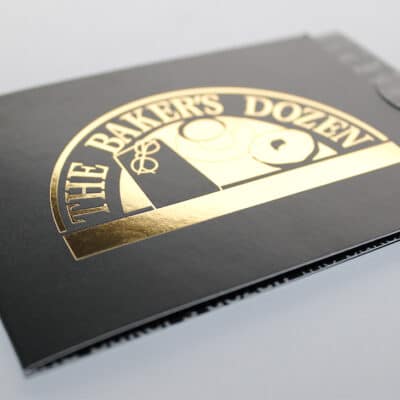
Nothing in print says “elegance” like foil stamping, but what exactly is it? Foil stamping, hot stamping or hot foil stamping is the application of pigmented or metallic foil to paper using pressure and a heated die. The die presses the foil onto the surface under pressure, leaving the design of the die on the paper.

Foil stamping, or foil printing is frequently combined with embossing to produce a three-dimensional image. You’ve likely seen this effect on holiday cards, wedding invitations and certificates. There are so many ways to use foil stamping to set your print apart from the crowd.


Man explaining foil stamping and how to use foil stamping in printing.

Types of Foil

There are many types of foil that can make your printed piece pop.

  • Metallic Foils have a metal-like sheen and a shine or shimmer, and come in a variety of colors, such as gold, silver, copper, green, blue and red.
  • Gloss Pigment Foils have a high glossy, but non-metallic finish and come in many colors.
  • Matte Pigment Foils have a dull finish with deep solid colors.
  • Special Effects Foils such as marbles, woodgrains, leathers or pearl add distinctive textures and looks.
  • Holographic Foils use the transfer of a hologram image onto unique foils. Holographic foils add a dramatic effect that often provides a “high-tech” look.

Benefits of Hot Foil Stamping

  • Greater brand perception: Research shows that by adding gold foil printing or other interesting effects to your piece, consumers perceive a higher value and quality of your product.
  • Attention-grabbing effects: Foil stamping helps make your printed piece stand out from the crowd with its distinctive and eye-catching appeal.

What can you Foil Stamp?

Foil can be applied to most paper stocks. However, the ideal paper stock for metallic foil or other foil stamps is gloss cover or other stocks with a smooth surface. Linen or other textured papers can be a challenge for foil due to their uneven surfaces, as the foil may not look as crisp.

Business cards, brochures, presentation folders, greeting cards, note cards, invitations or diplomas and certificates are some of the endless possibilities that you can foil stamp. Add a touch of class to your marketing materials with elegant and affordable foil stamping. Learn more about designing print materials for foil stamping.

Because of the extensive setup involved, a minimum quantity of 250 pieces is required.

Request our custom printing effects sample to see examples of these effects first-hand. Need creative or technical advice on using foil stamping on your next printing project?

Give our print experts a call at 800-924-2041, or Get Pricing.

Examples of Foil Stamping

Giftcard
Gold Foil
Custom Holiday Cards Printing
Silver Foil


This field is for validation purposes and should be left unchanged.

Get 20% Off

Subscribe to our weekly newsletter and get an instant 20% off your first print project.

Name(Required)
RELATED MARKETING & DESIGN TIPS

Gate Fold Brochure Design Review

How to use four color printing, unique folds and custom paper to reel in guests at a Montana guest lodge.

Read More >


Wholesale Printing for Print Buyers and Brokers

Wholesale printing program for print brokers to offer high-quality printing to their clients at discounted prices

Read More >


Choosing the Best PDF Preset in InDesign

Choose the best Adobe InDesign PDF presets for printing. This guide covers ‘high quality print’, PDF/X-1a, PDF/X-4 presets, and custom Adobe PDF presets.

Read More >


  • « Go to Previous Page
  • Page 1
  • Interim pages omitted …
  • Page 6
  • Page 7
  • Page 8

Footer

Printing for Less

info@printingforless.com
100 P F L Way, Livingston, MT 59047

800-930-2423

  • Home
  • Products
  • Services
  • Industries
  • Get Printing Samples
  • Direct Mail Marketing Resource Center
  • Printing Resource Center
  • Blogs
  • Templates
  • Terms & Conditions
  • Contact
  • About Printing for Less
  • Careers
  • Login

Copyright © 1998-2026 PrintingforLess.com. All Rights Reserved.

logo
  • 800-930-2423
  • Products
  • Direct Mail Marketing
  • Services
  • Industries
  • Direct Mail Marketing Resources
  • Printing & Mailing Resources
  • Get a Quote
  • Contact Us
  • My Login
Postcard Printing & Mailing
This field is for validation purposes and should be left unchanged.

Get 20% Off

Subscribe to our weekly newsletter and get an instant 20% off your first print project.

Name(Required)

*Some exclusions apply. See details