• Skip to primary navigation
  • Skip to main content
  • Skip to footer
Printing for Less

Printing for Less

At Printing for Less, we've offered high quality online printing services since 1996. Shop business cards, booklets, stickers, and more!

P F L.com
My LoginMy Login
800-930-2423
  • Printing
    • Postcards
    • Business Cards
    • Catalogs
    • Brochures
    • Folders
    • Letters
    • Newsletters
    • Envelopes
    • Greeting Cards
    • Print Templates
    • All Products
  • Direct Mail
    • Why Direct Mail Marketing?
    • Every Door Direct Mail® Postcards
    • Direct Mail Letters
    • Catalogs & Booklets
    • Marketing Gifts & Kits
    • Direct Mail Automation
  • Services
    • Mailing Services
    • Pro Services
    • Design Services
    • Custom Printing Services
    • Reseller Program
  • Industries
    • Advertising & Design
    • Food & Beverage
    • Healthcare Payers
    • Healthcare Providers
    • Nonprofit
    • Real Estate
    • Retail
    • Technology
    • University
  • Resources
    • Direct Mail Marketing
      Resource Center
    • Printing Resource Center
    • Blogs
    • Templates
    • Video Library
    • Have a Question?
  • Get Samples
  • Holiday Shopping
  • Get a Quote

Blog

How to Design a Brochure That Actually Gets Used

woman opening package

We all know that direct mail is incredibly popular. Study after study proves that people love to receive relevant, attractive, and personalized mail. Brochures are a versatile solution to your direct mail needs. They are compact, can be stacked in offices or passed out by hand, act as self-mailers, and hold a ton of information. A beautiful brochure is the cornerstone of any marketing campaign but finding those perfect brochure colors can be difficult. Thankfully, by utilizing just 3 color combinations, you can pull together a snappy new brochure design in no time!

The 3 color combination is popular with major companies because of its simple application and visual appeal. Using only a 3 color palette keeps you brochure on point and easy to design. You can also apply this design principle to a 3 color logo or other 3 color design for other direct mail materials or swag.

Know Your Objective

Before we delve into design, let’s focus on your goals. What do you hope to accomplish with this brochure? What is your message? What impression do you want to create? What ultimate results do you want to achieve? By using these questions as your style guide, the design process will be effortless and your brochure will stay on message with your brand.

marketing plan image

Know Your Audience

As always, consider your target audience when picturing your design. Is this brochure for your usual clientele or is it for a specific sub-group? What are their wants? Do they have any pain points? Design your pitch with your audience in mind and your work is half done already.

Your Brochure Color Scheme

The colors that you choose can significantly alter the effectiveness of your brochure. Colors can sooth, irritate, energize, infuriate, bolster, or boost, so choose yours carefully.

What Is Your Brand Personality?

When picking colors to represent your brand, select ones that match the mood of your company.

What does that mean? Well, does your company have branded colors? What color is your logo? If your company doesn’t have branded colors, the you can use this exercise to get started. And if your company has a main branded color, then start with it and use our tutorial to update your look.

First write down an adjective that best describes your company. Is your company energetic? How about passionate? Rugged? Suave or strong? Intelligent or youthful?

Once you’ve written it down, compare your adjective to the chart shown here:
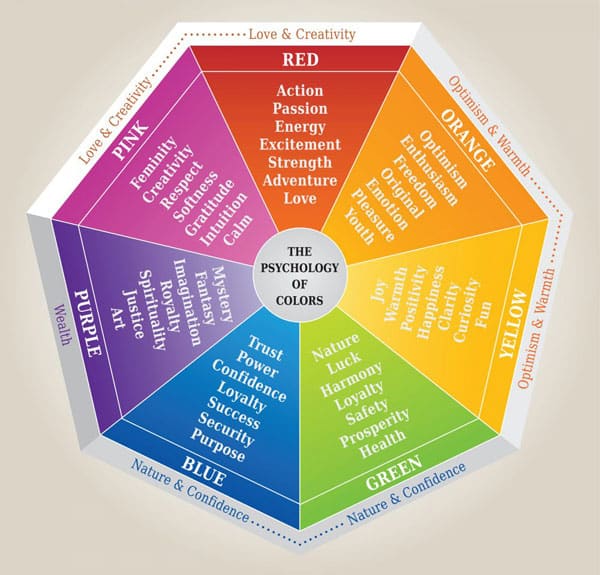
brand personality graph

Find the word that most closely matches your word and the color associated with it. That color is going to be your main color.

Now, for your paired colors, you will be choosing from two complimentary colors and then a neutral. What is a complimentary color, you ask?

The Basics (A Very Quick Tutorial)
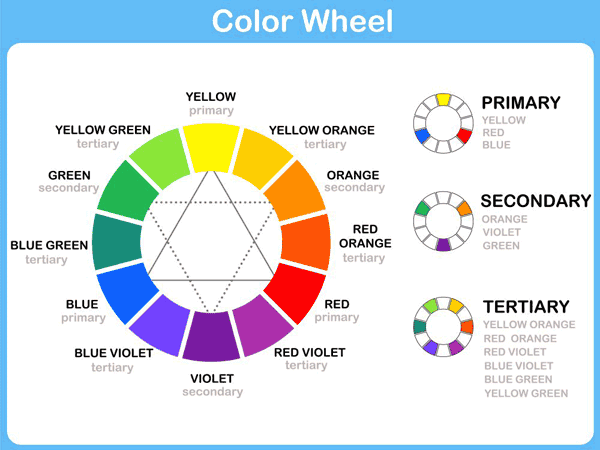
color wheels

Basically, there are three types of color: primary, secondary, and tertiary. Primary colors are red, yellow, and blue; whereas secondary colors are the colors created when you blend the primary colors (in this case, orange, green, and purple). Tertiary colors are blends of primary and secondary colors and have two-word names (like red-orange, yellow-green, blue-purple)

Complimentary (sometimes called contrasting) colors are ones that are opposite of each other on the color wheel. An example would be red and green.

colors can also be categorized as warm or cool. Warm colors have red undertones, whereas cool colors have blue undertones. Warm colors can be welcoming and cool colors can be soothing. Matching colors that are warm or cool to the mood of your campaign can improve the appeal of your brochures.

Now, back to your choices. Let’s say for example that the word that you picked for your company was ‘enthusiastic’, and so you chose orange as your main color (a very popular choice by the way!)

To find your complimentary colors, take another look at the color wheel in The Basics (A Very Quick Tutorial) section. Remember, the complimentary colors are directly opposite the color that you choose. So, in this case, your contrasting colors will be blue-green, blue, or blue-violet.

Well, that was easy! So, are we all done here? …no? Oh, right.

Remember those warm and cool colors? As you can see on that color wheel, the primary (red, yellow, blue) colors are in a triangle, so all of the blue colors end up on one side and all of the red colors end up on the other, with yellow and purple as sort of a DMZ. Cool on one side, warm on the other. Do you want a friendly and warm color scheme? Try orange and blue-violet. Or go cool and upbeat with orange and blue-green.

Finally, your choose your neutral color. Orange and blue will really POP but you don’t want them to be too overwhelming and a neutral tone provides some visual relief. Neutrals are usually white, gray, or black, but you can pick a hue (a color that has white mixed in) that compliments your main color too.

Restrain Your Fonts

With so many choices available, it can be easy to get carried away. But you want to attract your audience, not overwhelm them. Pick something fun, funky, or even a more elaborate font, but save them for your banners or headlines. Balance them with more conservative fonts for the body of your material and remember to use a dark color over a light color or vice versa for your fonts.

What’s Your Point?

With so many balls in the air, it can be easy to lose sight of your message. To stay on topic during the design process use your headlines as guidelines. Base them off of your goals to keep your objective in mind. Stay focused and remember your audience. Don’t get bogged down in a slew of information. No matter how relevant the material, if it’s boring your audience may lose interest. With that in mind, avoid long words and sentences and keep the acronyms to a minimum. Keep it short and sweet. Short sentences keep the momentum going. Remember, brevity is the soul of wit.

Set The Tone

Keep your overall look on point by choosing visuals that share similar tones as your main or complimentary colors. Pick images that match your mood. Is your tone warm? Then think upbeat, smiling faces and sunshine. Did you go cool? Then go confident, professional, or edgy. And always remember, if it doesn’t enhance your brand, cut it loose.

Quality Materials

Even when you are on a budget, investing in quality materials is a must. Thin, flimsy, or cheap feeling paper and weak inks can negatively impact the appeal of your brochure and degrade the value of your message. Psychologically, if your customer thinks that you have put a lot of time and effort (and money) into your presentation, then the information must be that much more important. Appeal to their sense of worth and give your brochure some weight. Even a small increase to a heavier bonded weight of card stock will add gravitas to your brochure and your message.

With so many options available from Printing for Less, you don’t have to break the bank but you show your customers that you think that they are worth it. Talk to an expert today at 800-930-6040 to get started on brochure design.
Get A Brochure Printing Quote

15 Creative Newsletter Designs for Growing Businesses

Developing an original look for your advertising materials doesn’t have to be a Herculean task. With a seemingly endless array of possibilities, getting started by just picking a font can seem daunting. Thankfully, with our teams of experts here at Printing for Less, you don’t have to worry about knowing the ins and outs or even the How-To’s of print newsletter design. We can take care of the nitty-gritty (and can even help with those fonts), but if you are finding yourself stumped for newsletter design ideas or your next newsletter layout, then take a gander at these creative printed newsletter designs and pick up some inspiration for your next project.

1. Fashion

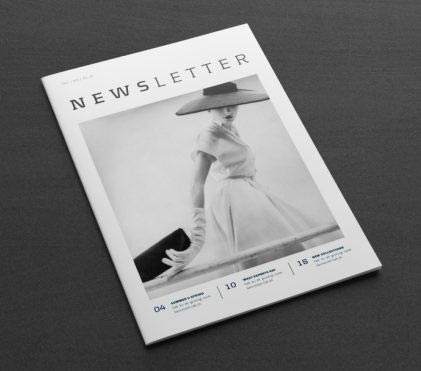
Fashion Newsletter design

Mailbox-friendly marketing materials are always in vogue. Model yours on haute couture fashion mags and your clients won’t want to wait to get their hands on your next newsletter. Start with a gorgeous stand-alone image on the cover, then go glossy and showcase your list of contents just below for a tasteful layout worthy of Harper’s Bazaar. While black and white is always fashionable, you can spice things up with some color. Instead, try rich, beautiful tones and a matte finish for a high end feel and a modern appeal that never goes out of style.

2. Greenpeace

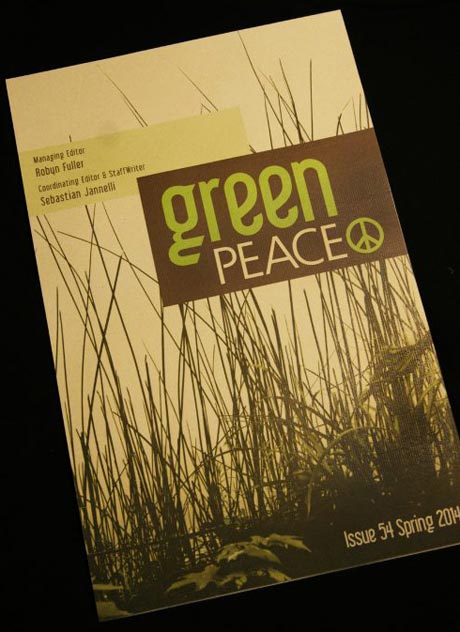
Green Peace Newsletter example

It isn’t always easy being Green. This cover beautifully blends organic imagery and earth tones with a dynamically placed title that delivers a strong on-brand message. It may be tranquil, but it is not passive. Combine this look with environmentally responsible products, such as milled paper from Oji Paper Group and vegetable-based inks (both available at Printing for Less) and showing your true colors will be a walk in the park.

3. Xplore

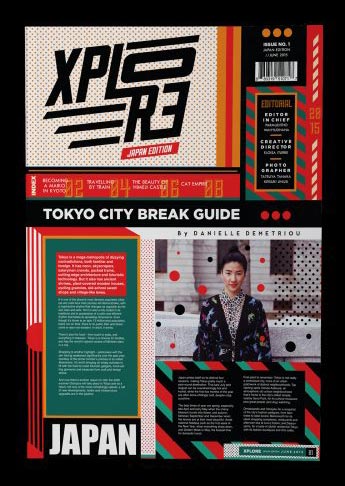
Xplore Newsletter cover

For an energetic design like this one, you need a dynamic color scheme and some great shots. This cover makes fantastic use of a strong geometric scheme and trendy colors, reminiscent of the industrial sprawl and neon signage of Tokyo’s Shibuya shopping district. Saturated contrasting colors (like the teal, rust and pumpkin used here) glow against the grounding effect of the black and white. Combined with bold and funky fonts, this is a great style for growing brand interest.

4. African Studies Heritage Studies

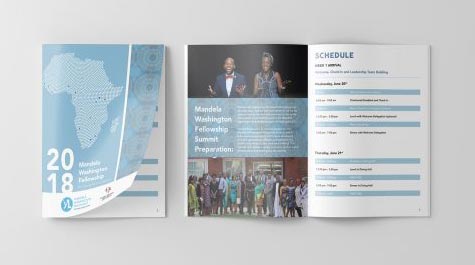
AHSA Newsletter Cover example

This layout showcases a classic form that offers a relaxed presentation. A fantastic style for the more formal settings of conferences or meetings, the soft tones and flow of information effortlessly carries the reader from one page to the next. Perfect for accompanying materials, your audience can easily refer to displayed data without missing out on the presentation.

5. Art News

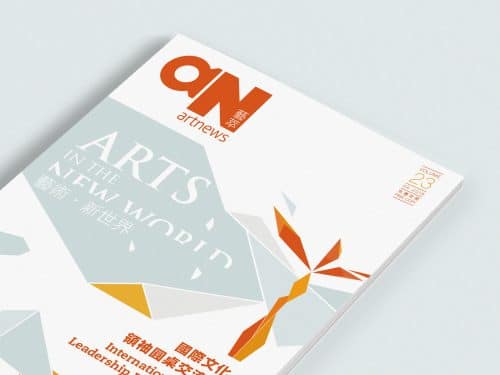
ARTS News newsletter cover

Here is another example of beautiful results that can come from the use of contrasting colors and geometric shapes. An abstract landscape graces the cover; done in arctic shades and highlighted by brilliant oranges and golds. This style has a more mature feel than the Xplore cover previously shown, but is no less visually stunning. With modern sensibilities and a playful appeal, this layout is perfect for established companies looking to cultivate their image.

6. La Memoire Vive

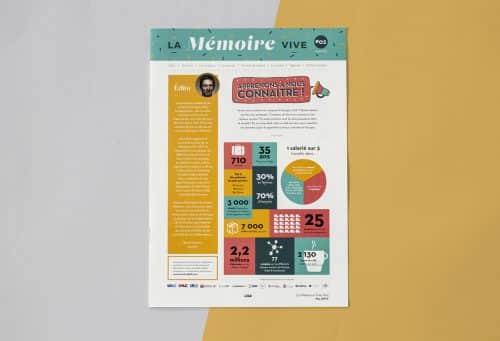
La Memoire Vive cover

Colorful and playful, this newsletter doesn’t hide from the facts, but lays them carefully out on the front page. Primary colors and cute icons are easy on the eyes and makes those pie charts fun to peruse. Meanwhile, generous spacing keeps the layout from looking crowded and the toned down shades lend maturity. We see this style used most commonly by companies looking to invigorate their look.

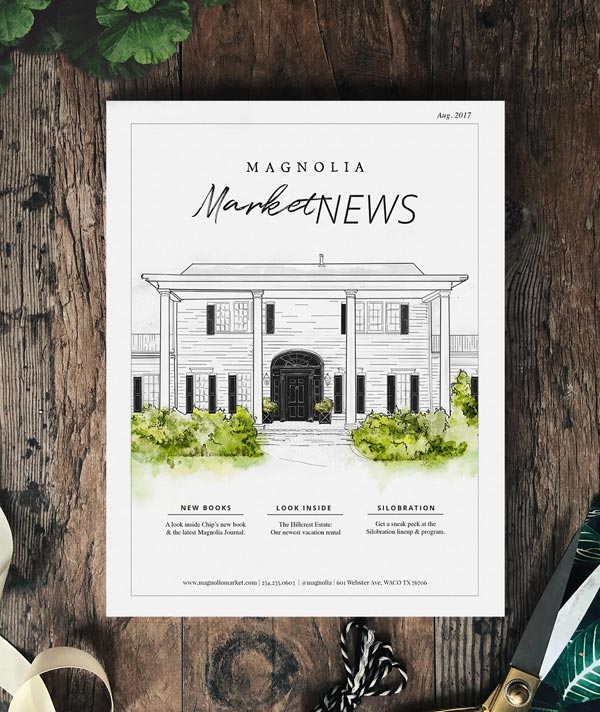
7. Magnolia

newsletter cover example

This newsletter successfully rocks an upscale East Coast vibe. Leaf green accents alongside its minimalist black and white architectural illustration give it a clean, fresh look. And a quick list of highlights neatly tucked along the bottom of the page keeps things top-notch. This layout is perfect for a first-of-the-year newsletter.

8. Vinoly

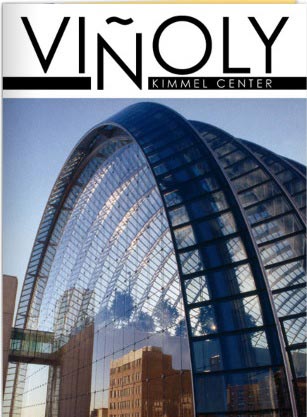
Vinoly Newsletter Cover Design

You can’t go wrong with a fantastic centerpiece. And this one, with its alternating curves and hard lines, the ribs of the structure either heavily kohled with shadow or iridescent with sunrise, is superlative.
Let your image speak for itself. Take advantage with a larger-than-life layout and a minimalist cover. Off-setting your font breaks up the straight lines of your borders and creates a point of interest, When your newsletter’s focus is information-laden articles, copy this style or take a page from popular magazines like Time or Smithsonian. Develop your written content around interest-building images. Keep them relevant and your viewers will stick with you until the end (of the article at least).

9. Power Through Peace

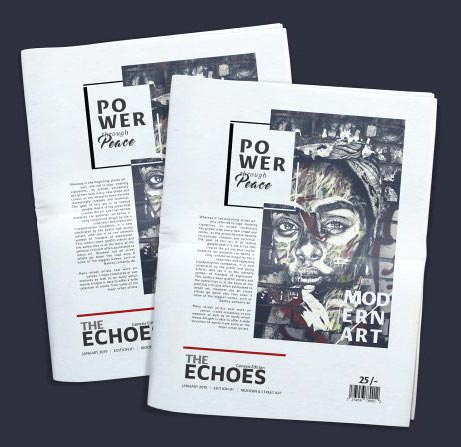
Power Through Peace Newsletter

There is something fundamentally transient about this cover. One can almost taste the bitterness of black coffee, feel the rhythm of slam poetry where newsletters like these might be strewn across battered tables. Youthful rebellion is dynamic branding. Bespoke résistance showcasing gorgeous street art is trendy and the message is clear: politics change, graffiti may be painted over, but this is cool.

10. Act News

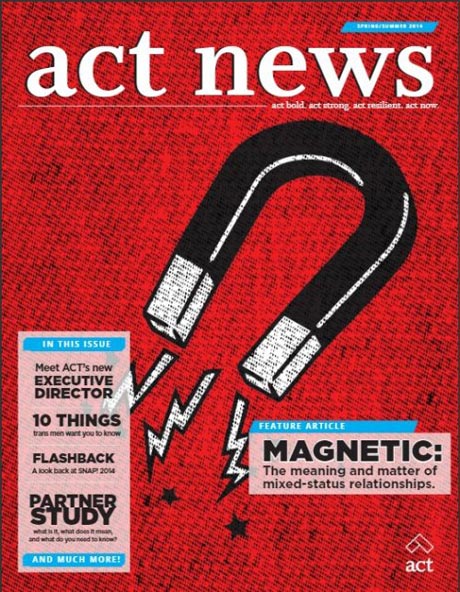
Act News Cover

Vibrant, dynamic, and magnetic! This pop art inspired cover effectively uses saturated colors and simple motifs to drive their message. Try using an all lower-case serif to keep your title professional but low key. Direct and to the point, these semi-transparent text boxes list the newsletter’s highlights without detracting from the overall effect.

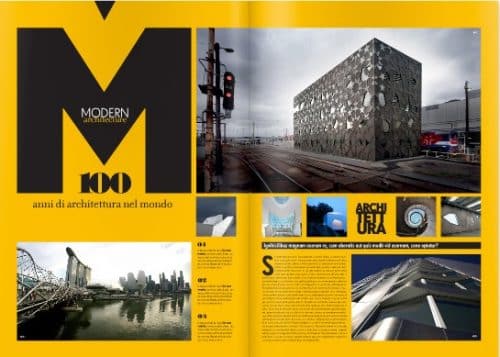
11. A News

newsletter design example

Putting the ‘M’ back in Modern, this daring spread is laden with great visuals. Framed by fantastic images, the article lies center-stage and gives you the opening you need. Grab audience attention with over-sized fonts as solid as the brick-and-mortar beauties showcased opposite. Just remember, yellow and black is daring but keep it in check with a saturated but less vibrant tone. You want to attract them, not give your viewers hives.

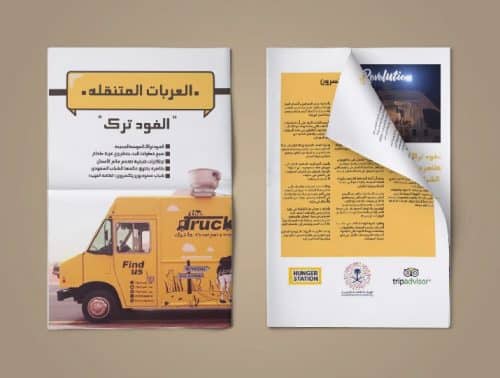
12. The Food Truck

newsletter design example

No business is too small or too new to benefit from a well executed direct-mail campaign. From food trucks to pop-up shops or even your kiosk at the next convention, you can generate interest in up-coming venues, popular trends, and developing products that are in the pipeline.

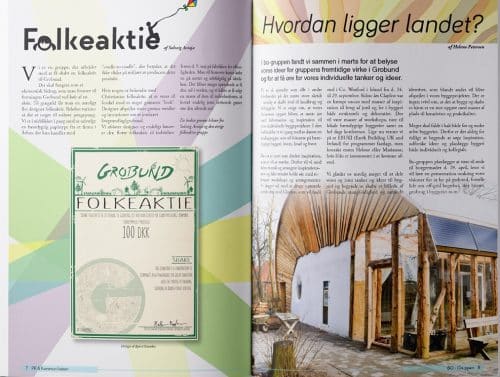
13. Grobund

full color newsletter design

A veritable pastel rainbow, this layout is friendly and approachable and balances nicely with the raw pine frame of the facing image. Fresh spring tones beautifully frame the inset flier, tying this brochure back to a larger campaign.

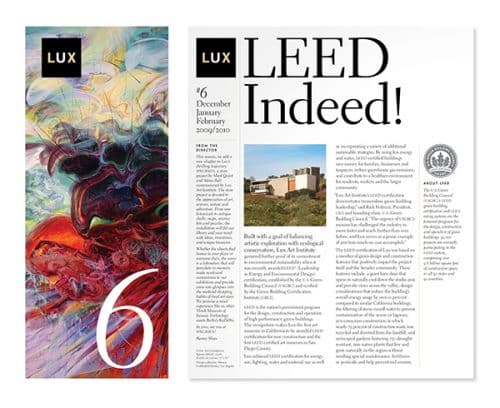
14. Lux

folded newsletter design


Saturated color is truly luxurious. The brushstrokes provide impeccable texture and incredibly vibrant. And yet, the picture facing it from within the article is fairly tame. This diametric opposition between the mundane and the feverish creates a sense of balance upon the page. The article provides content yet the images are the substance, acting as a foil for the spread. Meanwhile, the over-sized title carries the energy onto the next page.

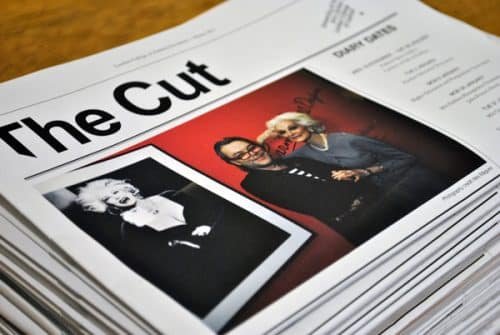
15. The Cut

corporate newsletter example

Corporate newsletters were made for newsprint. From ‘breaking news’ to the gossip column, there isn’t a single other forum that matches the pure vivacity of copy. Does that mean that you have to be big business to send out your own limited edition? Absolutely not! Tuck in a flier or a coupon for your reader’s next visit and get twice the action out of your direct-mail campaign.

Want more? Talk to a print expert today at 800-930-6040 to get started with your newsletter.

How to Get Started with Direct Mail Automation on a Budget

Direct mail is unquestionably effective, has fantastic returns, and can easily dovetail into your existing marketing campaign. Here’s how a put together a great direct mail automation campaign to squeeze every last drop of value from your budget.

The Benefits of Omni-Channel Marketing

email marketing

Almost three billion emails get sent every day, and people are getting better at filtering them out. Even with the best, target-specific digital advertising, the odds are stacked against you. The trick is diversification. While it may seem contrary to the digital world that we inhabit, customers still love direct mail. And automated mailing systems make getting your message to a wider audience easier (and cheaper) than ever!

Develop Your List, Check It Twice

When you are running a direct mail campaign, it is vital to start with a clean list of contacts.

Direct-mail experts like to cite the 40/40/20 model: 40% of success comes from having the right mailing list, 40% comes from the value of your offer, and 20% is your writing and visuals. So, whether you are developing your own list or buying a list, give the list a thorough review before sending direct mail.

Bad addresses, changed addresses, updates that somehow never made it into the system; these can result in undeliverable or returned mail that will cost you money. If you are sourcing your mailing list from a third party, always check when the last time the list was updated. More than thirty days and you are at risk of out of date information.

As a side note, something to consider as an addition to your campaign is inbound marketing. While it sometimes seems like a distant cousin to direct mail, when paired together they can increase chatter about your business and generate traffic on your website. As an added bonus, this strategy creates a steady flow of new leads into the funnel to fuel your automated campaign.

Designing Your Mailer

joyful mail recipient

For every project, there is a direct mail option to suit your budget. Studies show that oversized envelopes and postcards receive the most interest, at 5% and 4.25% respectively. In addition, postcards come in several sizes and different finishes and can be embellished for a more unique look.

Whatever your budget, it is advisable to get the highest quality paper and inks for your mailers that you can afford. There are definitely areas of your project that permit cutting corners, but the materials of your mailers aren’t one of them. Direct mail articles are called tactile marketing for a reason. Thin, flimsy paper and cheap inks detract from the quality of your campaign. By using a basic mailer design that is less expensive, you can dedicate more of your budget to higher quality paper, better inks, and more finishes or coatings.

If there is more room in your budget, you can opt for more elaborate mailers. Specialty shapes, folds, die-cuts, inserts, or more visuals can increase appeal. Additionally, you can bring your omnichannel campaign full circle by making your mailers a truly holistic asset.

A Limited Time Offer

As we mentioned earlier, a combined 80% of your success comes from sending to the right prospects and the value of your offer. The acquisition of new customers costs 5 to 25 times more than existing customers. With that in mind, the perceived value of the offer must be significant enough to arouse curiosity and draw in your new targets. So, don’t skimp on this incredible detail. Make them a great offer, add an alluring CTA, and watch your numbers rise.

Maximizing Automation

Admittedly, one of the major appeals of contracting out the nitty-gritty of your digital and direct mail marketing to a third party is that they already have a system in place to handle the gathering, tracking, coordinating, and distribution of your information. They have the benefit of experience in handling large amounts of data; such as your tracking your mailings, the responses and website hits, and the follow-up. They can not only help you develop a professional looking campaign, but also manufacture, coordinate, and distribute your marketing materials, be it digital or physical.

And let’s face it, wouldn’t you rather put your budget towards a professional campaign that takes care of itself and allows you to dedicate more of your time and resources towards improving your brand value and client satisfaction, than licking postage stamps?

increase in marketing ROI

Remember, there is a lot of work that goes on behind the scenes for a successful marketing campaign. And after your mailers go out, there is even more work to do for the follow-up. Most automated marketing systems can take a few months before you start to see real growth. During that time, response and increased traffic data must be collected and analyzed. By batch coding your mailings and tracking the individual responses to your campaign, areas of effectiveness can be tracked and address the weak points. But all of this takes significant time and effort. Ultimately, a coordinated charge between your digital and your direct mail campaigns is more thorough, leaves less room for missed opportunities, and captures more high-quality data. Contracting a professional company to handle your campaign increases the likelihood for success and squeezes more value out of your budget for your ROI.

Rinse Repeat

Whether digital or direct, your marketing campaign will require regular and steady effort. There is no single process that will bring in new prospects, stimulate lost leads, and returning customers in one go. Direct mail automation is only the first of many steps to build a successful brand. But fortunately, you won’t have to start over every time The more that you automate and the more steps that you take, the easier it will be and the more successful you will become.

Call Printing for Less today at 800-930-6040 to start your own automated campaign!

10 Brochure Ideas You Haven’t Thought of Yet

There are few print marketing materials more versatile and informative than brochures. A brochure is, at its most simple, a folded, single-page printout that includes text and images about a brand’s products and/or services. And if that sounds boring, just stick with us for a second—we promise there is a ton of room for creativity within that folded-up page.

To understand how you can get creative with brochures, you have to understand the purpose of a brochure beyond just its general definition. So what is a brochure used for? Anything you can think of. Brochures are used in marketing and advertising, but they’re also used in restaurants, retail shops, and doctor’s offices. You’ll find politicians distributing brochures, as well as PR firms, banks, schools, salespeople, and so on. Basically, if an individual or a company has something to tell you about, chances are they’re going to do it in a brochure.

The reason that brochures are such a ubiquitous print marketing tool comes down to their adaptability. Well beyond the general guidelines that answer the question “what is a brochure?” is the ability for brands to get as imaginative as they want with what their finished products look like. Not convinced? Here are 10 alternative brochure ideas to kickstart your next print marketing project.

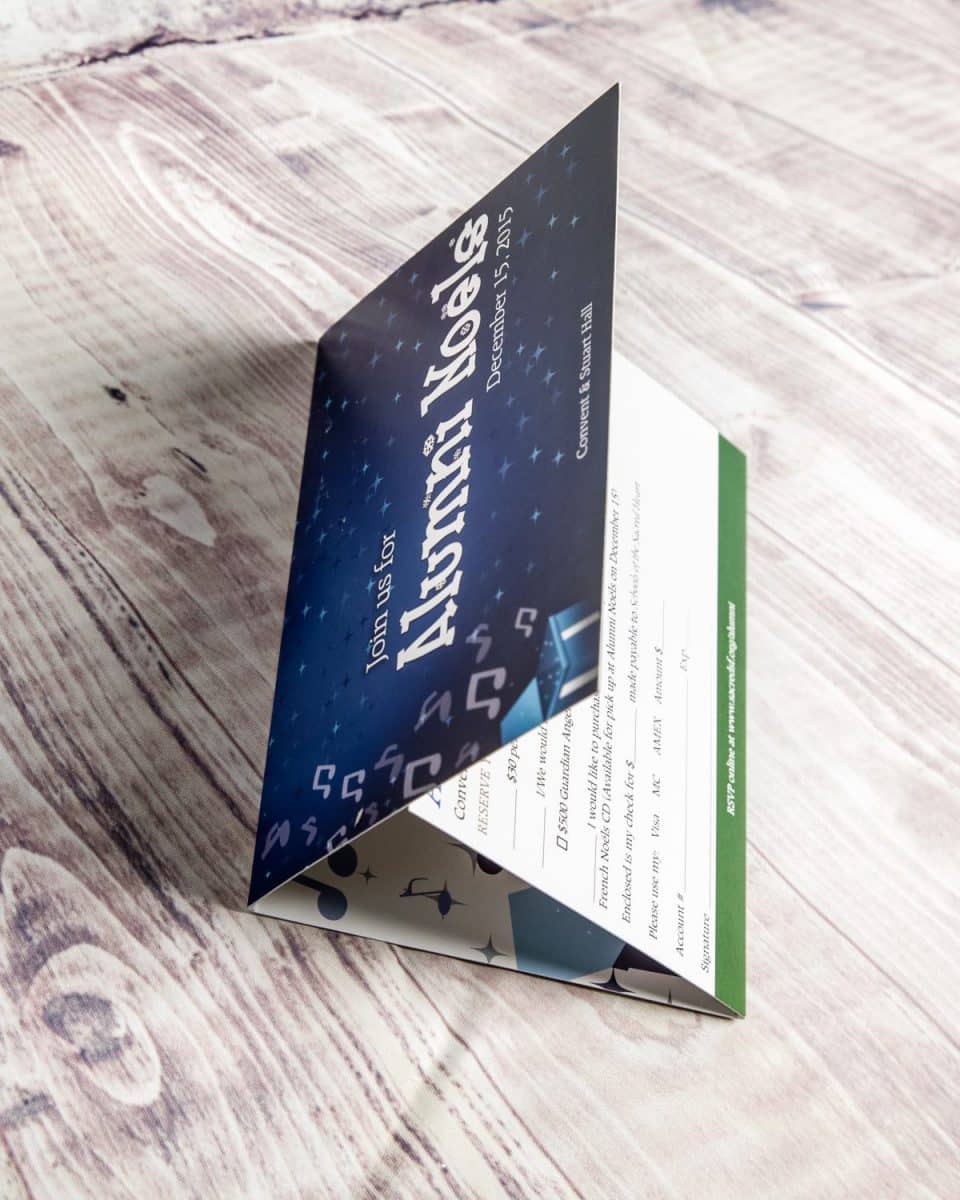
1. Use a brochure as an invitation

holiday brochure mailer

Next time you send out an invitation to a client- or lead-focused event, use it as an opportunity to share more than just the date, time, and place of your get together. By turning your invitation into a brochure, you give yourself significantly more room to go into information about who you are and what you do—which can be a real advantage if your event itself is marketing-driven.

2. Think beyond standard folding options

cross fold mailer

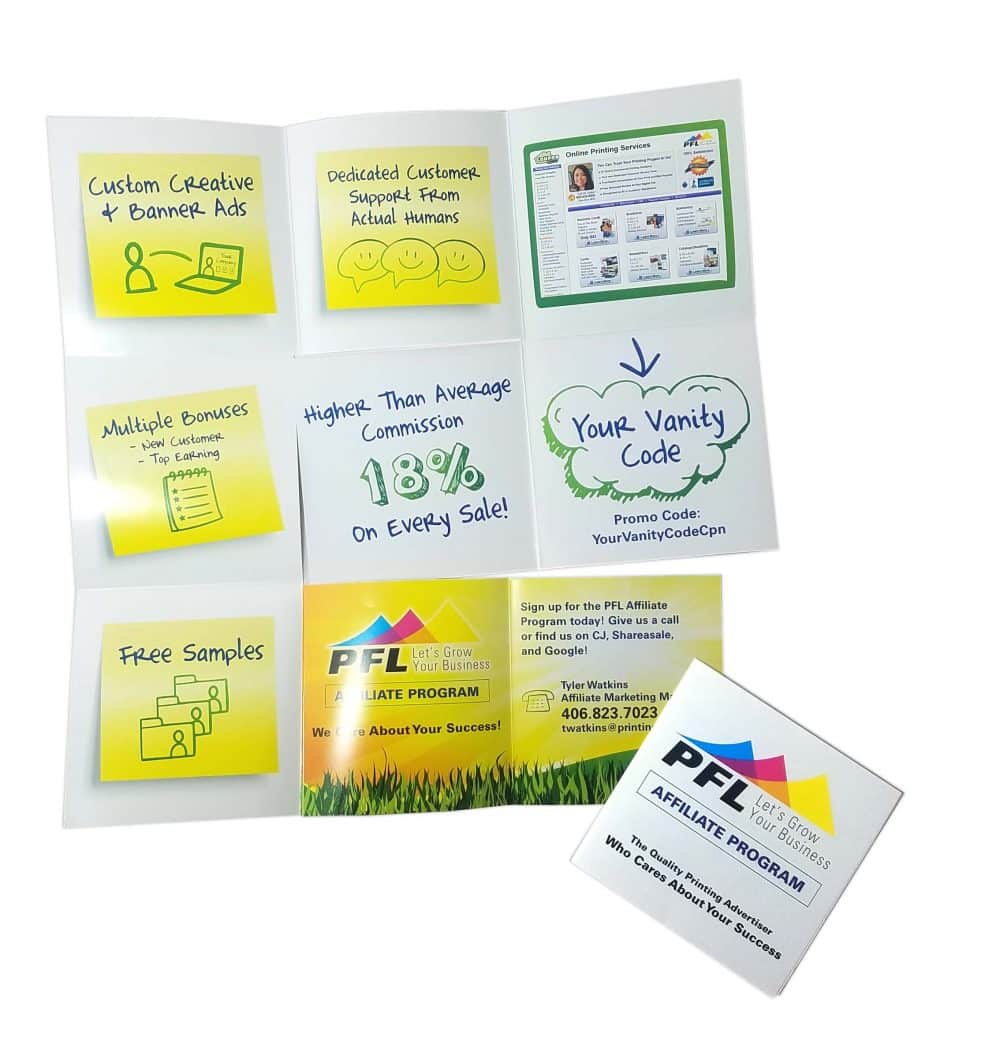
There’s no one way to fold a piece of paper. Help your brochure stand out by getting creative with your folds, opting for something non-traditional rather than just a standard panel arrangement. Doing this sends a subtle message about your brand that it’s forward thinking and into out-of-the-box ideas. In the example above, the unique fold is accentuated by images that work both as standalones when the brochure is opened and together when it’s closed.

3. Play around with shape

irregularly shaped brochure

Have some fun with the overall shape of your brochure. Because while a brochure is essentially just a piece of paper, there’s no rule that that piece of paper has to be a rectangle. The shape you choose for your brochure is up to you. Go with a star and fold each point inwards to create panels. Go with a circle or a hexagon or a pirate ship—whatever makes sense for your brand. The shape just has to be foldable (and not necessarily even into symmetrical parts).

4. Size it small with a snake fold

snake fold brochure

Big things really can come in small packages. Snake folds are an original method of brochure folding that balk standard patterns to create something unexpected, and lend themselves very well to tiny brochures that pack a major punch. Who knew you could get so many panels out of one standard size sheet of paper?

5. Include an infographic

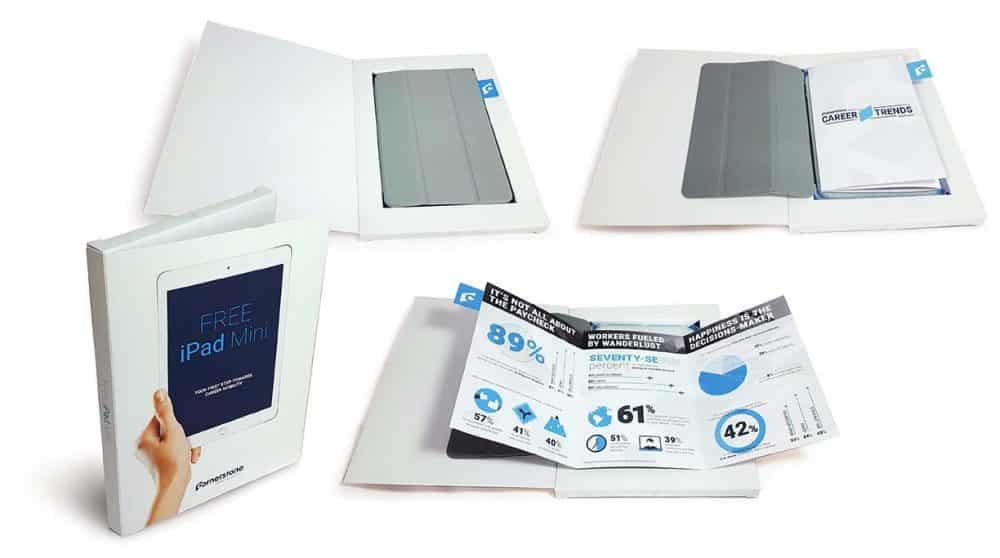
Cornerstone mini iPad

Infographics convey a ton of information in a quick, easily digestible format. And while you may be used to seeing infographics online, a brochure is a great way to bring them into print. The key to a good infographic is that it has to capture attention and it has to provide information in a non-distracting way. Be conscious of how you use color and text in your infographic so that you don’t overload the page—there should still be enough white space on there to carry the eye from point to point.

6. Tell a fortune

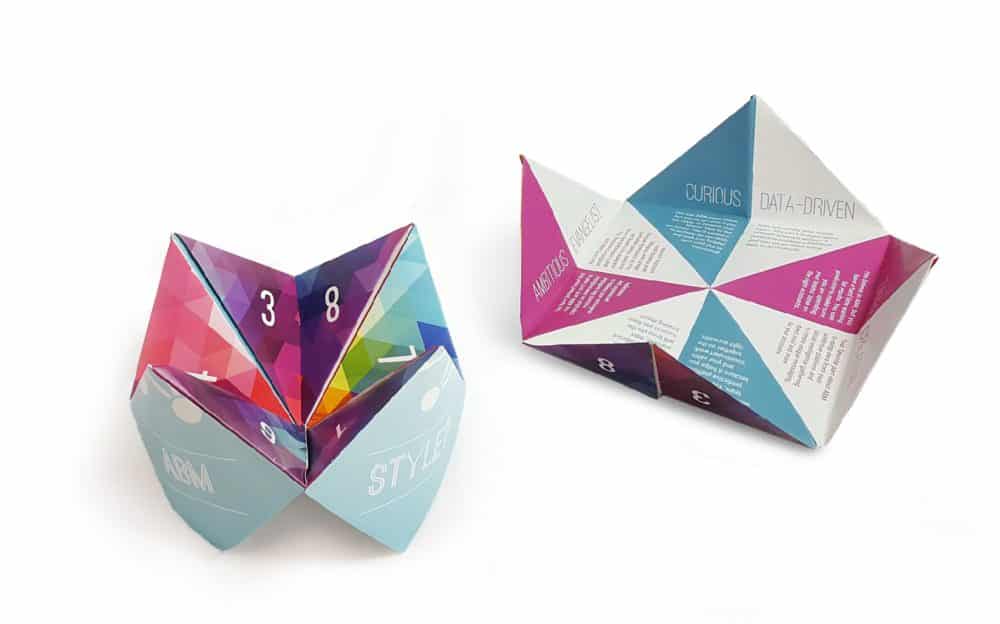
Everstring fortune teller

Even if you’re not in the business of fortune telling you can still design a creative brochure that mimics a paper fortune teller. Use each panel to highlight a different product or service that your company offers, or designate each panel in another way that you see fit. The benefit to this layout is that you can fit a ton of information in a relatively small brochure. And because the final product is three-dimensional, you’re sure to make a strong impression.

7. Make your imagery the star

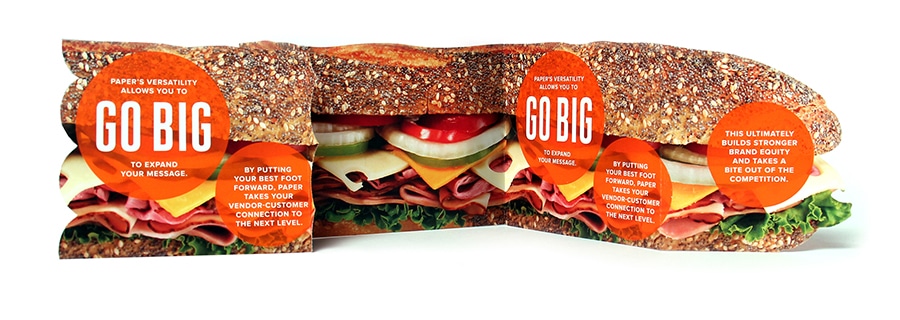
sandwich brochure

Brochures are used to share information, but to get someone to open it up in the first place you

have to grab their eye. Images are a great way to do this, especially when you incorporate the imagery into your overall brochure design instead of just using them to occasionally break up some text. In this example, the image dictates the entire shape of the brochure, and in doing so, immediately tells a story about this brand and what they do.

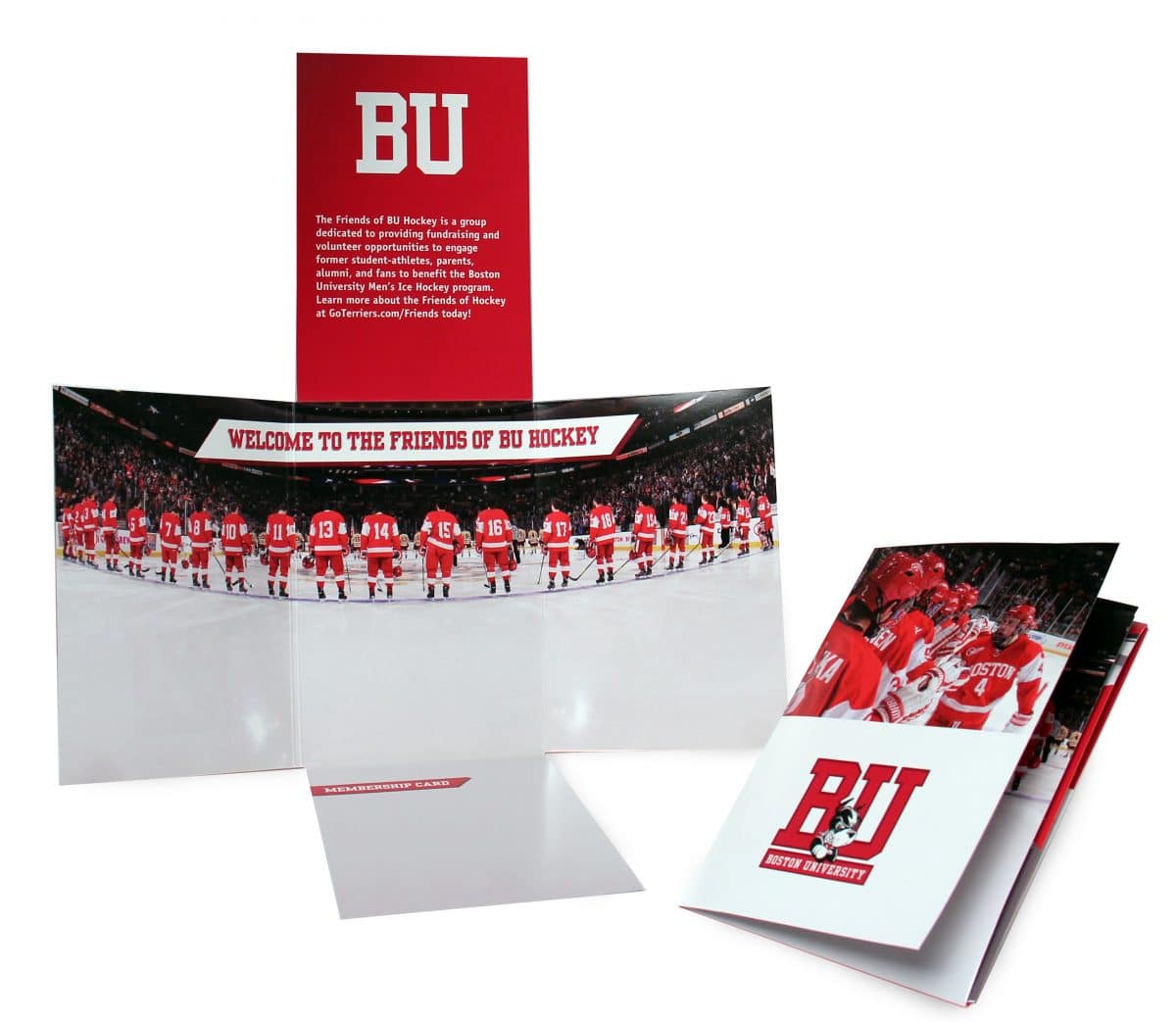
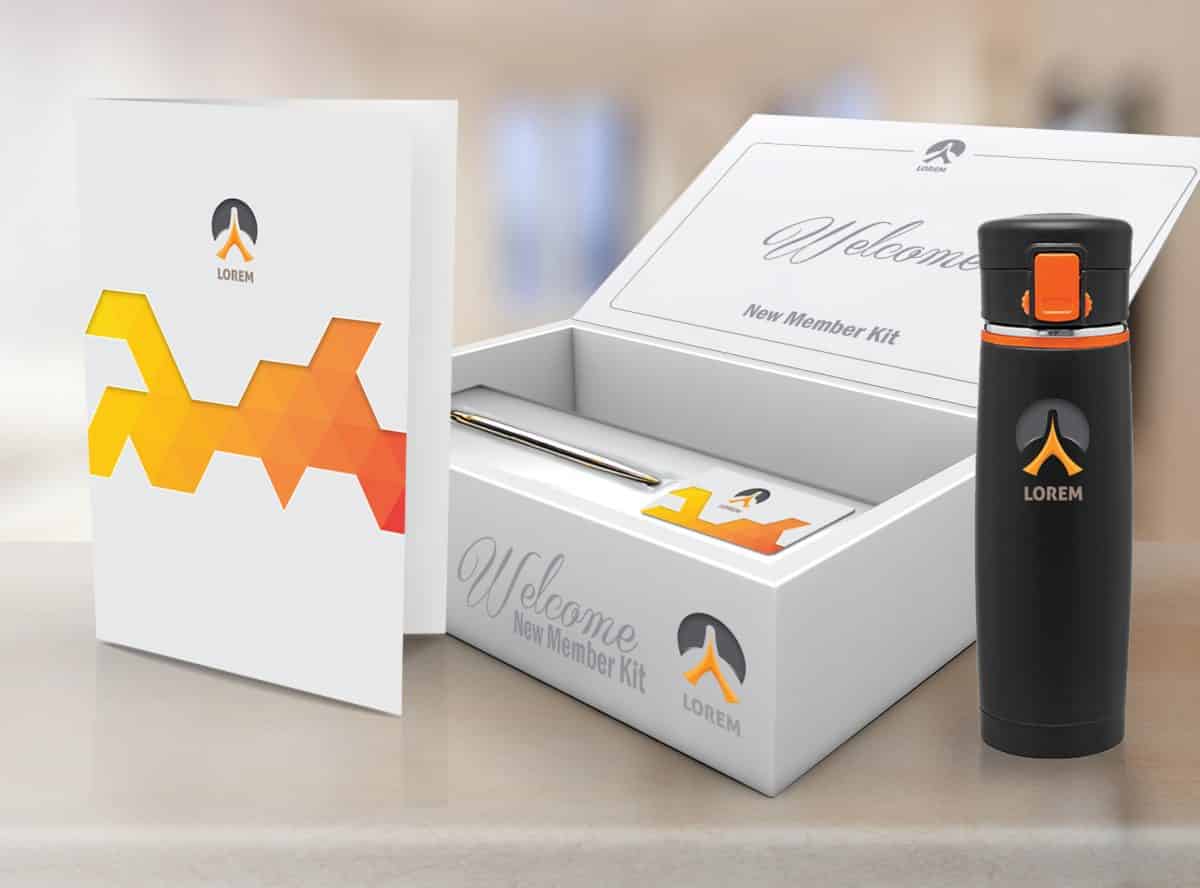
8. Supplement your brochure with a gift

Lorem Welcome Kit

You already know why a client or a potential lead should pay attention to your brochure, but like all of us, they’re likely inundated with marketing materials every day. If you really want to stand out, it helps to sweeten the pot with a gift. By creating an integrated marketing bundle that includes a brochure and some sort of useful gift, you make it more likely that your recipient will notice your brochure among the others they’ve received, and will also give them more incentive to read what you have to say.

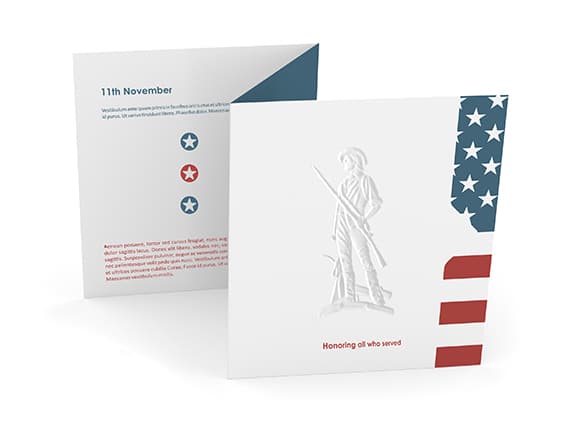
9. Embrace embossing

Military Brochure embossed

Adding embossed imagery or text to your print marketing materials adds a touch of something unexpected. It can be particularly effective on brochures like the ones in the image above, which are otherwise understated in their visual effect. Embossing adds depth and texture to a page, both of which can turn an unassuming brochure into something worth taking a second look at.

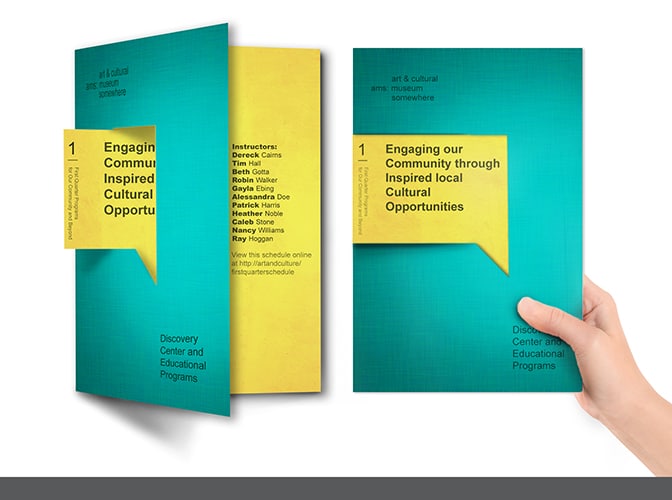
10. Pop it out

museum brochure pop out

Speaking of unique design elements, consider including a pop out, which combines text from multiple panels of your brochure to highlight the message that you want to share. The brochure in the image above uses a pop out to make a strong point about what the objective of the ad is. And because it’s so clearly denoted, the organization doesn’t need to use a lot of other text to get that point across.

See? Brochures don’t have to be boring! Talk to a Printing for Less print expert to learn more about how you can create brochure that makes a big splash. Call us at 800-930-6040 to get started with brochures today.

Get A Brochure Printing Quote

The Ultimate Guide to Every Door Direct Mail Marketing

ultimate guide to eddm

How to Craft a Successful Direct Mail Campaign

Almost everyone in the entire world has been on the receiving end of an Every Door Direct Mail® (EDDM®) campaign. Even if you have recently changed your address, there will always be that business postcard promptly waiting inside your mailbox, usually marked “Postal Customer”. That is why EDDM campaigns are so effective. In a progressively more digital world physical pieces of mail still make it to your mailbox and in front of your very eyes, shutting down the outdated “print is dead” philosophy and giving direct mail marketers an edge they can’t get online. 

With EDDM®, you can cast a net into a concentrated area to maximize your direct reach. A well executed EDDM® campaign is the perfect way to get your message into the hands of every person in a specific geographic region — all without the cost of purchasing mailing lists and permits. Remember all those glossy flyers from your county’s representatives? EDDM® is made for the campaign trail. Pinpoint who your demographic is and only send mailers on your route matched with your ideal consumer. You can tailor your marketing material to better fit your postal route. EDDM® is ideal for political organizations, businesses and individuals looking to gain the attention of basically anyone (think “Local Postal Customer”). 

Every Door Direct Mail Marketing Reigns Over Digital Avenues 

What’s so efficient about EDDM® is the streamlined organization and transportation. There are reduced sorting and transportation costs associated with EDDM®, which translates to a reduction in cost incurred by the USPS carrier, which is then passed on to you. Some of the best-suited candidates for EDDM® are political groups looking to drive awareness of candidates/issues, and businesses looking to reach out to targeted customers in a specific geographical area. The number one value in an EDDM® campaign is the Reach. Direct mail marketers like political candidates want your votes, which means they have to reach out to you first. first.

With a never-ending election cycle, it’s time to get a jump on the campaigning and get your direct mail marketing started! 

Cast The Direct Mail Marketing Net 

There once was a push to make everything digital, but in recent years there’s been a resurgence of interest in direct mail. Digital marketers have realized that their online campaigns can only reach so far before they’re automatically filtered into the junk folder, removed by ad blockers, or skipped over on social feeds. By striking a balance between digital calls to action to sign up for email newsletters and Direct Mail Campaigns, marketing professionals are shifting to a mix of online and offline channels to maximize their marketing effectiveness. They realize that the expansive digital ecosystem produces an overwhelming amount of information that can be easily replaced, updated, and ignored by potential customers. It takes a whole lot of effort, but people do have the option to hit that “ Unsubscribe” link in the fine print. So, you may have reached your customer only for them to part ways with the message almost instantaneously. By including print, marketers can incite a 1:1 dialogue with their prospects, which creates lasting, engaged customer relationships. That is the long way to saying “print isn’t dead,” despite many arguments. 

According to a ProPrint survey, 79% of consumers act on a brand’s direct mail piece immediately, while 56% found printed material to be the most trustworthy out of all media channels.

Four advantages to direct mail marketing (EDDM®) campaigns:

  1. Reach. The ability to select specific zip codes and carrier routes allows you to target geographically, ensuring your message reaches consumers in areas most relevant to your business. You can search for your consumer market by narrowing down your audience by income, age and location. Additional demographic filters exist if you have a slightly more targeted methodology, such as home ownership, gender and household or family size. You can also use the EDDM® Mapping Tool from USPS to search for your ideal route. Ideally your reach targets only customers in your ideal market, which will lead a promising amount of conversions to your business.When going through the route reach process, USPS will ask your Route Type. You are then able to select one or more types between: residences by city, neighborhood, rural or highway and PO Box. The next prompt will ask for your Address Type (labeled Residential or Residence) which are divided into three selections which you are allowed to pick one: Business & Residential, Only Residential, or a targeted age group anything from legal age to senior citizen. Besides the design process (which hopefully you already have done) searching for your route will be the only tedious hurdle in beginning your campaign. Remember the route can make or break the campaign’s success. Make the most of your marketing dollars and take the time to find the best route for your direct mail campaign.
  2. Flexibility. This measures the size flexibility of your message. What kind of impact do you want your message to leave? The variety of postcard sizes available provides flexibility with your messaging. The smaller formats allow for punchy and compelling copy while larger formats offer room to tell the full story of your product or service. At Printing for Less, we offer many USPS templates in all different sizes for postcard printing. Not sure what your message is going to be? Try out a mockup template before you decide to complete your order.
  3. Value. Without an EDDM® campaign, large mailing requires a postage permit as expensive as $400 per permit. With an EDDM® campaign provided by Printing for Less, we waive that fee. USPS provides a simplified address system so that you never have to pay the price of mailing list. With no mailing permits or lists to buy and with postage at only 15.7 cents the program is highly economical. We even offer reduced postage rates for non-profit organizations.
  4. Effective. Print complements repetitive digital cycles and actually strengthens the overall effectiveness of a digital campaign. Providing something you can handle and read, grabs the consumer before they decide their next interaction with your business. By adding a high-impact, personalized tactile touch, you create true multi-channel campaigns, which increases exposure, response, and prospect engagement. Print is a low cost addition to your EDDM® campaign that could be the tipping point to beginning a lasting consumer to business relationship.

Choosing the Right Printing Partner for Your Direct Mail Marketing

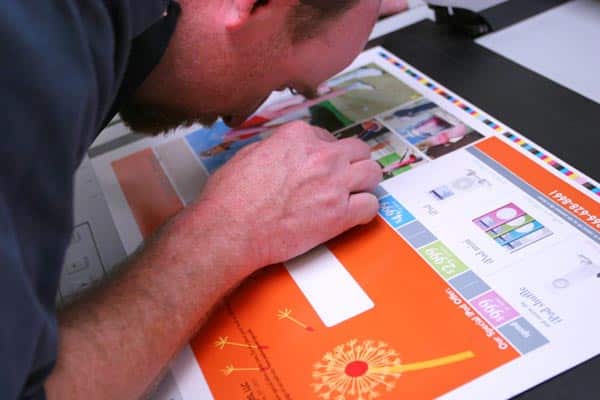
press-check

Your printing partner can make all the difference in how effective your direct mail marketing is. The less time you devote to coordinating the details of an EDDM® campaign, the more time you have to focus on growing your business. Printing for Less offers all of following tools you will need for a successful campaign. Selecting a printer that has the capabilities to execute all aspects of an EDDM® campaign is important, so when searching for a direct mail marketing partner look for one that provides: 

  1. Printing capabilities. Look for a print shop with both digital and offset printing options. Digital allows for smaller quantities and variable data while offset provides larger runs with custom finishes. If you want to see your design before its sent out? Before you start down the printing pipeline, get a price quote or customized samples of your campaign before beginning your Direct Mail Campaign. When you offer both options your message is saturated in both digital and print mediums. Cover all the bases by using a printing partner that can facilitate range of print options. With all of our design options and printing capabilities, we can ensure your print job reaches your market successfully and efficiently.
  2. Route selection. What is so efficient about having an Every Door Direct Mail campaign is that we partner with USPS so that they handle delivery along the carrier route. You can deliver in suburban areas with high concentration of family housing, or maybe your target market is in an urban area filled with young professionals. Direct mail marketing only works well is your business is centered around attracting the right audience in your area. Choose a print facility that offers a route selection tool as part of the ordering process. Check out the USPS EDDM® User Guide for more information on registration. This saves you the hassle of manually searching for and choosing specific neighborhoods to target. Now you can close in on households that would find your business practice or special offer appealing which most likely means a higher response rate. Printing for Less has made Every Door Direct Mail Campaigns simplified to offer tailored services for small businesses to political campaigns.
  3. Delivery service. Most print facilities offer transportation to the nearest USPS, but you should always ask to double-check so you don’t get stuck transporting the bulk mailing to the post office yourself. Upon arrival to the USPS, your direct mail campaign prints will be sent out to every home or business address on your carrier route. You can find your desired carrier route online by using the USPS EDDM® mapping tool to tailor your circulation.
  4. Regulatory expertise. EDDM® has very specific bundling and mailing requirements, so confirm that your printer has a mailing services department that is well-versed in the rules and regulations of EDDM®. Many printing services offer specifics on mailers that only include certain print sizes and bulk orders. For example: if you’re a brewery that recently unveiled a new beer on tap, you can send out a bulk of 5,000 mailers or fewer to a specific zip code near your business to draw attention to your beer release event. This type of campaign is called an EDDM® Retail Account, something for small brick and mortar shops, restaurants, or professional services. If you’re a larger organization, like a nationally recognized department store or grocer, you’re going to need the Business Mail Entry Unit (BMEU) which entitles you to 5,000+ mailers per zip code and will also require an additional postage permit. Create an account if you haven’t already with USPS and this will enable you to sign up for the right account fit for your business needs.

Sending Your Direct Mail Marketing Order

After you’ve made the final decisions on your route map, schedule all your orders to be dropped off at the post office that is designated to your account. Choose a drop off date for your mailers then a payment prompt will highlight options to pay online or pay at the post office. We mentioned that finding an EDDM® mailer that will do all of the legwork, like picking up, dropping off, and sending mailers is ideal to ensure that your time is used wisely.

However, if you should choose to coordinate your own transport for the mailers, make sure that you have filled out the correct forms, bundle your postcards, and deliver them to the post office with in an orderly stacks of 50-100 cards. Your order should be labeled with the correct USPS forms and contain a postcard count. You can ship or drop off your orders at the post office that is designated to your account, whether it’s BMEU or an EDDM® Retail Account. BMEU policyholders have to drop off their order at the post office that holds their permit. Retail Accounts must drop off their mailers with the post office that is matched with your route. 

Make the Most of Direct Mail 

direct mail postcards

Once you understand the logistics and targeting associated with direct mail marketing, the final component to a positive ROI is the actual composition of the piece. The design process can be a ship on rocky waters, so it’s best to keep in mind a few best practices to make this project quick and on its way to doorsteps.

  1. Design. Use strong creative direction by using simple color palettes paired with a few eye-catching tones like metallic or chrome. Use design features that, to the touch, feel memorable like raised cardstock or glossy finishes. While a full-color piece will cost a bit more, the impact can greatly outweigh the cost variance. Things like high-resolution images, bold colors, and clean typography create a high-impact piece that will stand out in the mail. Remember, if it looks bare and scrappy then your mailer might be destined for the discard pile.
  2. Copy. Even with the larger size postcard, every word counts. Think about concise, catchy, and compelling copy. Use bold active language that draws readers in to whatever it is your selling or offering. Activate their minds to make a decisive action. Provide enough information to educate, in a way that keeps your prospect engaged and leaves them with something memorable. Make it active or give your reader a task like applying a coupon code or signing up for promotional discounts. Or if you’re online, drive them to your website by providing a welcome discount code.
  3. Tracking Measurement. Being able to measure your EDDM® campaign by tracking gross response rate is the best and most accurate way to prove your campaign’s success. Do you want them to call your business? Come to your store on a specific date for a sale? Or would you rather them find you online? Making the best call to action related to your business is key to getting successful response rates.

Tracking Your Direct Mail Marketing Campaign

  • Phone Number. If you choose to add a phone number with tracking capabilities, your marketing team will be able to track recorded inbound calls to your tracking number. Tracking numbers help with measuring which offer generates the most response, how many responses a certain mailer receives, what time of day you receive the most calls, and how your team handles incoming calls.
  • Website URL: Adding something like a website URL is a reliable way to track visitors to your website, who may want to book a professional service or make a reservation. If you’re a restaurant or offer salon and spa services, this is the best call to action! Drawing your consumer into your mailer will lead them to your website. Offering a coupon discount code for salon service will incentivize your customer and lead them to your website to schedule an appointment. If you’re a new restaurant in the neighborhood, your mailer could offer a discount on your first meal if you present the mailer or book a reservation. Mailers that offer a lead to goods and services are always successful.
  • QR Code: The ever more popular route of CTAs is the quick response (QR) code that is friendly to scanners on most smartphones. You can label smart codes like these onto your mailer to connect someone’s mobile device to your business. QR codes often contain data that, once scanned are linked to the device, are tracked and lead to a website or an application that contains the mailer offer. In conclusion, QR Codes are a quicker way to drive your consumers to your website with little effort and increase total conversion rate.

Being able to prove and improve your marketing spend is a critical component. Special offers, QR codes, and dedicated URLs are all viable ways to track the campaign and reinforce a multi-channel strategy with the ability to track whether or not consumers are converting. Depending on which strategy you decide to use, be sure that your message is clear and direct, so customers know exactly what to do and where to find you.

Measuring Direct Mail Marketing Performance

In preparation for your next campaign, the best route of action is to measure your previous EDDM® campaign performance. By using many tracking tactics like Google Analytics, you can track your response rate from your campaign from any of the methods that we mentioned above. According the Direct Marketing Association in targeted direct mail households, the response rate is 9% and 5% prospective rate, which are both higher than email, paid search, online display and social media combined.

Responses / Pieces Sent = Response Rate

To ensure the most accurate collection of your EDDM® response rate, take quality assurance in training your sales team to acquire and code leads accordingly as they are logged in an analysis tracking program. This should be practices every time a new tracking method is introduced or changed to an EDDM® campaign.

Next Steps: Direct Mail Marketing Best Practices

Now what? You’ve mailed out your campaign and are collecting your results and watching the growth. As you observe your successes and reevaluate missed opportunities, take into account which tracking methods have been installed. As a best practice for your next campaign, make sure you’re recording all new avenues of tracking methods. Be sure you’re saving your results from past EDDM® campaigns. In the future you will observe and compare each campaign’s key performance indicators (KPIs) to see if your returns are improving and if it’s worth your marketing investment. One of the key components of compiling the best results is to consult your past campaign components before beginning the next campaign. Examine your mailer and see if there are any errors or misinformation or take a user experience survey. Arguably the best way to troubleshoot and measure your direct marketing campaign is by segmenting your audience. It all goes back to choosing your direct mail route: try segmenting your route to better fit your business or product.

Now that we have laid all of our reasoning out in the open, does your business need a direct mail marketing campaign? Check out why an EDDM® campaign is the perfect mailing option for your business. Just remember, each step of the process is just as important as the other steps. Your mailing route is just as important as the design.  Designing a perfect mailer that doesn’t reach your targeted market could be a shot in the foot for your business. Or, a mailer with a poor message that does get into the hands of consumers might not make the mark you want. Take extra care in choosing your route and design to ensure your message gets into the hands of your potential consumers. Every Door Direct Mail® is a highly effective approach to drive actionable results. Out of all other marketing mediums, including: paid search, social media, online display, and email, direct mail has continued to reign supreme as the most successful tactic. And now that we’re in a new election cycle, it clearly shines as a cost-effective, powerful channel to engage your constituents. Contact us today to get your EDDM® campaign started!
Need help with your print? Talk to a live print expert today: 800-930-7978.

Request A Custom Direct Mail Quote 

Stunningly Inventive Brochure Ideas to Consider for Your Business

If you’re hoping to produce brochures that don’t look like they were born from generic brochure templates, you’re in the right place. If you want to maximize the format and stand out to your audience, we’ve got some tips.

What Is a Brochure?

A brochure is a small print piece, frequently folded. Most companies intend to distribute their brochures for free, usually to advertise products or services and inform a specific group or audience.

In this digital age, interactive brochures have become popular in the online space; however, the most commonly referenced “brochure” consists of ink printed on some sort of paper stock, and occasionally bearing special treatments like embossing or foil. While some business owners try to get inventive with brochure alternatives, a well-designed brochure can be stunning on its own.

To decide on the most effective brochure design, and to make sure it will reach potential customers, first ask yourself, how am I going to use this brochure?

  •      Will you need to mail it?
  •      Will you display it in a rack next to competitors’ marketing material?
  •      Will you be handing out printed products in person at a conference or trade show?
  •      What featured product is being sold?
  •      What services are being offered?
  •      Is the target audience receptive to print media?
  •      Will existing brand guidelines determine the design? Have decisions on the color palette, typography, and imagery already been made?
  •      What are the budget limitations?
  •      What is the ideal timeframe for design, printing, and distribution?

Once you’ve answered these questions, you’ll have the perfect foundation on which to build something truly stunning and inventive.

Pacing Your Visual “Pow”

One way to make your brochure stunning is by paying attention to the pacing of your visuals and information. Try to gradually introduce your audience to your services and products.

Maybe you want to pose a question to pique their interest, and then lead them through a sequence of printed panels before you give them the answer. Command their attention with the very first panel — through color, line, and copy. Then, fill your interior panels with the majority of the information that you might appear on a text-based pamphlet or leaflet — but with style.

Be sure to lead them gradually towards a call to action and give them your contact information as you close. They’ll put it down with your memorable message still in mind.

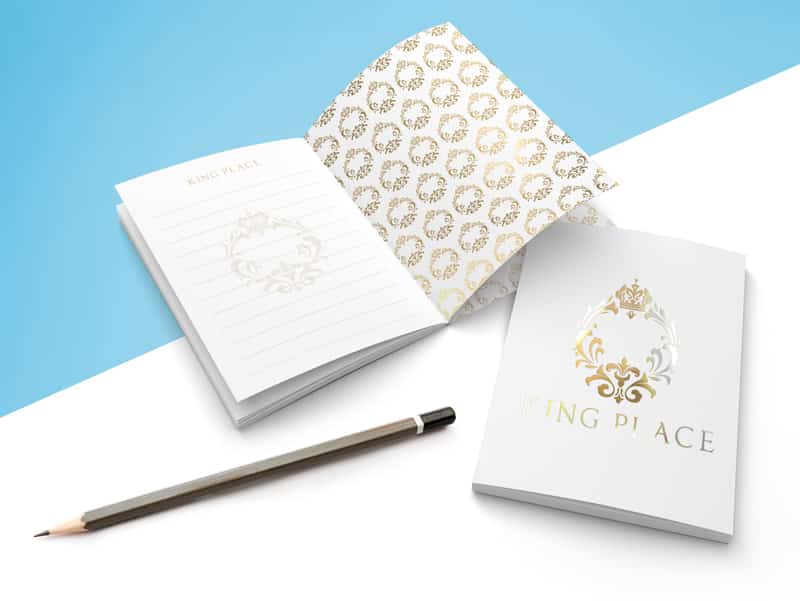
king place notebook

Using Minimal Text Inventively

With only seconds to grab and hold attention, you’ll want to keep your initial copy concise. Distill your message to the minimum possible number of words so that they stand out, giving you an opportunity to be inventive with your design and color usage.

We’re not recommending you dumb down your content or graphics — we’re reminding you that the more creative and inventive you are, the more your audience will remember your business. And sometimes, the best injection of creativity comes from self-imposed limitations. How can you more clearly and effectively communicate your message with less?

White space is an important element to give your audience room to breathe. How little text can you use, and still convey your message? How much white space can you include, and still get your point across? Devices like subheadings and pull quotes can also preserve white space and also draw attention to your chosen words.

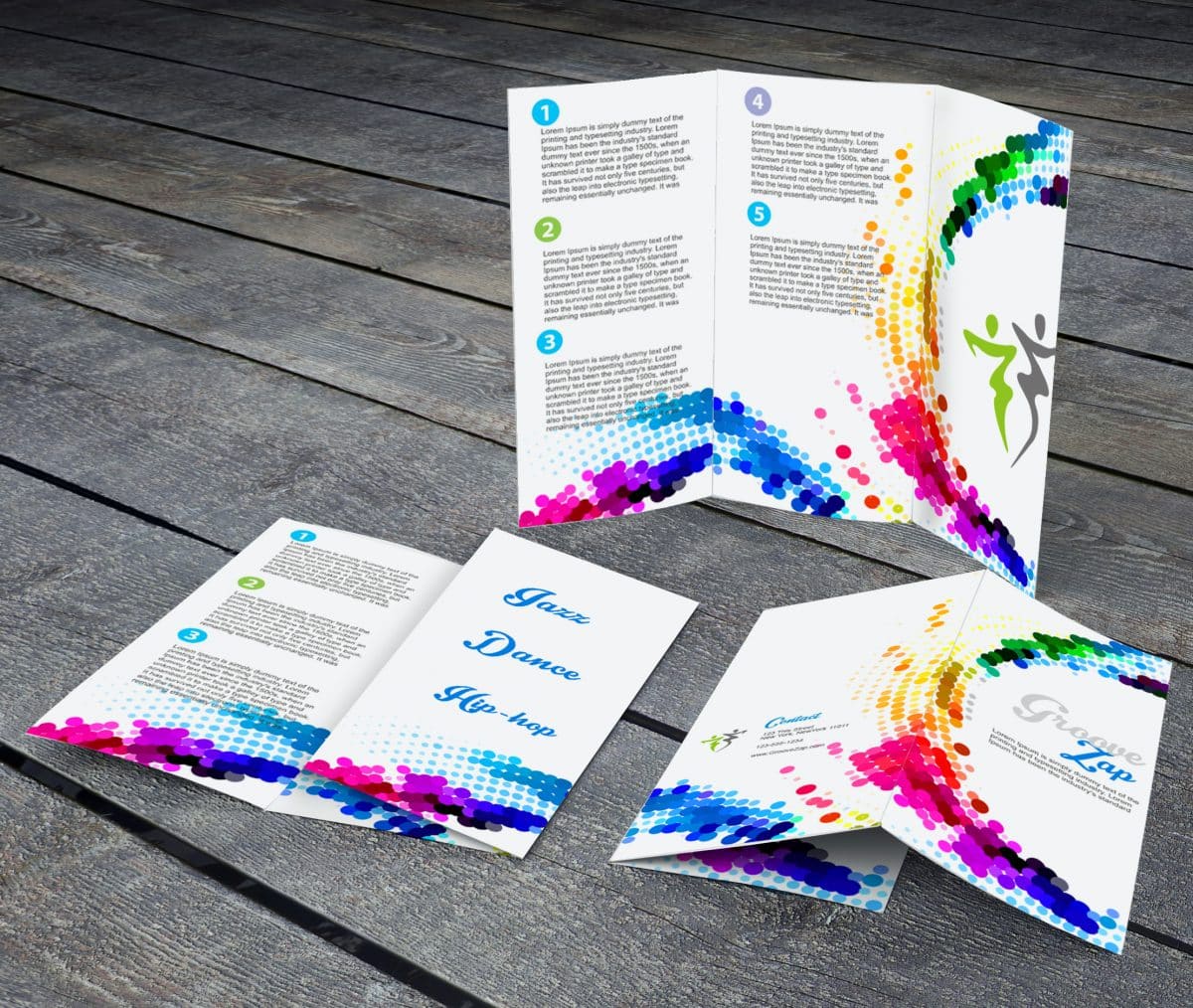
[ standard tri fold brochure

Get Inventive with Color

Color is a key design element, whether you’re getting inventive with lots or less color. You can use color to communicate emotion, mood, and even quality. Here are some approaches you can take to make your color choices memorable:

  •       Guess which colors your audience will expect, and then choose a completely different color scheme.
  •       Try to communicate a lively mood with minimal color.
  •       Use color to break up different sections of information within your brochure’s content.
  •       Use color only for callouts.
  •       Make your brochure into a colorful map, literally.
  •       Allow your colors to move along geometric shapes and lines.

Fun with Folds

Part of the tactile nature of a brochure is the way it folds. Folding is dimensional. And it allows you to deliver your message with greater impact and interest. It helps organize information by literally letting it unfold in a logical order. A well designed fold can help pace a story, direct the reader’s attention to key points, and even introduce an element of surprise.

Choose a fold that suits your message. How will a particular folding style help you tell your story? To test the effectiveness of your design, print it out or mock it up and give it to several people, and see how they respond to the brochure.

3D fold brochure

Some possible brochure fold solutions:

  •      Half-fold: Also known as a bi-fold brochure, a half fold described a single piece of paper literally folded in half, which looks like a booklet. It’s a basic brochure design that accommodates large amounts of information.
  •      Tri-fold: Instead of a single fold booklet, the tri-fold separates your piece of paper into three panels. This fold can be exciting in terms of design, but also means less content per panel — and you’ll need to make sure your audience can follow the flow!
  •      Gate fold: To make gate fold, two smaller half-panels are created by folding the outside edges of the main panel inward. The two smaller panels end up looking like a gate. This fold tends to work for higher end pieces due to the complexity and expense.
  •      Cross fold: A cross fold requires multiple folds in order to change a larger scale, often poster-like design into a portable format. This fold is most common for maps and tourism handouts.
  •      Z-Fold: Also known as a concertina fold, a zig-zag fold, or an accordion fold, a Z fold has three panels like the tri-fold but gets folded like an accordion. It’s more of an interactive format, and tends to be remembered because of the unusual ways information can be presented.
  •      Die-cut fold: A die-cut fold is similar to the Z-fold, but the top of the paper gets cut in a diagonal incline. This means the panels will be different sizes, and some of the interior content will be visible even in its folded state.

If you’d like to play around with different folding templates, you can contact our print staff or use the template generator at FoldFactory.com.

Stunning, Creative Framing of Stock Imagery

Unless you have a professional photographer on staff and available on demand, you’ll most likely find yourself downloading both vector and photographic stock. Maybe you’re lucky enough to have a budget big enough to commission original artwork, but frankly, we doubt it.

At this point, we’ve all seen enough stock images and generic graphics to forget them as soon as we’ve seen them. So the best way to be budget-conscious and stay top of mind is to use those common images in a new way.

You aren’t required to include people in your brochure artwork, even though viewers tend to respond to pictures of people (especially when they’re in action); you can use vector silhouettes and crop them creatively. You can combine multiple types of stock imagery to design an innovative and truly impactful visual. You can merge abstract shapes with more recognizable forms. There aren’t any limits, even when your budget is small!

The “Wow” Factor: Special Effects

Although special effects may seem like the obvious and easy way out (and they do tend to require some extra budget room), they’ll definitely help you make an impact. Special printing finishes such as die cutting, embossing, foil stamping, and spot varnishing will instantly impart class to your brochure.

Because many of these finishes are tactile (and therefore addictive to the senses), your audience may also find themselves keeping your brochure around long after your event or promotion has ended.

How might you use some of these specialty finishes?

  • Die cutting can create slits to hold additional inserts (such as business cards) or even custom paper shapes.
  • Embossing (with or without ink) produces a raised image in the paper, heightening dimension and visual interest.
  • Gloss or matte varnishes can cover your entire sheet or just parts of your brochure. They can protect your brochure from scratches simple add dimension and interactivity.
  • Spot UV blind prints in varnish without ink. Your printer will let you know the best way to set up your brochure files for such an effect.


No matter which way you choose to make an impact, we always recommend consulting your printer for the best advice to merge about cost and practicality. To find out how to make an impact with your new brochure, speak to one of our print consultants today.

  • « Go to Previous Page
  • Page 1
  • Interim pages omitted …
  • Page 19
  • Page 20
  • Page 21
  • Page 22
  • Page 23
  • Interim pages omitted …
  • Page 47
  • Go to Next Page »

Footer

Printing for Less

info@printingforless.com
100 P F L Way, Livingston, MT 59047

800-930-2423

  • Home
  • Products
  • Services
  • Industries
  • Get Printing Samples
  • Direct Mail Marketing Resource Center
  • Printing Resource Center
  • Blogs
  • Templates
  • Terms & Conditions
  • Contact
  • About Printing for Less
  • About P F L
  • Careers
  • Login

Copyright © 1998-2025 PrintingforLess.com. All Rights Reserved.

logo
  • 800-930-2423
  • Products
  • Direct Mail Marketing
  • Services
  • Industries
  • Direct Mail Marketing Resources
  • Printing & Mailing Resources
  • Get a Quote
  • Contact Us
  • My Login
2026 Calendar
This field is for validation purposes and should be left unchanged.

Get 20% Off

Subscribe to our weekly newsletter and get an instant 20% off your first print project.

Name(Required)

*Some exclusions apply. See details