• Skip to primary navigation
  • Skip to main content
  • Skip to footer
Printing for Less

Printing for Less

At Printing for Less, we've offered high quality online printing services since 1996. Shop business cards, booklets, stickers, and more!

My LoginMy Login
800-930-2423
  • Printing
    • Postcards
    • Business Cards
    • Catalogs
    • Brochures
    • Folders
    • Letters
    • Newsletters
    • Envelopes
    • Greeting Cards
    • Print Templates
    • All Products
  • Direct Mail
    • Why Direct Mail Marketing?
    • Every Door Direct Mail® Postcards
    • Direct Mail Letters
    • Catalogs & Booklets
    • Marketing Gifts & Kits
    • Direct Mail Automation
  • Services
    • Mailing Services
    • Pro Services
    • Design Services
    • Custom Printing Services
    • Reseller Program
  • Industries
    • Advertising & Design
    • Food & Beverage
    • Healthcare Payers
    • Healthcare Providers
    • Nonprofit
    • Real Estate
    • Retail
    • Technology
    • University
  • Resources
    • Direct Mail Marketing
      Resource Center
    • Printing Resource Center
    • Blogs
    • Templates
    • Video Library
    • Have a Question?
  • Get Samples
  • Get a Quote

Blog

Why Direct Mail Deserves a Place in the Modern Marketer’s Toolkit

Why Direct Mail Deserves a Place the Modern Marketer’s Toolkit

By The Printing for Less Team

For a Printing for Less roundtable, three seasoned marketing professionals gathered to unpack how direct mail — thoughtfully executed and well-integrated — can pierce the “digital clutter,” build meaningful connections, and drive measurable business outcomes.  

Led by Jennifer Bellin, Chief Marketing Officer at Printing for Less and a veteran direct mail practitioner, the conversation brought together diverse perspectives: Gretchen Swann, Senior Principal Marketing Program Manager at Paycor; Rob Willingham, Director of Marketing at LexisNexis; and Paul Bobnak, Direct Mail Evangelist at “Who’s Mailing What.” Together, they shared how they got started with mail, what motivates their strategies today, and why direct mail deserves a place in every modern marketer’s toolkit.  

From Manual to Strategic: How It All Started

For many marketers, the route into direct mail wasn’t planned — but it became purposeful.

Gretchen Swann recalls Paycor’s early experiments with direct mail. “We were basically mailing things out ourselves from our office,” she said, describing a time of hand-assembling packages, wrestling with spreadsheets, and dealing with returned mail due to bad addresses. The results were promising but the process wasn’t scalable—yet.

Rob Willingham’s entry was equally organic. “I don’t have a direct mail background,” he admited. When he inherited the channel at LexisNexis, direct mail was little more than ad-hoc gift cards and small gestures from sales reps. Identifying an opportunity, Rob piloted a structured approach that became the foundation of a broader, more strategic program. “Direct mail soon became a new channel of pipeline that’s continued to expand,” he explained.

For Paul Bobnak, the journey came through deep immersion. Taking the reins at “Who’s Mailing What”—a repository and analysis hub of thousands of pieces of mail each year — Paul learned “all the rules you’re supposed to follow and the rules that you can break.” His perspective, forged by constant exposure to mail campaigns across industries, brings seasoned context to how teams think about mail today.

Why Direct Mail Still Matters

As the dialogue shifted toward objectives and priorities, a theme emerged: direct mail isn’t just a novelty; it’s a strategic asset that drives pipeline, engagement, and revenue.

Willingham made it clear: “My priority is to make money and drive pipeline,” he explained. In a digital age where prospects are inundated with emails, he sees direct mail as an experiential channel that can surprise and delight—something that stands out compared with routine digital touchpoints.

Swann echoed this perspective from the B2B world. “We get so many emails people are quick to delete them all,” she said. For Paycor, direct mail is a way to break through, grab attention, and spark curiosity that leads to real conversations with sales teams.

However, the value of mail goes beyond novelty. As Swann put it: “It’s almost unusual when you get an actual physical piece of direct mail.” That rarity translates into engagement—a moment of connection that digital alone struggles to achieve.

Strategic vs. Tactics

The panel was quick to point out that direct mail isn’t an isolated tactic—it is part of a cohesive strategy. For marketers craving better results, thinking holistically matters.

“Direct mail really is breaking through more than other channels right now,” said Swann, pointing to the discipline’s ability to augment and uplift other campaigns. For B2B teams, that often means weaving mail into broader nurtures and journeys that span digital and physical touchpoints.

Willingham’s pilot ultimately wasn’t just about sending mail—it was about establishing processes, measuring impact, and earning organizational trust. His early success enabled the channel to scale, proving that, with the right strategy, direct mail can mature into a consistent growth driver.

The Mailbox Advantage

What becomes clear from the roundtable discussion is that direct mail’s value isn’t a throwback to “old-school” marketing—it’s about crafting memorable moments that connect with people in ways digital rarely can

Whether hand-assembling packages in an office or piloting a new ABM channel, these leaders found that intentional mail, used strategically, doesn’t just reach audiences—it resonates with them.

The Universal “Buyer’s Guide” Framework

The Universal "Buyer’s Guide" Framework

By The Printing for Less Team

This playbook combines an evergreen, industry-agnostic foundation with modular industry-specific pages that allow marketers to tailor messaging without reinventing strategy or structure.

Part I: The Universal Buyer’s Guide Framework

1. Why Direct Mail Buyer’s Guides Work

Buyer’s Guides are one of the most effective direct mail solutions when audiences are faced with complex choices, unfamiliar terminology, or high-stakes decisions. Unlike promotional mail, Buyer’s Guides are designed to educate first and convert later.

Curiously, physical formats slow the decision process in a productive way. They create space and time for clarity, comprehension, and trust—three factors that digital-only experiences often struggle to deliver. Well-designed Buyer’s Guides consistently outperform short-form mail when the goal is confidence-building rather than impulse.

Why Direct Mail Buyer's Guides Work

2. When to Use a Buyer’s Guide

Buyer’s Guides are most effective when decisions are not obvious or immediate. They perform best in those moments when customers need help understanding options, comparing solutions, or navigating next steps.

Common triggers include:
• Multiple products, plans, or services
• Regulated or compliance-heavy environments
• Long or multi-stakeholder buying cycles
• Onboarding, enrollment, or renewal moments
• Product expansion or re-engagement opportunities

Across the customer lifecycle, Buyer’s Guides can support early education, mid-funnel consideration, onboarding, and long-term relationship building.

3. Choosing the Right Format

Selecting the right format is critical to the success of a Buyer’s Guide. The format should reflect the complexity of the decision, the depth of content required, and the value of the offer.

Choosing the Right Format

‍
Common formats include:
• 8 – 12 page booklets for focused education.
• 12 – 24 page catalogs for broader solution storytelling.
• Trifold or gatefold self-mailers for concise guidance.
• Envelope-based kits for high-touch experiences.

When choosing a format, consider audience size, personalization needs, budget, timeline, and postage efficiency. Larger formats often outperform smaller ones when education is the primary goal, while self-mailers can be effective when speed and visibility matter most.

4. The Buyer’s Guide Content Framework

A successful Buyer’s Guide follows a clear, repeatable structure that guides readers from context to confidence.

Recommended flow:
1. Welcome and Context—Why the guide exists.
2. The Audience Challenge—Framed in customer language.
3. Solution Overview—Clear, plain-English explanations.
4. Options and Comparisons—Visual tables and summaries.
5. What to Look for—Decision-criteria checklist.
6. Proof and Validation—Case study, testimonial, or data point.
7. Next Steps—Clear call to action (CTA) supported by QR or digital bridge.

The design should make it easy to scan, while prioritizing white space and visual hierarchy to encourage engagement.

5. Personalization and Connected Experiences

Personalization enhances relevance and helps Buyer’s Guides feel intentional rather than generic. Even light personalization—such as tailored introductions or segment-based CTAs—can significantly increase engagement.

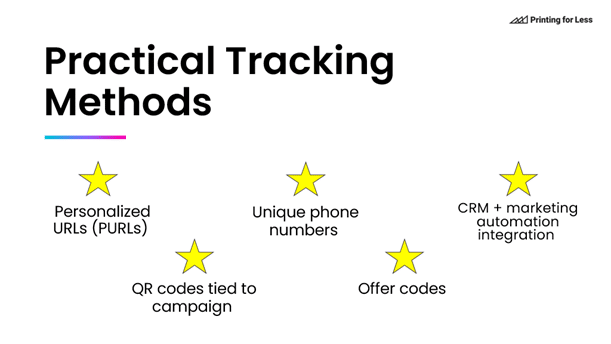
Connected experiences extend the value of the printed guide. QR codes, personalized URLs, and AI-assisted summaries allow recipients to continue their journey digitally, access demos, compare options, or schedule next steps.

6. Multi-Touch Extensions

Buyer’s Guides are most powerful when used as part of a multi-touch journey. They can anchor a sequence that reinforces messaging and guides recipients toward action.

Multi-Touch Extensions

‍
Common extensions include:
• Buyer’s Guide followed by a reminder postcard.
• Buyer’s Guide followed by a personalized letter.
• Buyer’s Guide triggering a digital nurture or sales outreach.

These journeys can support acquisition, onboarding, re-engagement, or expansion efforts.

7. Measurement and Optimization

Measurement ensures that Buyer’s Guides remain accountable and continuously improve.

Key metrics include:
• QR scans by section or CTA
• Landing page engagement
• Conversion actions, such as scheduling or enrollment
• Performance by segment or industry

Optimization opportunities include testing page count, CTA placement, format type, and timing between touches.

8. Production Planning

Successful Buyer’s Guides require thoughtful production planning. Teams should align early on creative timelines, data readiness, finishing requirements, and mail-drop schedules.

Clear planning reduces delays, manages expectations, and ensures a seamless experience from concept to mailbox.

9. Templates and Tools

To make execution easier, Buyer’s Guides should be supported by practical tools, including:

• A fillable content outline
• Format selection worksheets
• CTA planning guides
• AI prompt libraries
• Multi-touch journey planners

‍

In a marketing landscape increasingly defined by speed and noise, Buyer’s Guides stand out by doing the opposite: creating space for informed choice, meaningful engagement, and long-term relationship building—one mailbox at a time.

‍

Part II: Industry-Specific Applications

The following pages layer industry relevance onto the universal Buyer’s Guide framework. Each page highlights common challenges, recommended formats, and messaging guidance to help teams tailor execution without changing strategy.

Specific Applications

Financial Services

Financial decisions require trust, clarity, and confidence. Buyer’s Guides help simplify complex products while reinforcing credibility. ‍

Use cases include:
• Commercial banking solution guides
• Wealth management overviews
• Lending portfolios
• Client onboarding materials.

Financial Services

Recommended formats include 12 – 24 page booklets or catalogs with structured comparisons.
CTAs often focus on consultations, solution exploration, or relationship reviews.

Download an example of a Buyer’s Guide for Financial Services.

Healthcare

Healthcare audiences face complex, regulated decisions that benefit from clear, well-organized education. ‍

Buyer’s Guides are effective for:
• Benefits selection
• Provider navigation
• Member onboarding  
• Enrollment support

Healthcare

Formats should prioritize readability and reassurance, often using booklets or directories.
CTAs may include plan comparisons, care access tools, or enrollment actions.

Download an example of a Buyer’s Guide for Healthcare.

Technology (B2B/SaaS)

Technology purchases often involve multiple stakeholders and technical complexity. ‍

Buyer’s Guides help:
• Translate features into outcomes
• Support product launches
• ABM efforts
• Adoption campaigns

Recommended formats include concise booklets paired with digital demos.
CTAs typically drive demo requests, feature exploration, or strategy conversations.

Download an example of a Buyer’s Guide for Technology companies.

Retail and Consumer Brands

Retail Buyer’s Guides emphasize storytelling, curation, and inspiration. ‍

Retail

‍They work well for:
• Seasonal lookbooks
• Curated collections
• Loyalty programs
• Early-access campaigns

Visual formats such as catalogs and self-mailers perform strongly.
CTAs often focus on shopping, unlocking access, or discovering collections.

Download an example of a Buyer’s Guide for Retail.

Conclusion ‍

Buyer’s Guides work because they respect and enhance the way real decisions are made. They slow the process just enough to replace confusion with clarity and promotion with confidence. When thoughtfully designed, personalized, and connected to the broader customer journey, they become more than a piece of mail—they become a trusted reference that earns attention, builds understanding, and creates action. In a marketing landscape increasingly defined by speed and noise, Buyer’s Guides stand out by doing the opposite: creating space for informed choice, meaningful engagement, and long-term relationship building—one mailbox at a time.

5 Innovative Ideas for Marketing Your Next Auction

5 Innovative Ideas for Marketing Your Next Auction

Whether you’re hosting a fast-paced live auction featuring a few high-value items or a sprawling silent auction with dozens of curated prizes, the success of your fundraising event hinges on one critical element: effective event marketing. 

In the digital era, marketing an auction requires more than just a mention in your monthly newsletter. Your team may spend countless hours on item procurement, planning event logistics, and coordinating volunteers, but without a dedicated promotion strategy, you risk underperforming on the big day. 

To help you make your nonprofit’s next auction a success, this guide will explore five innovative strategies designed to capture attention, drive registrations, and maximize revenue potential.

1. Run a “Daily Drop” or Item Countdown Campaign

One of the best drivers of interest in an auction is excitement over the items themselves. Rather than simply listing every prize on your event page, create a marketing schedule that treats your best items like exclusive product releases. 

A 10-day or 12-day countdown campaign leading up to registration (or the event itself) can build anticipation and provide fresh, engaging content for your social media and email channels.

Dedicate each day’s post to one high-value item, using professional-looking photos and enticing copy with visuals branded to your organization to catch potential participants’ attention. 

Highlight big-ticket items (such as travel packages or other experiences that bidders can’t easily find elsewhere) to showcase the quality of your catalog. For the duration of the countdown, your call-to-action should be “Sign up to be notified when registration opens” or “Get the full auction catalog first,” depending on campaign timing.

This tactic is invaluable for building your pre-event email list. Plus, you’ll transform item listing from a passive task into an active, hype-generating marketing campaign.

2. Maximize Sponsorship Value Through Co-Branded Assets

Fundraising event sponsors offer more than just fundraising resources—they unlock access to their own networks of patrons and supporters. 

Your partnership with sponsors should go beyond requesting donated items. Leverage sponsorship support to its full potential by creating co-branded marketing materials, such as:

  • High-quality digital marketing assets (e.g., co-branded Instagram Stories, social media posts, and website banners) that feature both your nonprofit’s logo and the sponsor’s brand. 
  • Co-branded, custom postcards or direct mail pieces that your major sponsors can distribute to their top clients or members. These tangible items serve as a high-trust, exclusive invitation that stands out in a crowded digital space.

Not only does this promote your upcoming auction, but it also showcases your sponsors’ commitment to giving back to their community, which gives them even more of an incentive to spread the word.

3. Re-engage Warm Leads with Targeted Print Mailers

While digital ads and emails are excellent for mass awareness, targeted print marketing can be the final nudge that converts a strong lead into a registered bidder. Supercharge your direct mail campaign by identifying key segments from your CRM (such as past high-dollar bidders, lapsed event attendees, or local major donors) and send them a bespoke auction invitation.

This shouldn’t be a simple promotional mailer, but a polished, personalized message that highlights any special benefits available before and during the event for their segment. Custom printed catalogs are also fantastic tools, allowing attendees to browse all items in advance and plan their strategy.

In these messages and other auction marketing content, Winspire recommends including a dedicated QR code or short link to your online registration form so recipients can sign up right away if they’d like. By linking back to your digital presence, you’ll also be able to track conversion rates and measure engagement by audience segments, offering useful insights you can use to strengthen your nonprofit marketing efforts going forward. 

4. Leverage Digital Retargeting to Close the Deal

For the attendees who have shown interest but haven’t registered, your marketing strategy needs to be automated and persistent, which is where retargeting comes in. As Getting Attention’s nonprofit advertising guide explains, “Retargeted advertising allows you to achieve a high level of precision when reaching out to prospects. In turn, you can convert more users who were on the fence about supporting your work.”

This approach works by serving specialized ads to users who have previously interacted with your web presence. Retargeting can be done via pixel-based tracking (using cookies) or list-based retargeting (uploading email lists of non-registrants). 

Your retargeted ads should create a sense of urgency. Use copy like, “Bids are racking up quickly—don’t miss your chance!” or “Registration closes in 48 hours!”. 

Since the goal is a final nudge, this is a perfect place to subtly highlight a few of your biggest, most desirable prizes one last time.

5. Segment Communications by Bidding Intent

The job of your nonprofit’s marketing campaign isn’t over as soon as supporters register for your fundraising event. Rather, you should continue marketing to registrants and nurture bidders throughout the entire auction lifecycle.

This strategy requires segmenting your audience based on their engagement level and providing personalized, actionable information to keep them interested and maximize bids. 

Consider these audience segments when tailoring your late-stage marketing campaign:

  • Registered-But-Quiet: Supporters who have signed up but haven’t placed a bid. Send them an email or text message highlighting five high-value, low-bid items with the subject line: “Top Items Still Available—Start Bidding Now!”
  • Bidding-But-Outbid: Supporters who have been outbid on one or more items. Send them a personalized text reminder that their favorite item is now open for a higher bid, or suggest a similar item they may have missed.
  • High-Value Watchers: Supporters who have favorited a big-ticket item. Send them an alert shortly before your auction closes, reminding them of the deadline for their “dream prize.”

Text messaging is perfect for quick, urgent reminders, as this channel typically sees higher open rates than email for time-sensitive content. By using this personalized approach, you can actively engage with each participant’s competitive spirit to maximize their fundraising impact.


Hosting an impactful auction requires careful planning, including a creative marketing approach that leverages both the high-touch authenticity of print materials and the data-driven precision of digital campaigns. By innovating in your item promotion, empowering your sponsors, and targeting your communications, your nonprofit can generate the crucial hype needed to drive bidding wars and set your next auction up to be a record-breaking success.

How Data Analytics Can Upgrade Your Healthcare Marketing

How Data Analytics Can Upgrade Your Healthcare Marketing

From public health awareness campaigns to fundraising initiatives, outreach of all types is most effective when it’s data-backed. Whether you’re analyzing donor behaviors to market an upcoming fundraiser or using population health insights to inform local updates, data is essential for creating communications that resonate with your audience and spur them to action.

According to Arcadia, healthcare analytics is the systematic use of data and statistical analysis techniques to derive valuable insights. These insights lead to informed decision-making in numerous areas of your healthcare organization’s operations, including patient care, financial outcomes, and marketing.

This guide explores specific ways data analytics can transform healthcare marketing from reactive outreach into proactive engagement.

Deepens Your Understanding of Your Audience

Marketing in any industry starts with knowing who you’re trying to reach and how best to reach them. Data analytics enables healthcare organizations to move beyond basic messaging based on demographic or clinical information toward behavior- and needs-based communication backed by more advanced conclusions. With the right insights, health teams can even tap into new audiences altogether.

Data-driven audience insights for healthcare marketing could include:

  • Healthcare utilization patterns, including types of services accessed and frequency of appointments
  • Engagement habits, such as whether your target audience interacts with direct mail, email, or other campaigns most consistently
  • Health literacy levels, i.e., the audience’s understanding of medical terminology and their comfort navigating health systems
  • Lifecycle stage in the care journey (new patient, undergoing active treatment, etc.), especially for individuals facing chronic conditions

Reliable information comes from usable, aggregated data sets. Raw, disorganized data won’t give marketers a complete picture of their target audience, resulting in misguided or less specific outreach. 

For example, let’s say a healthcare organization keeps clinical and nonmedical information in disparate data storage platforms. Simply reaching out to patients with shared diagnoses may forfeit opportunities to further segment the audience according to nonmedical characteristics, like education or access to transportation. 

Using the example above, this marketing team might send an introductory-level educational pamphlet about screenings during breast cancer awareness month to all of the women in their database. While this message may be beneficial to some, it might feel unnecessary to women who already get regular screenings. Or, it could lack important information for women who can’t schedule screenings because they don’t have access to transportation. 

Instead, the organization could send the introductory pamphlet only to women who haven’t had a breast cancer screening in the past two years. Or, they could create a separate flyer listing mobile screening clinics in the area for women with limited transportation options.

Increases Patient and Community Trust

The very nature of patient health is extremely vulnerable, and healthcare marketing should be respectful of that. Data analytics provides the necessary insights to develop messaging that makes your audience feel heard.

For example, asking an individual with limited financial resources to donate to your grateful patient program may leave that constituent feeling disconnected from your organization. Requesting in-kind contributions or sharing an upcoming volunteer opportunity instead will make this audience member feel understood and more willing to respond.

A data-driven approach builds on your understanding of your audience to develop targeted messaging that strengthens trust. Some useful insights may include:

  • Health equity indicators: Data can reveal disparities in access to care and other resources. With this insight, healthcare outreach can connect the right people to the right resources, such as at-home treatments, education about lifestyle changes, and other interventions that could improve their overall health.
  • Geographic or community trends: Patterns in local health data can illustrate challenges or needs that the patient population as a whole experiences. Healthcare organizations should create message content that speaks to community members’ lived experiences and resonates with their circumstances.
  • Direct feedback: Healthcare organizations of all types gather feedback, from clinicians asking patients to complete post-appointment surveys to healthcare associations polling members about their satisfaction with educational experiences. According to Deep Sync, this information is called zero-party data, and you can use it to personalize marketing campaigns according to your audience’s preferences.

Ultimately, outreach grounded in data-backed insights unifies your audience around your campaign’s core message. When it’s clear that your organization understands community members’ needs and experiences, your messaging can inspire individuals to take ownership of their health, build a sense of community around health-related initiatives, and position your organization as a trusted partner in the population’s overall well-being.

Enhances Resource Allocation and Campaign Efficiency

Organizations seeking performance improvement in healthcare know that data is at the heart of identifying areas for improvement and adjusting accordingly. Whether you’re looking for opportunities for cost savings or operational efficiencies, a strong analytics system provides the insights needed to make essential changes.

This principle is also true in marketing. When marketers know which messages, channels, and communication frequencies most inspire their audiences to take action, they can save time and resources on campaigns while driving better results. 

Data analytics can reveal marketing insights like:

  • Channel effectiveness: Data can help you pinpoint which communication channels (email, text, direct mail, etc.) yield the highest engagement and conversions. You may also take a multi-channel approach to appeal to different audience members’ preferences and create additional touchpoints for interaction.
  • Message resonance: Engagement data shows which themes or appeals drive the most action, leading to the marketing campaign’s intended results. Marketers can draw on specific engagement trends within their audiences or use wider datasets to understand broader trends. For example, does your audience prefer messages that lean into storytelling or respond better to claims supported by statistics?
  • Optimal timing and frequency: Data analytics enables marketing teams to schedule messages for the times when audiences are most likely to open or respond to them. For example, you could plan messages over the weekend to avoid reaching out while audience members are at work. Or, you might schedule social media posts during the hours in which audience members are most active on a particular platform.

Instead of A/B testing messages or implementing trial-and-error campaigns that require you to learn from your mistakes, analyzing data allows you to base appeals on proven behaviors and get the response you’re looking for, the first time.

Data analytics can also surface opportunities to improve your organization’s internal efficiency. For example, AI-driven tools can streamline fundraising workflows like grant writing or prospect research, reducing the amount of staff time spent on these efforts. Your organization may identify opportunities to automate audience segmentation or message scheduling with AI as well, allowing your team to focus on other responsibilities. 


Data should inform every healthcare decision, and it’s becoming more common in conversations about delivering patient care. However, providers aren’t the only professionals in the healthcare industry who can benefit from data analytics—marketers should also understand how analytics can enhance their efforts to achieve better results. Start by evaluating your data usage and build your marketing strategy from there.

Logan Masta

Logan Masta is Arcadia’s Director of Special Projects, where he leads strategic innovation and research initiatives focused on expanding the company’s product capabilities through applied AI and advanced analytics. Logan’s work spans generative AI, natural language processing, and data architecture, helping healthcare organizations access and act on complex data more effectively.

Logan drives the development of Arcadia’s next-generation product concepts, including AI-powered conversational analytics, automated document processing for clinical and risk data, and intelligent platforms for value-based care contracting. His efforts accelerate Arcadia’s ability to deliver real-time insights and scalable infrastructure for health plans and providers.

Before joining Arcadia, Logan held leadership roles at CareMax, where he managed enterprise product strategy, technology integration, and M&A execution. He also served as a management consultant at Booz Allen Hamilton, advising federal health clients on telehealth and system transformation.

Logan earned a B.S. in Industrial and Systems Engineering from the University of Florida and is Lean Six Sigma Black Belt certified by Dartmouth College. Logan lives in southern Florida and enjoys fishing when he’s not creating innovative solutions for healthcare.

Direct Mail In 2026: Entering a New Era of Marketing

Direct Mail In 2026: Entering a New Era of Marketing

By The Printing for Less Team

Marketers in all sectors will find 2026 to be a nearly unrecognizable landscape—one shaped by AI, new privacy laws, rapidly shifting consumer expectations, and a particular hunger for authenticity. Marketing is no longer about choosing between digital and physical channels; it’s about orchestrating them, so automation, measurement, and tangible experiences work together to drive results.

Direct mail marketing—once the much-maligned offline cousin of digital—will emerge as a strategic bridge between engagement and trust. Given that, what does 2026 hold for marketers in all industries—healthcare, financial services, nonprofit retail/ecommerce marketers, and more—and how will it catalyze results in this new world.

‍Why Direct Mail?

Marketers face the growing challenge of cutting through digital din that has overtaken modern life. While AI-driven campaigns flood the inbox, physical mail creates a memorable moment—especially when personalized at scale. Printing for Less’s direct mail automation platform exemplifies this shift, helping thousands of organizations increase engagement and double their ROI year over year. The reason is simple: direct mail demands attention, builds trust, and offers a compliant, privacy-conscious channel as third-party cookies disappear and privacy regulation tightens.

2026 Trends

In 2026, direct mail is evolving from a standalone tactic into a sophisticated, data-driven channel that complements and elevates digital marketing. As new technologies reshape how brands use data, automate journeys, and prove ROI, five forces—AI-powered personalization, digital integration, measurable impact, authenticity and trust, and sustainability—will define how marketers design and execute direct mail campaigns in the year ahead.

  • AI-Powered Personalization: New tools enable marketers to create individualized experiences based on zero-party and first-party data, addressing the twin mandates of relevance and privacy. For example, healthcare organizations use AI-driven segmentation to deliver patient education mailers tailored to individual health profiles.
  • Digital Integration: No campaign stands alone. Direct mail is increasingly coordinated with email, SMS, and social journeys. CRMs and marketing automation platforms trigger physical sends at the perfect moment, tracking every touchpoint for full attribution.
  • Measurable Impact: The newest platforms integrate direct mail data with digital analytics, quantifying conversion, engagement, and pipeline influence.
  • Authenticity and Trust: Tangible mail connects in ways that digital cannot—especially as consumers seek authenticity and brands take stronger positions on sustainability and social impact.
  • Sustainability: Eco-friendly materials and green production standards are now a baseline for responsible direct mail programs.


How Specific Industries Will Handle the 2026 Landscape

  • Healthcare: Personalization with Purpose

Healthcare marketers are under continual pressure to balance HIPAA compliance, patient trust, and meaningful outcomes. Direct mail solutions, such as Printing for Less’s, enable organizations to send personalized wellness newsletters and appointment reminders directly to patients—often the main channel that patients rely on, especially older populations. One Printing for Less customer, Wider Circle, mails 18,000 customized newsletters monthly to Medicare recipients, resulting in increased event participation and rapid feedback on delivery quality.

  • Financial Services: Security, Compliance, and High-Value Touchpoints

Financial institutions require secure, compliant communication. Direct mail offers a critical channel not only for relationship-building, but also for delivering complex regulatory disclosures and high-value offers in a trusted manner. A verified Printing for Less client in financial services notes over 100 percent year-over-year improvements in mailer performance, emphasizing the value of automation for tracking and compliance. APIs connect direct mail with sales and marketing workflows to deliver personalized offers when customers are most likely to act.

  • Nonprofit: Donor Stewardship and Fundraising in a Changing World

For nonprofits, donor engagement is the lifeblood of sustainability. Direct mail fundraising campaigns stand out amid diminishing email click-through rates, marrying the emotional resonance of mission-driven storytelling with data-triggered delivery. Printing for Less enables organizations to orchestrate fundraising appeals, stewardship letters, and event invitations alongside digital outreach. This allows donors to receive relevant, timely, and authentic communications. As one nonprofit leader shared, response rates and event attendance climbed following the switch from digital-only engagement to Printing for Less-powered direct mail newsletters.

  • Retail/Ecommerce: The Power of Physical + Digital

Retailers and ecommerce brands navigate hyper-competitive markets where every touchpoint counts. The new year will bring more AI personalization and retail media networks, but physical mail creates store visits, builds brand recall, and drives conversions even when digital isn’t enough. Printing for Less’s direct mail programs integrate seamlessly with loyalty and e-commerce platforms, allowing brands to trigger personalized offers, samples, and campaigns based on purchase and browsing data. Case studies highlight retailers saving nearly 98 percent in print costs and boosting sales goals far beyond digital-only approaches.

Technology and Integration

In 2026, direct mail marketing will be synonymous with digital innovation. Marketers orchestrate multi-touch journeys with the help of automated triggers—whether sending branded welcome kits after an online conversion or launching re-engagement campaigns based on customer inactivity detected in the CRM. With Printing for Less, product samples, dimensional mailers, and personalized letters are triggered, tracked, and attributed just as they are with digital ads—all within unified dashboards.  

Taking Action: Preparing Your Team for 2026

Ready to get ready for the new year? Here’s a look at how marketers in every sector can make direct mail a centerpiece of modern strategy:

  1. Audit current customer data practices with a focus on first-party and zero-party data.
  2. Integrate direct mail with existing digital campaigns using automation platforms and CRM triggers.
  3. Deploy personalization and segmentation for mailers in every industry you serve.
  4. Measure results continuously, using attribution tools to optimize campaigns and maximize ROI.
  5. Commit to sustainability—choose eco-friendly vendors, materials, and processes.
  6. Build authenticity into every touchpoint, ensuring direct mail aligns with your brand’s values and mission.

‍

‍The Direct Mail Opportunity

Marketing leaders have a unique opportunity in this moment: to merge digital precision with physical impact in ways that were never possible before. Direct mail is no longer a one-size-fits-all tactic—it is a data-driven, automated, omnichannel answer to 2026’s biggest marketing challenges. With Printing for Less’s platform and expertise, brands are not just sending mail—they’re creating memorable experiences and powerful moments and driving measurable outcomes, allowing them to enter the unknowable new year with confidence.

Four Ways to Jump-Start the New Year with Direct Mail

Four Ways to Jump-Start the New Year with Direct Mail

By Printing for Less Blog

As the calendar turns from 2025 to ‘26, customers are primed for fresh starts—and smart brands capitalize on this moment by delivering thoughtful, engaging direct mail campaigns that inspire action for the year ahead.

Begin with personalized New Year’s greeting cards, which are easier than ever to produce, these days, with variable data printing. You can send a message that reflects on the past year’s achievements and sets a tone of optimism about what’s ahead. A card that acknowledges successes and thanks customers for their partnership creates a foundation for lasting loyalty.  

Next, align offers with common New Year’s resolutions: health, productivity, and personal growth are just a few topics to connect with. Send direct mail containing tips, checklists, or exclusive coupons that help recipients achieve their goals. This targeted approach transforms mail from a flat promotion into a relevant resource customers are eager to receive and use.

Third, use direct mail to introduce new products, services, or initiatives—offering early access or exclusive invitations to your most loyal contacts. A well-designed mailer announcing upcoming launches or events provides VIP treatment and makes customers feel part of your brand’s journey from day one.

Finally, turn your direct mail into an anticipation-builder. Share stories about milestones reached in the last year, a sneak peek at future products or releases, or an invitation to join your community. Curate content that is more than an offer: Make it part of a broader conversation about growth, progress, and shared goals.​

With the right blend of personalization, relevant offers, and forward-looking messaging, direct mail remains a powerful tool for kicking off a successful New Year—cultivating both short-term excitement and long-term relationships.

Happy Holidays and a Joyous New Year From All of Us At Printing for Less.

  • Page 1
  • Page 2
  • Page 3
  • Interim pages omitted …
  • Page 47
  • Go to Next Page »

Footer

Printing for Less

info@printingforless.com
100 P F L Way, Livingston, MT 59047

800-930-2423

  • Home
  • Products
  • Services
  • Industries
  • Get Printing Samples
  • Direct Mail Marketing Resource Center
  • Printing Resource Center
  • Blogs
  • Templates
  • Terms & Conditions
  • Contact
  • About Printing for Less
  • Careers
  • Login

Copyright © 1998-2026 PrintingforLess.com. All Rights Reserved.

logo
  • 800-930-2423
  • Products
  • Direct Mail Marketing
  • Services
  • Industries
  • Direct Mail Marketing Resources
  • Printing & Mailing Resources
  • Get a Quote
  • Contact Us
  • My Login
Postcard Printing & Mailing
This field is for validation purposes and should be left unchanged.

Get 20% Off

Subscribe to our weekly newsletter and get an instant 20% off your first print project.

Name(Required)

*Some exclusions apply. See details