• Skip to primary navigation
  • Skip to main content
  • Skip to footer
Printing for Less

Printing for Less

At Printing for Less, we've offered high quality online printing services since 1996. Shop business cards, booklets, stickers, and more!

My LoginMy Login
800-930-2423
  • Printing
    • Postcards
    • Business Cards
    • Catalogs
    • Brochures
    • Folders
    • Letters
    • Newsletters
    • Envelopes
    • Greeting Cards
    • Print Templates
    • All Products
  • Direct Mail
    • Why Direct Mail Marketing?
    • Every Door Direct Mail® Postcards
    • Direct Mail Letters
    • Catalogs & Booklets
    • Marketing Gifts & Kits
    • Direct Mail Automation
  • Services
    • Mailing Services
    • Pro Services
    • Design Services
    • Custom Printing Services
    • Reseller Program
  • Industries
    • Advertising & Design
    • Food & Beverage
    • Healthcare Payers
    • Healthcare Providers
    • Nonprofit
    • Real Estate
    • Retail
    • Technology
    • University
  • Resources
    • Direct Mail Marketing
      Resource Center
    • Printing Resource Center
    • Blogs
    • Templates
    • Video Library
    • Have a Question?
  • Request Samples
  • Get a Quote

Blog

How to Personalize Member Engagement: 5 Strategies

How to Personalize Member Engagement: 5 Strategies

For today’s professional and trade associations, members want experiences tailored to their needs, interests, and goals. For associations, this means moving beyond one-size-fits-all communication and engaging members with personalized content. 

Whether your association is a large national organization or a small nonprofit run by volunteers, the right tools and tactics can help you deliver branded, member-centric experiences at scale.

To help you connect with your members and build lasting relationships, we’ll outline five practical strategies for how to personalize member engagement at your association.

1. Segment members. 

Effective personalization starts with understanding who your members are. Use your association management software and member directory to gather and store member data. Then, segment them based on relevant characteristics. For example, you might segment members by:

  • Career stage, such as job seekers, entry-level workers, and experienced professionals
  • Professional interests, such as networking, skill development, and job hunting
  • Communication preferences, such as email, direct mail, and messages through your membership management platform 

Once segmented, you can tailor messages to each group. Job seekers might receive updates about your job board, new professionals could be directed to upskilling courses, and established professionals may appreciate invitations to industry conferences. Message templates aligned with each segment make it easier to deliver relevant content at scale.

2. Leverage communication triggers. 

Automation is a powerful ally in managing personalized member experiences. With the right membership management and marketing tools, associations can set up communication triggers that respond to member actions in real time. For instance, you might use messaging triggers to:

  • Send a welcome series to new members once they sign up for a free trial
  • Thank members for renewing their membership
  • Congratulate members after completing a course

These automated touchpoints help members feel seen and supported, no matter where they are in their membership journey, without adding to your team’s workload.

3. Create a member mentor system. 

While few associations have the staff time and resources to personally guide each new member to content and opportunities, a member mentor system can bridge that gap. By inviting senior members to volunteer as mentors, you create a direct line of support for newcomers that helps them navigate your offerings and engage with content, events, and other activities aligned with their interests.

To make your mentorship program more effective, consider: 

  • Providing incentives to become a mentor. Mentorships require senior members to volunteer their time and energy. Encourage sign-ups by offering incentives like reduced membership fees or free tickets to a major upcoming event. 
  • Hosting events specifically for mentors and new members. Plan events dedicated to welcoming new members to your association, such as meet-and-greets and informational sessions. These face-to-face events provide mentors with opportunities to help their mentees network and solidify their own professional relationships. 
  • Collecting feedback from new members about their mentorship experience. Ensure your mentor program is useful for new members by asking them to complete a survey when it ends. Ask questions about how helpful their mentor was, what events and activities their mentor helped them access, and if there was anything they wish the program focused more on.

The goal of a mentorship program is to ensure new members start engaging with your association’s offerings right off the bat. Plus, by getting a personalized welcome from someone in your community, they’ll feel valued from day one. 

4. Use an algorithm to suggest engagement opportunities. 

Association technology has come far in the past few years, and many organizations now tap into AI-powered tools that analyze members’ behavior to provide personalized engagement recommendations. For example, an algorithm might suggest a blog article on a topic similar to the last one a member read or suggest they connect with a member whom they share connections with. 

These AI’s capabilities vary widely. Some community and member engagement platforms might have AI chatbots that can help guide members through their site, while others might use simple algorithms that recommend the next course in a series a member is working through. 

5. Gather member feedback. 

Sometimes the most effective way to ensure your content is sufficiently tailored to members is to ask them outright. Surveys can help you gather data about and improve all aspects of your membership experience. For example, you might survey your members to:

  • Gather feedback about specific programs. After a member attends an event, completes an online course, or participates in another activity your association offers, invite them to complete a survey about their experience. This allows you to get targeted feedback about individual offerings to learn if they’re easy to access, meet members’ needs, and are up-to-date. 
  • Allow members to express their concerns. Satisfaction surveys help you understand how individual members are engaging with your association. Through these surveys, members can express frustrations and ask questions about their specific experiences. After receiving a survey, analyze its content and elevate to the right person at your association, so they can reach out to the member directly and resolve any issues they are experiencing. 
  • Enable members to provide information about their preferences. To personalize content to each member, you need to know as much about them as possible. When members first sign up, encourage them to complete a survey, sharing as much information with your association as possible. Some members might stick to providing only their name and job title at first, while others might provide their contact information, interests, and communication preferences. 

Many association management software solutions have basic communication and surveying tools. Leverage these tools, or invest in platforms and plugins specifically for surveys if you have more complex information-gathering needs. 


Personalized content is now the new standard for member engagement. With the right strategies and tools, any association can deliver tailored experiences that resonate with members and strengthen long-term loyalty. Start by analyzing your membership base, segmenting audiences, and leveraging automation and community platforms to speak to members as individuals. And above all, personalization begins with understanding what your members truly value.

For a Happy Holiday, Plan for Loyalty Gifting Now

For a Happy Holiday, Plan for Loyalty Gifting Now

In this virtual session, we’ll explain why now is the perfect time to get going with your direct mail loyalty gifting strategy for the 2025 holiday season—and how to do it with a bang. With consumer expectations shifting, mailboxes filling up, and production timelines tightening, brands that want to see some real fireworks this holiday season need to start planning now. 

Join us as we look at: 

  • 2025 Holiday Season Trends: What’s changing in consumer behavior, and how it affects your direct mail approach. 
  • Creative That Connects: Insights into design, messaging, and items that stand out during this peak season. 
  • Timeline Matters: A breakdown of everything you need to know to be sure creative, ordering, printing, and mailing all hit at the right moment. 
  • Tech & Tactics: How to integrate direct mail with digital channels, and personalize at scale. 
  • Avoiding Pitfalls: Common planning and production missteps to make your holiday marketing less stressful.

You’ll leave with a clear action plan and expert tips to elevate your 2025 holiday loyalty campaigns—and it all starts now. 

Bonus: Attendees will receive a downloadable 2025 “Direct Mail Holiday Prep Checklist.”

Marketing 101 for Small Businesses: 4 Best Practices

Marketing 101 for Small Businesses: 4 Best Practices

Acquiring customers takes more than great products and services. It also requires a strong marketing strategy that drives audience members to engage with your business and ultimately make a purchase. As a small business, however, you might not have the know-how or manpower to execute a robust marketing plan.

With limited time, staff, and budget, small business owners need to prioritize only the most impactful marketing tools and strategies. This lays a solid foundation that you can build on and develop as your business grows and changes. If you want to grow customer acquisition and loyalty through marketing, start with the tips in this guide.

Build a Website That Works for You

Think about the last time you needed to purchase an item, like plant food or a hammer, that wasn’t available at a store you frequent. You probably whipped out your smartphone and looked up where the nearest plant nursery or hardware store was. Then, you navigated to their website and quickly perused it to determine if the shop offered what you needed.

What does this tell us? Your small business’s website is often the first impression potential customers have of your business. An effective site can be one of your most valuable marketing assets.

According to eTailPet, consider these elements when designing your website:

  • Visuals and branding: Visual elements like your business’s logo, brand colors, typography, and imagery inform a web visitor’s first interaction with your website. Make sure that your website is visually appealing and accessible. This might mean implementing practices like ensuring the right contrast level between foreground and background colors.
  • UX and navigation: Your website should provide a good user experience (UX) by having a clear navigation menu, mobile-friendly design, search bar, and optimized load speed. You should also highlight key actions to guide visitors, such as by adding buttons labeled “Shop Now” or “Book Appointment.”
  • E-commerce: Aside from allowing visitors to learn more about your business, your website can also enable sales by allowing customers to purchase products online. If this option interests you, create product listings, synchronize your inventory with your real-time stock, and offer secure payment processing.

Your website is the place to show that your business is trustworthy and well-regarded. Social proof is a powerful way to do this. Include customer reviews, testimonials, and certification badges on your website to boost your credibility and show visitors that your small business deserves their patronage.

Use POS Tools to Power Your Marketing

Usually, when people think of marketing tools, they’re not imagining a point of sale (POS) system. Modern POS tools go beyond transactions and can even assist you in building stronger customer relationships.

Here are a few ways your POS system can support your marketing efforts:

  • Customer contact info: At checkout, ask customers for their email or phone number in exchange for digital receipts or loyalty points to capture their contact information. Then, send follow-up communications thanking them for their purchase and encouraging them to visit again.
  • Learn from customer data: Your POS system can identify repeat buyers, top-selling products, and seasonal trends to shape your marketing strategy. For instance, a pet store’s POS system might help the business identify that only one specific type of customer purchases your most expensive dog food, helping you target the right individuals for promotion.
  • Integrated tech stack: You can integrate your POS system with your marketing tools and customer relationship management (CRM) platform so your data flows easily from one system to another for easy communications.

Don’t overlook the impact a robust POS provider can have on your store. For best results, look for a system built specifically for your type of small business to ensure it meets your needs.

Choose the Right Marketing Channels for Your Business

Although omni-channel marketing allows you to reach the widest audience, it’s extremely challenging for a small business owner to juggle marketing on every available channel while managing day-to-day operations. Luckily, you don’t need to market everywhere. You just need to focus on the channels that matter most.

Prioritize channels based on your audience’s preferences and your capacity. MassageBook recommends starting this process by identifying your target market based on your business’s sector. As part of this process, develop client personas that include details about demographics, needs, habits, and marketing preferences. In particular, think through where your customers spend time and how they like to interact with your brand.

For instance, if your store is brick-and-mortar only, that narrows your audience down to local individuals. In that case, direct mail marketing through letters, postcards, and flyers might be the most impactful and effective route to take. On the other hand, if you operate an e-commerce store, then you may use social media to attract a wider range of customers.

It’s easiest to conduct this process if you already have marketing data to review. If you don’t have any information yet, go with your best judgment and review your results periodically. If certain channels are outperforming others in terms of ROI, then you know where to focus your attention!

Create Simple, Repeatable Campaigns

When you’re starting your business, having an easily repeatable marketing campaign that attracts customers is extremely valuable. Consistency beats complexity in marketing, so you should prioritize campaigns that are easy to replicate.

Here are a few tips for creating easily repeatable marketing:

  • Plan around seasons and events: Depending on your business type, you can create campaigns for back-to-school, holidays, or store anniversaries that you update each year. For example, a pet store that offers flea and tick prevention treatments in the spring and summer can create an annual marketing message promoting these treatments during those seasons.
  • Recycle and repackage content: “Syndication” in marketing refers to republishing content on multiple platforms or channels. Use this principle to repurpose a single marketing message into communications across all your channels. For instance, you can turn a print flyer you designed into an email, social media post, and even a poster.
  • Automate simple tasks: Your marketing tools should enable you to schedule posts, emails, and other communications, allowing you to essentially set it and forget it. If you’re running promotions or discounts as part of your marketing strategy, your POS system should be able to help with that.

Remember to set up a system for tracking key data points. Measure metrics like website traffic, customer acquisition rates, message open rates, click-through rates, social engagement, sales, and coupon redemptions to understand what works and what doesn’t. 


You don’t need a large budget or dedicated team members to successfully market your small business. However, it’s important to keep your limitations in mind and work around them. With the practices in this guide, you’ll be able to craft a marketing strategy that engages customers at every stage of the customer journey and ensures that your business stays booming. 

Graphic Design for Small Businesses: How to Get Started

Graphic Design for Small Businesses: How to Get Started

You’ve probably heard that graphic design and branding are some of the best ways to establish yourself when you start a business. Your company’s visual identity helps your customers remember you and sets you apart from the crowd.

You don’t need to be a design pro to make your brand stand out. With today’s tools and a little guidance, small business owners can easily create designs that boost brand visibility and engagement.

This guide walks through the essential steps of getting started with graphic design and both logistical and aesthetic best practices to ensure eye-catching, effective branding for your business.

Define Your Brand Identity First

Before creating any visual materials, it’s important to clarify your brand’s identity. This includes visual elements (like your logo, colors, and fonts) and verbal elements (like your mission statement, values, and tone).

MassageBook’s guide to marketing suggests you take these steps to establish your brand:

  • Identify your brand personality: Think of a few adjectives that you want customers to associate with your brand. Do you want them to think of your brand as playful? Serene? Professional? These choices will inform your design strategy and ensure that you reinforce those feelings.
  • Develop a consistent look: While your brand personality can be anything from professional to irreverent, consistency should be a top priority in your graphic design efforts. Out-of-step visual branding makes your business look untrustworthy and illegitimate, but uniform colors and font usage instill confidence in your customers. 
  • Create a basic brand style guide: Having a document to refer to while creating marketing materials is extremely helpful when ensuring visual alignment. Take note of specific colors (down to the hex codes), fonts (including whether/when to use elements like bolding or italicization), and images (such as best practices for finding stock images or creating your own images).

Taking these steps helps you build a strong foundation for your graphic design efforts and ensures that you have a clear vision for what your design should communicate about your brand.

Understand What Works

If you’re new to design, one of the best ways to build confidence is by seeing what tools and design approaches are working for businesses like yours. Your peers can be a rich source of inspiration, and today’s design tools make it easier than ever to bring those ideas to life.

Here are a few ways to approach your research:

  • Start by collecting examples of websites, mailers, and other marketing materials you admire, especially from businesses in your industry or local area. For example, if you run a massage practice, look at other massage therapist websites to see what platforms they use and how they use design elements to connect to an audience similar to yours.
  • Find a mentor who can help you follow marketing best practices. Ask connections in your existing network how they approach marketing and find online communities that offer relevant advice for your industry and goals.
  • Match your tools to your needs, whether you want full creative control or a more guided design experience. Look for features like drag-and-drop editing, font and color customization, and pre-set sizes for print formats. Additionally, seek out templates that are specific to small business needs or to your industry to make the process even smoother.

Remember, taking inspiration from others and using plug-and-play design tools doesn’t mean simply copying others’ work. You need specific knowledge of your audience’s personalities and preferences to create successful designs that resonate with them.

Design Essentials: Keep It Simple and Impactful

When it comes to design, sometimes less is more. Clean layouts, legible fonts, and strong visuals are your best assets. Here are some basic best practices to keep in mind:

  • Use hierarchy. Hierarchy refers to the arrangement of content according to its relative importance. Instead of confusing readers by giving them every piece of information all at once, map out a clear journey for how their eyes should travel through a page. Headlines, for example, should draw their attention first with larger fonts at the top of the page, and then should break into subheaders if necessary.
  • Avoid clutter. Colorful and engaging design is great, but too much visual information can become overwhelming. Embrace white space on the page to give readers’ eyes a break. 
  • Choose high-quality, relevant images or icons. Which business would you trust more: one that uses blurry images in its marketing materials, or one that uses high-quality images? Crisp, high-resolution images show readers your professionalism and provide a way for you to break up any text elements in your materials. Make sure your images align with your brand guidelines, too.

These simple tips will keep your marketing messages focused and clear. Regularly revisit your design strategy to see how people react to different design approaches. For instance, try conducting A/B testing to see how interactions with your content vary based on design.

Design for Print vs. Digital

Allegiance Group + Pursuant’s guide to omnichannel marketing defines the term as “a communication strategy that integrates various communication channels to create a unified, consistent experience for your audience of supporters.” It’s important to incorporate your graphic design into every channel at your disposal, including text, email, and direct mail, and tailor your design to each platform.

Here are a few ways you can do that:

  • For direct mail and print pieces: Use the CMYK color model to ensure consistent color output and set your resolution to at least 300 DPI for sharp images. Incorporate bleed and margin guides so nothing essential gets cut off during printing. Also, save your files in printer-friendly formats like PDF/X and double-check that fonts are embedded or outlined to prevent rendering issues.
  • For digital platforms: Design in RGB color mode, which offers more vibrant colors on screens. Save your images in web formats like PNG or JPEG to optimize their loading speed, and aim for a resolution of at least 72 DPI. If your designs will appear on a website or social feed, make sure they are responsive to various screen sizes.
  • For email campaigns: Keep it simple. Avoid overly complex layouts and make sure your design looks good on various email clients and devices. Use standard image sizes (600–800px wide) and add alt text for accessibility.

Using various communication channels and platforms helps you better connect with your audience and increase brand recognition. Encourage interaction across platforms by implementing strategies like adding QR codes to print materials or adding a sign-up form for direct mail to your website.

When to Hire a Designer (and How to Do It Affordably)

Sometimes, it’s worth investing in professional help. Whether your business is undergoing a rebrand or launching a major campaign, outside expertise can ensure that you make the right impression. Professionals can help you build a new brand identity that feels true to your roots and assist you in complex design situations like multi-piece direct mail campaigns.

While looking for the right design service, be sure you’re asking the right questions in advance. What is their experience with various media? Can they provide file formats that meet your printer’s requirements? Do they include revisions in their pricing? Look into their reviews, case studies, and testimonials to see what types of organizations they work with and the results of their previous projects to determine if they would be a good fit for your small business.


With a clear brand identity, the right tools, and an understanding of design best practices, you can create visuals that leave a lasting impression. Your graphic design is your way of showing the world who you are and what you do, so taking the time to thoughtfully create your brand identity is well worth the effort.

Top 4 Marketing Tips for Breaking Into New Audiences

Top 4 Marketing Tips for Breaking Into New Audiences

Effective marketing is central to your nonprofit’s growth and continued success, whether “success” means recruiting more supporters for your membership program or hitting a certain fundraising goal. And while you can do great work for your cause by engaging your current supporter base, pivotal growth often relies on branching out to new audiences.

Tapping into these new audiences takes more than a few social media posts or mass emails. Instead, your organization will need to invest time into audience research, develop a cohesive marketing strategy, and craft messaging tailored to the audience’s preferences that still feels authentic.

In this guide, we’ll share actionable marketing tactics for reaching new potential supporters, empowering your nonprofit to make a strong first impression that serves as the foundation for long-term relationships.

Define & Research Your New Audience

Before you can successfully engage a brand-new audience, you’ll need to clearly define who they are and work to understand their interests, preferences, and motivations. From there, you can uncover their preferred communication channels and identify opportunities to personalize the creative components of your outreach.

These are the basic steps you’ll need to follow to get to know your audience:

  1. Analyze your current donor and supporter data to identify patterns in demographics, behaviors, and engagement. While your new audience obviously won’t have the exact same preferences, identifying strategies that worked well in the past can be a good starting point.
  2. Conduct research to define key characteristics of your desired new audience, including their values, interests, giving motivations, and communication preferences.
  3. Create an audience persona to represent typical members of the target group. Incorporate both quantitative and qualitative insights, such as the typical audience members’ age, income, occupation, interests, giving behaviors, etc.
  4. Compare existing outreach efforts with the needs and expectations of the new audience to identify missed opportunities to address their motivation or values and evaluate channel or tone alignment. 
  5. Develop tailored messages and strategies for the new audience (we’ll discuss this more in the next section).

While this may feel like an extra step standing between you and the campaign’s launch, developing a deep understanding of your audience is critically important to hitting your goals. As Deep Sync’s guide to data marketing explains, analyzing and applying insights about your audience will enhance targeting and personalization, improve campaign performance, help you stand out, and offer higher returns on your investment.

Tailor Communications to the New Audience

To capture (and hold) new prospects’ attention, your nonprofit’s digital and print content must resonate with them. Leverage the following tips to engage your supporters with tailored outreach: 

  • Reach out via preferred channels. Using your audience research, plan your strategy around the channels the audience uses and engages with most (e.g., SMS, direct mail, social media, email, etc.). It’s best to use multiple channels to increase the number of touchpoints you have with the audience. Keep in mind that experts like Allegiance Group + Pursuant stress the importance of taking an omni-channel approach, integrating channels to subtly nudge supporters toward taking action.
  • Tailor your tone and message format. These elements should match your target audience’s values and language preferences. For example, potential major donors might prefer direct mail messages that greet them by name, list highlights from your most recent impact report, and take on a more serious tone. On the other hand, busy professionals might prefer short, engaging, digital messages like a TikTok video or a quick email.
  • Adjust the timing and frequency. Align your outreach with when and how your audience prefers to engage. This way, you’re more likely to get your messages in front of the right eyes. While retirees might have more time to engage during the day, for example, working parents likely only have a few hours of downtime in the evenings.

Additionally, consider reviewing your website from the perspective of a new audience member. How easy is it to find information about your programs, impact, and cause? Does your website look polished and professional, positioning you as a trustworthy organization? Do you offer useful content targeted to the new audience, and is it ranking well on search engines?

Your website is likely the next stop interested prospects will make after seeing your marketing messages, so it must serve as a compelling single source of truth.

Prioritize Personal Touches

In the cluttered marketing landscape, reaching out in personal, authentic ways can differentiate your nonprofit. New audiences are also more likely to trust and engage your organization if you treat them like individuals rather than numbers or data points. 

Show intentionality in your outreach with strategies like:

  • Addressing their interests. Reference specific local events, interests, or shared values in your messaging. This makes it clear that you’ve done your homework and both understand and care about the community you’re trying to reach.
  • Establishing a specific point person. Assign a specific staff member to follow up with new contacts, fostering real relationships from the start. Sign off communications like emails or letters using this point person’s name for consistency.
  • Leveraging direct mail. Direct mail feels very personal, showing that your nonprofit put effort into reaching supporters and understanding their preferences. Additionally, direct mail offers a tactile first impression, making it more memorable than just another social media post or email cluttering their inbox. Use your research to select the format (e.g., postcards, letters, brochures, newsletters, greeting cards, etc.) and personalize the copy by greeting them by name.
  • Sending handwritten notes. Depending on the size of your nonprofit and the audience you’re targeting, this can be a great way to make a unique, meaningful first impression or thank first-time supporters. This shows that your organization is willing to invest time and effort into forming a new relationship.

Because direct mail can involve more moving parts and logistical details than digital channels, you might need more support. For one, you’ll need a printing partner to help you create high-quality, professional mailers. Additionally, working with an agency specializing in direct mail pairs you with a team of experts who can help you target the right audience and share your story.

Refresh Your Brand

Sometimes, the barrier to reaching new audiences is outdated branding. Inconsistent or stale branding can undermine your credibility and brand recognition, particularly with new audiences. Here are a few signs you might need to refresh or completely rework your brand:

  • Your visual identity feels outdated or is applied inconsistently across channels
  • The brand no longer accurately reflects your mission or programs (e.g., you’ve expanded or pivoted)
  • Your organization lacks distinctiveness in your sector
  • Audience engagement is flat or declining
  • There is internal confusion or frustration about the brand (e.g., there aren’t clear guidelines on how to use each version of your logo)

If you find it’s time to update your brand, identify the root cause of the issue and aim to correct it in your brand’s next iteration. Be sure to study peer organizations, taking inspiration from successful brands while keeping yours distinct. Then, infuse your new brand colors, logo, graphics, etc., into all of your communication channels, from your website design to your social media posts to direct mail.


Expanding your reach is about showing up with the right message in the right format for the people you’re hoping to reach. Remember to carefully track your campaigns to determine whether you’re on track to reach your goals, using the appropriate key performance indicators for each channel (e.g., response rates for direct mail or click-through rate for email). Analyze your findings, identify gaps or opportunities to improve, and make your next campaign that much more effective.

It’s A Gift: How to Elevate Holiday Campaigns with Direct Mail

It’s A Gift: How to Elevate Holiday Campaigns with Direct Mail

By The Printing for Less Team

The holidays may seem far off, but for marketers in the know, Q3 is the critical moment to plan your holiday campaigns. In the recent “It’s a Gift” virtual event, Printing for Less’s Kristina Gray and Laura Phillips walked through the creative strategies and proven tactics any brand can use to add direct mail to their seasonal mix—and deliver results across every stage of the customer journey.

Direct Mail Formats for Every Buyer Stage

The session kicked off with holiday season forecasts: Roughly half of consumers expect to spend about the same as last year, but Gen Z and millennials show the highest intent to increase holiday spend. That means marketers would be wise to engage both their loyal base and new prospects through tailored communications.

Gray and Phillips broke down ideas for integrating direct mail through each phase:

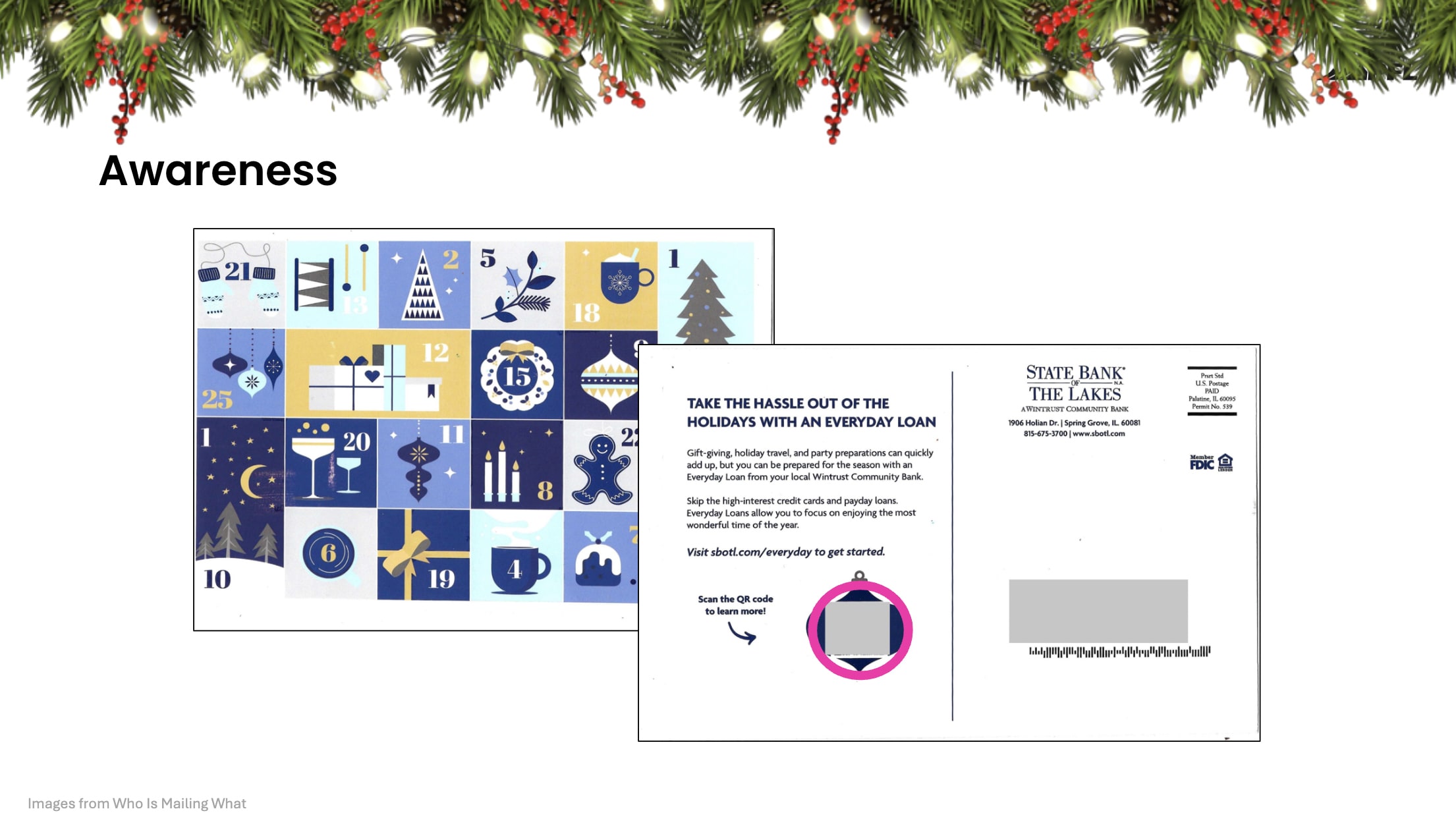
Awareness: Use bold visuals on formats such as postcards, flyers, menus, or mini catalogs to maximize reach and recognition. The Printing for Less team recommends Every Door Direct Mail (EDDM) for local targeting, allowing brands to reach every household in select areas cost-effectively. A standout example: State Bank of the Lakes sent festive, inclusive holiday mailers featuring both a URL and QR code for easy digital tracking—a simple form of A/B testing to see which channels spark the most engagement.    

Consideration: Guide buyers with educational, personalized content—think targeted letters with early offers, mini-catalogs, and postcards. One example is a fall-season letter from Modern Milkman, featuring farm partner logos, bold coupons, and an explanation of how the process works. Another one is a clever Halloween-themed payroll solution mailer that AB-tested QR codes and calls to action.  

Expert tip: Incorporate social proof such as logos or testimonials to build trust and use segmented lists for sharper targeting—supported by Printing for Less’s demographic and industry-specific data solutions.

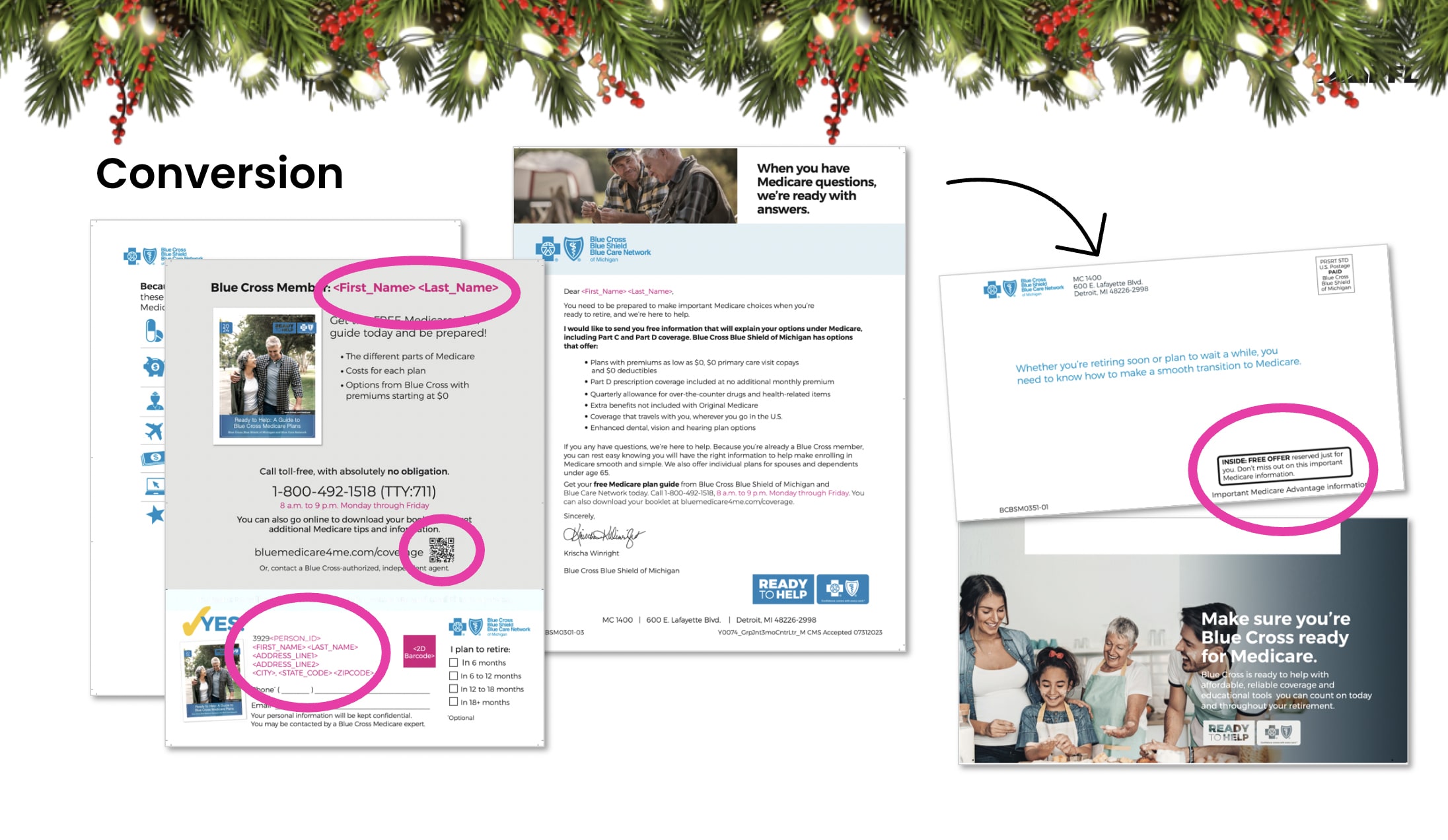
Conversion: Inspire prospects to act with personalized letters, impactful postcards, and substantial catalogs. Gray showcased Blue Cross Blue Shield’s campaign using variable data printing, QR codes, and tear-offs, all of which ensures that recipients feel known and provides several easy paths to respond. For e-commerce brands, an abandoned cart postcard with exclusive offers can nudge nearly converted shoppers over the line.  

Expert tip: Direct mail works exceptionally well as a decisive follow-up tool—especially after trial windows or cart abandonment.

Customer: A heartfelt thank-you note—say, a holiday card sent to animal shelter donors—reinforces wise purchase decisions and starts building an emotional connection right away. The power of a true signature (whether real or expertly printed) shouldn’t be underestimated in making new customers feel valued.    

Expert tip: Include a loyalty offer or referral incentive with each welcome, giving excited customers a reason to advocate.

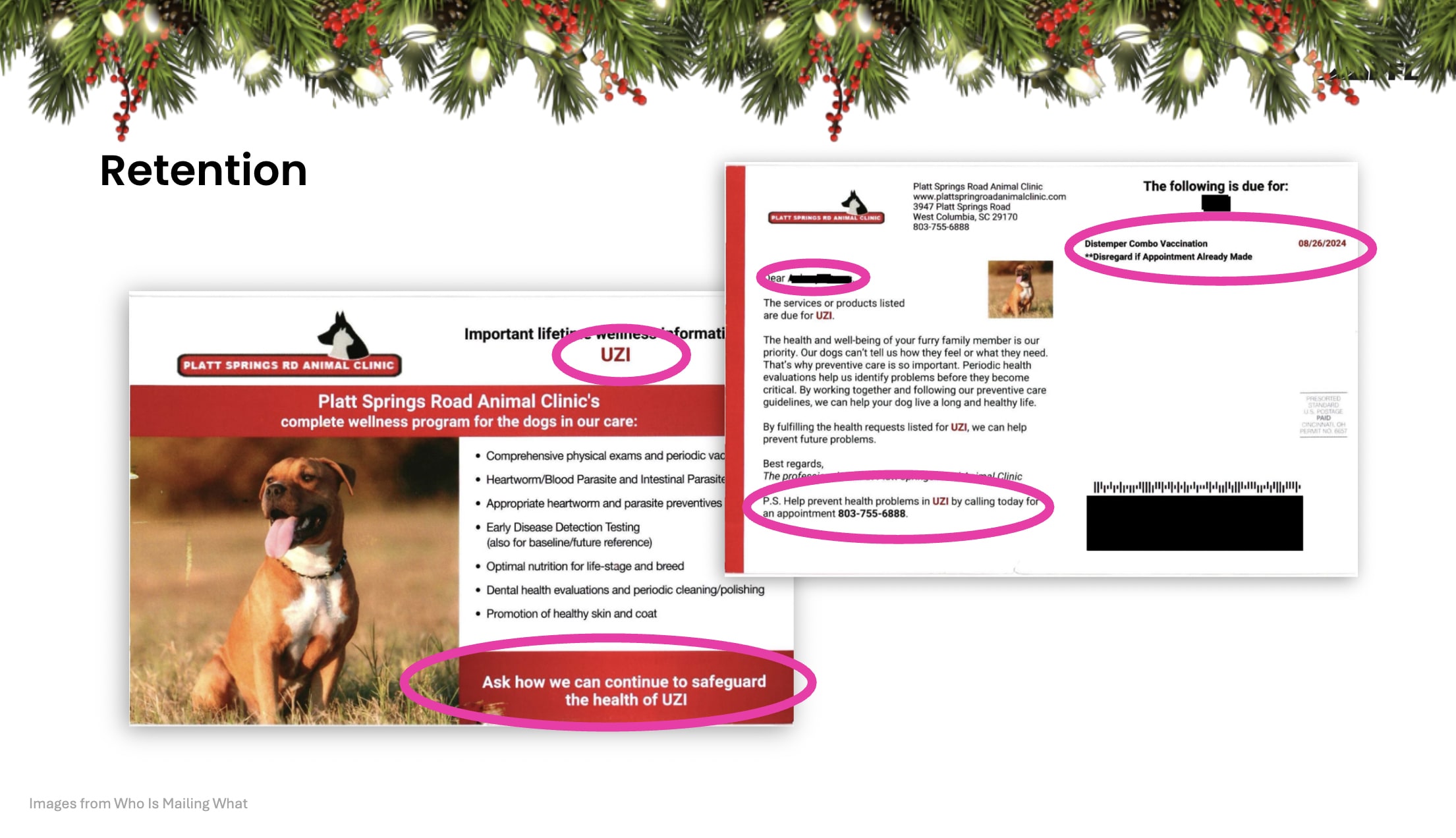
Retention: Personalized wall calendars, gift mailers, and greeting cards keep relationships warm. Gray noted her favorite: A custom postcard featuring the customer’s pet, using variable image printing and bold calls to action. Retailers can take a page from Macy’s gold star program—VIP perks and personalized coupons go a long way.

Expert tip: Personal touches, especially handwritten notes or tailored graphics, foster lasting loyalty.

Advocacy: Transform happy customers into true advocates. Phillips described Printing for Less’s own brand ambassador kits—bubble mailers with event gear, timely guides, and surprise gifts—that prompt social sharing and reaffirm brand value. Timing these thoughtful touches around renewals or major milestones keeps excitement high and engagement rolling.

Top Takeaways for Holiday Direct Mail

The two Printing for Less direct mail experts concluded that direct mail cuts through digital . Creative formats and integrated tracking make campaigns tangible, memorable, and easy to attribute. And that personalization matters more than ever. Custom messaging, variable printing, and digital integration (QR codes, URLs) turn mailers into conversion powerhouses.

The also urged attendees to integrate offline and online tactics. The most effective campaigns are those in which direct mail amplifies and tracks alongside digital marketing—using geographic data, A/B tests, and omnichannel ideas.

And when asked about the single most impactful customer journey stage, Phillips emphasized that awareness is especially powerful if a brand is looking to expand reach, but “personalized outreach for existing customers is equally valuable for building repeat engagement.”

Phillips further recommended that, to maximize ROI, planning ahead with unique URLs, QR codes, and UTM tracking is essential so marketers can see which channel or channels deliver the best results.

Coming Up!

Now Is the Perfect Time to Start Prepping You Holiday Gifting Strategy For 2025

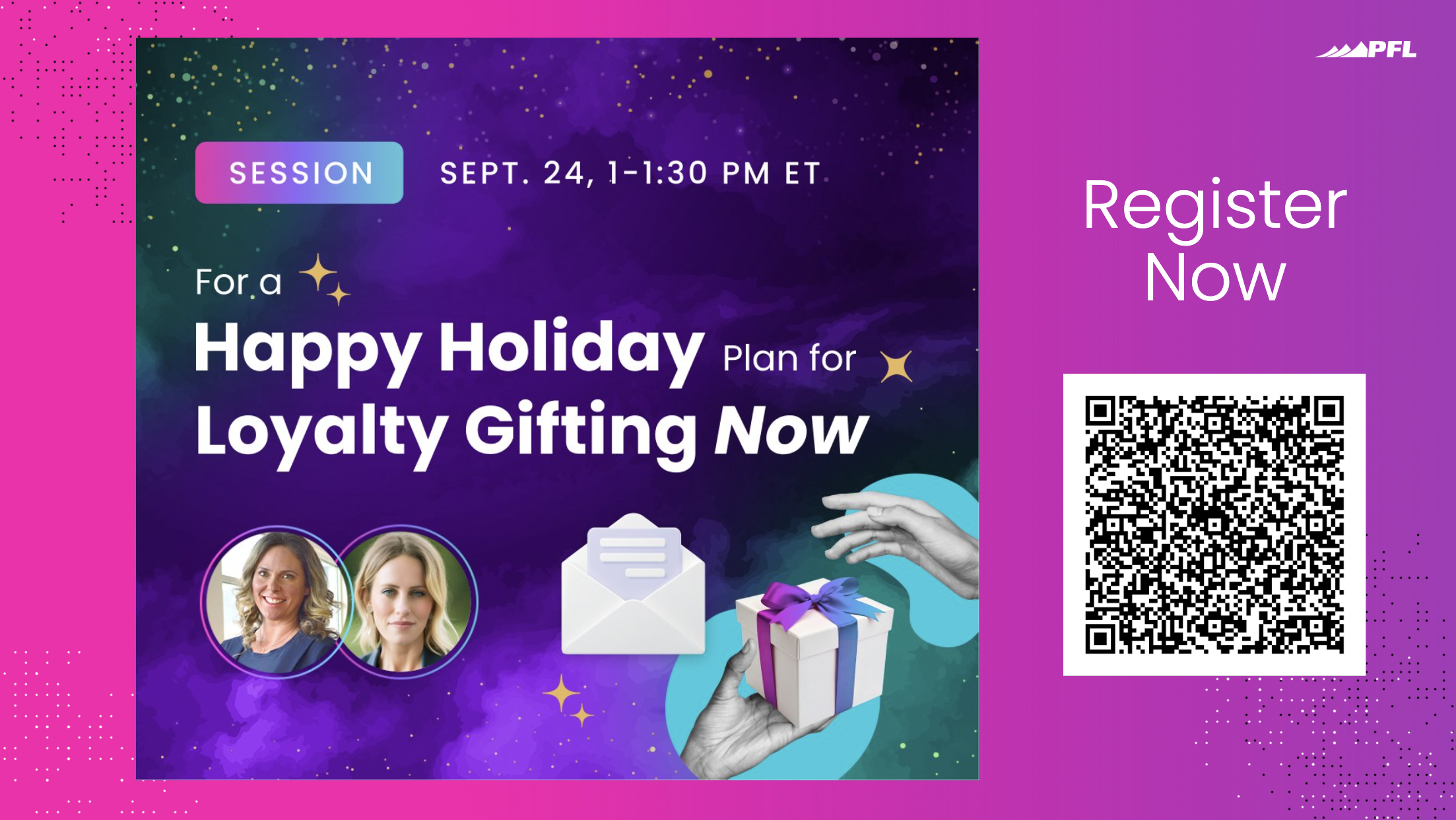
In this virtual session, we’ll explain why now the perfect time is to get going with your direct mail loyalty gifting strategy for the 2025 holiday season—and how to do it with a bang. Join Amber Sikkink, Director of Merchandising & Creative Services , Printing for Less, and Kricia Storms, Director, Product Marketing, Customer Engagement to learn why—with consumer expectations shifting, mailboxes filling up, and production timelines tightening—brands that want to see some real success this holiday season need to start planning now. 

Save Your Spot Today
Wednesday, September 24, 2025

1:00 – 1:30 PM Eastern Time
For a Happy Holiday, Plan for Loyalty Gifting Now

  • « Go to Previous Page
  • Page 1
  • Page 2
  • Page 3
  • Page 4
  • Page 5
  • Page 6
  • Interim pages omitted …
  • Page 48
  • Go to Next Page »

Footer

Printing for Less

info@printingforless.com
100 P F L Way, Livingston, MT 59047

800-930-2423

  • Home
  • Products
  • Services
  • Industries
  • Get Printing Samples
  • Direct Mail Marketing Resource Center
  • Printing Resource Center
  • Blogs
  • Templates
  • Terms & Conditions
  • Contact
  • About Printing for Less
  • Careers
  • Login

Copyright © 1998-2026 PrintingforLess.com. All Rights Reserved.

logo
  • 800-930-2423
  • Products
  • Direct Mail Marketing
  • Services
  • Industries
  • Direct Mail Marketing Resources
  • Printing & Mailing Resources
  • Get a Quote
  • Contact Us
  • My Login
Direct Mail Delivery
This field is for validation purposes and should be left unchanged.

Get 20% Off*

Your First Print Order

Name(Required)

*By subscribing, you agree to receive weekly emails from Printing for Less. Some exclusions apply. See details.